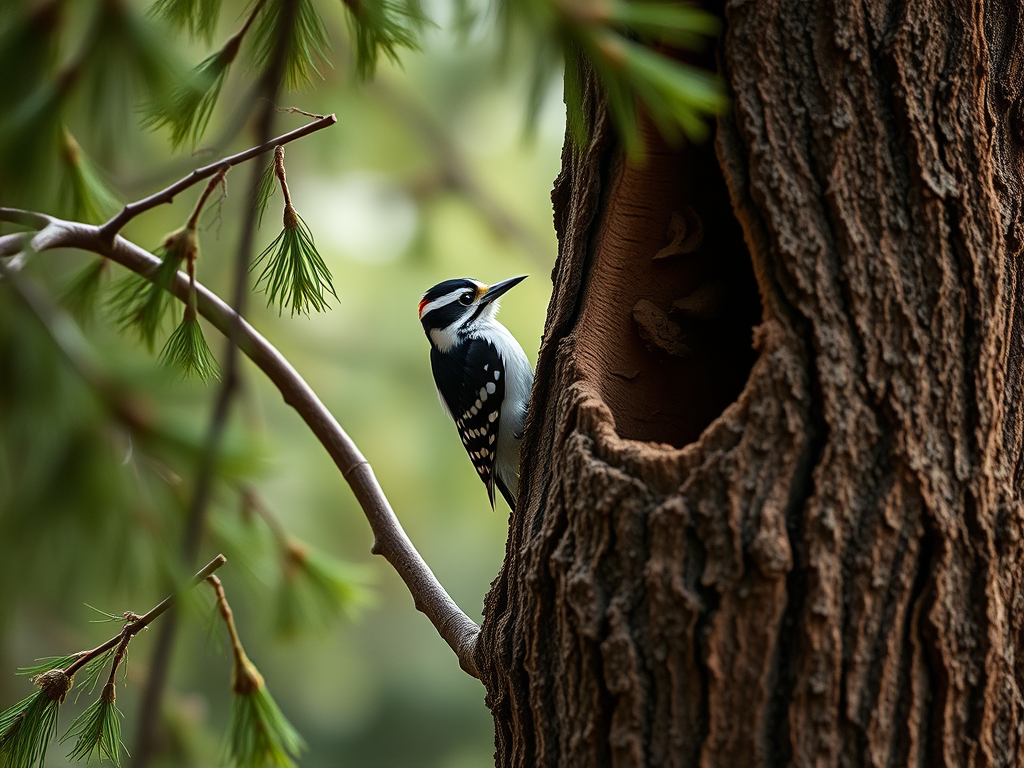
The downy woodpecker is especially close to my heart since we have an artistic carving of a downy pair which we purchased long ago at an indoor craft’s fair. We also have real live downy woodpeckers that come around our home during this time of year. I saw only the male with a full vivid red patch on the back top of its head. It was a perfect specimen of a real bird in action. It hung around longer than I expected, though I was still too busy doing other things to take its picture.
The tree outside our window is a Juniperus virginiana (aka red cedar). It is tall enough to hug our home and protect one corner of our covered deck which would otherwise be exposed to wind. Junipers are in the cypress tree family along with sequoias. We also have three of these trees along our back fence line. They stand closely together which has made them grow straighter and taller, and they are less spread out than the one surrounding the corner of our dining room and deck. We have one more of these trees which had been partially cut down at one time, and now has a tall daughter tree that grew up and out from its base. It protects another corner of our home along the backside.
Since my recent woodpecker sighting I have been reading up about all types of evergreens that are used as Christmas trees, and all the traditions surrounding its origin. During my research I ran across a Willa Cather quote that I found captures a sentiment that I have felt before.
“I like trees because they seem more resigned to the way they have to live than other things do. I feel as if this tree knows everything I ever think of when I sit here.” ~ Willa Cather
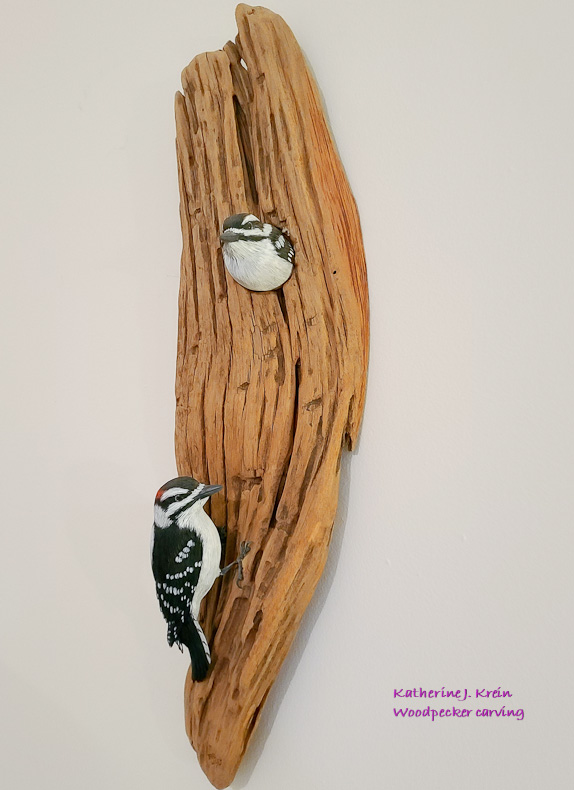

Downy woodpecker pair is made out of carved wood and then painted. We purchased this long ago at an indoor craft exhibition.

 movingforwardslowly