Autumn twists, turkey tails, and silver stars caught my attention this week.
The twist is a re-blooming azalea, the turkey tail is a fungus that has medicinal value, and the silver star is a re-blooming clematis.
The silver star is joined by a light phlox I planted this summer. It is still blooming, and their colors match.
The turkey tail fungus is bringing interest to the old wood pile that lies along a back fence.

The bird feeders were empty, so I refilled them all.
The bird vine started to buzz, and soon the flock returned.
Can it last throughout the weekend?

The cool nip in the air this morning put a bounce in my stride.

Early last evening a huge hawk was in the crepe myrtle tree closest to our patio.
My husband saw it first and called me over to see it.
I saw it swallow the last bite of a meal. I could not tell what it was.
I thought I saw a grey tail, perhaps a mouse or a small snake.
I don't think it was a smaller bird.

At such close range its size was impressive and its feather patterns were magnificent.
No camera was nearby, so a picture opportunity was missed.

This morning when I was out filling the feeders, I was pleased to spot a beautiful Honorine Jobert anemone.
It was planted long ago in a now neglected section of our garden.
On that same side the pretty white morning glories were blooming. They are a nuisance.

The colorful Coleus on my deck have been show stoppers all summer.
They are still going strong.

I am hoping my calendar will allow some late fall and early spring restoration.
Update-- I found a better picture of turkey tail fungi from my Virginia garden. Can you see how it got its name?
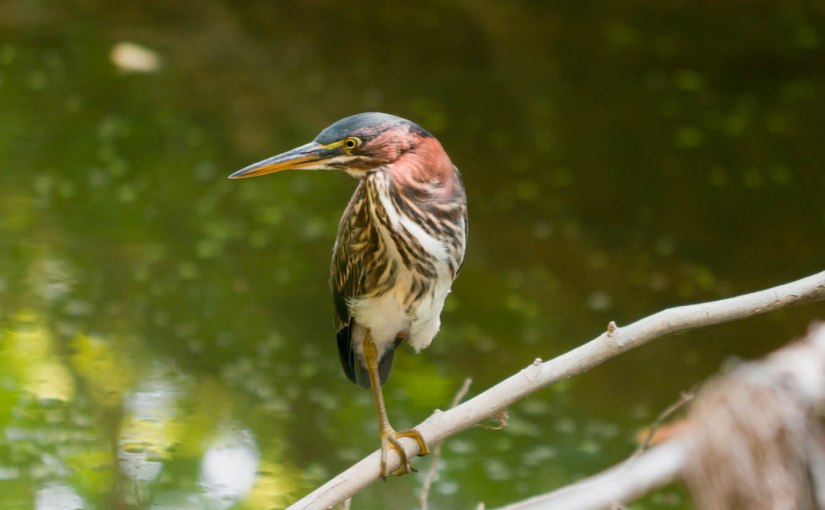
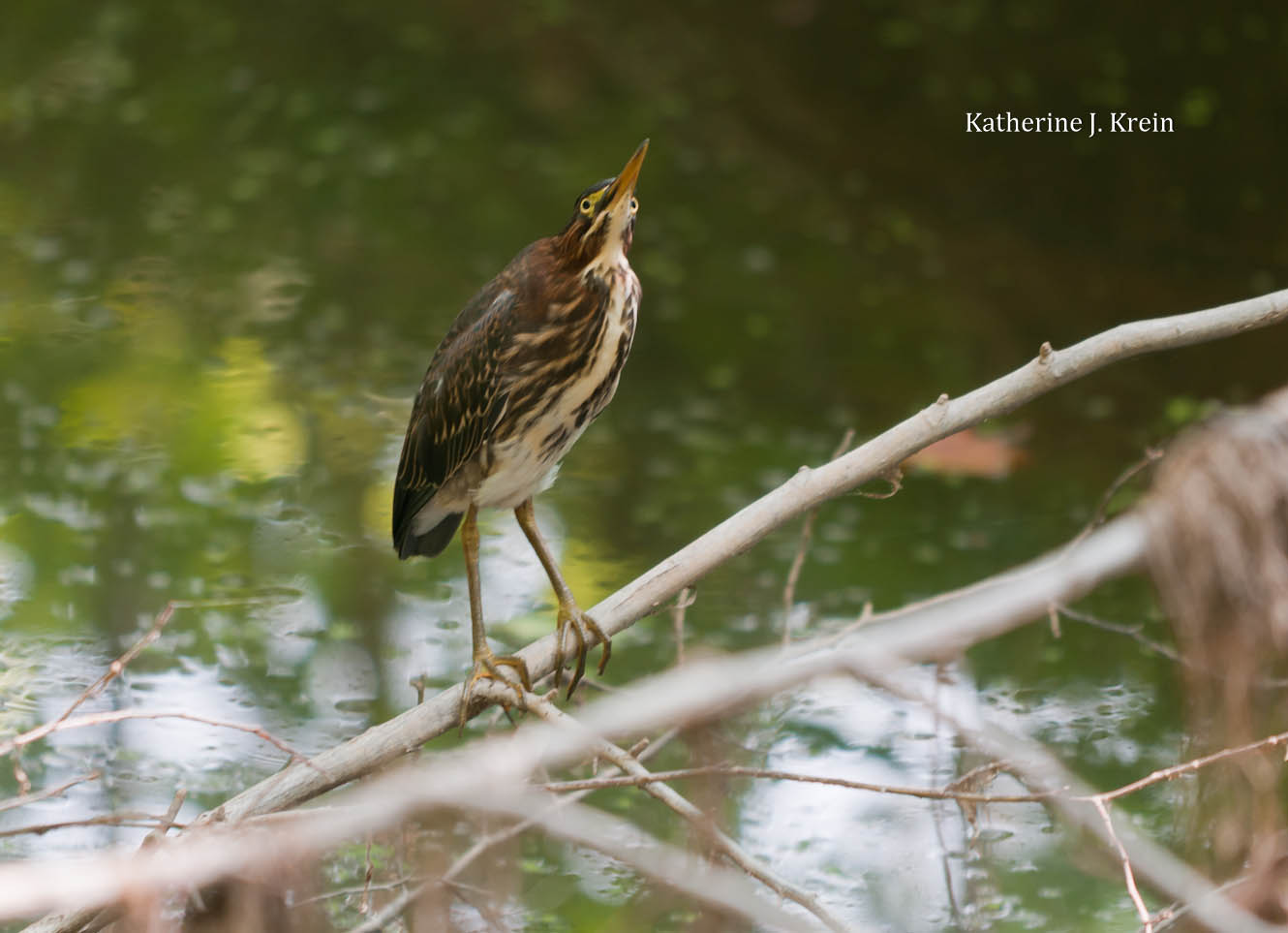
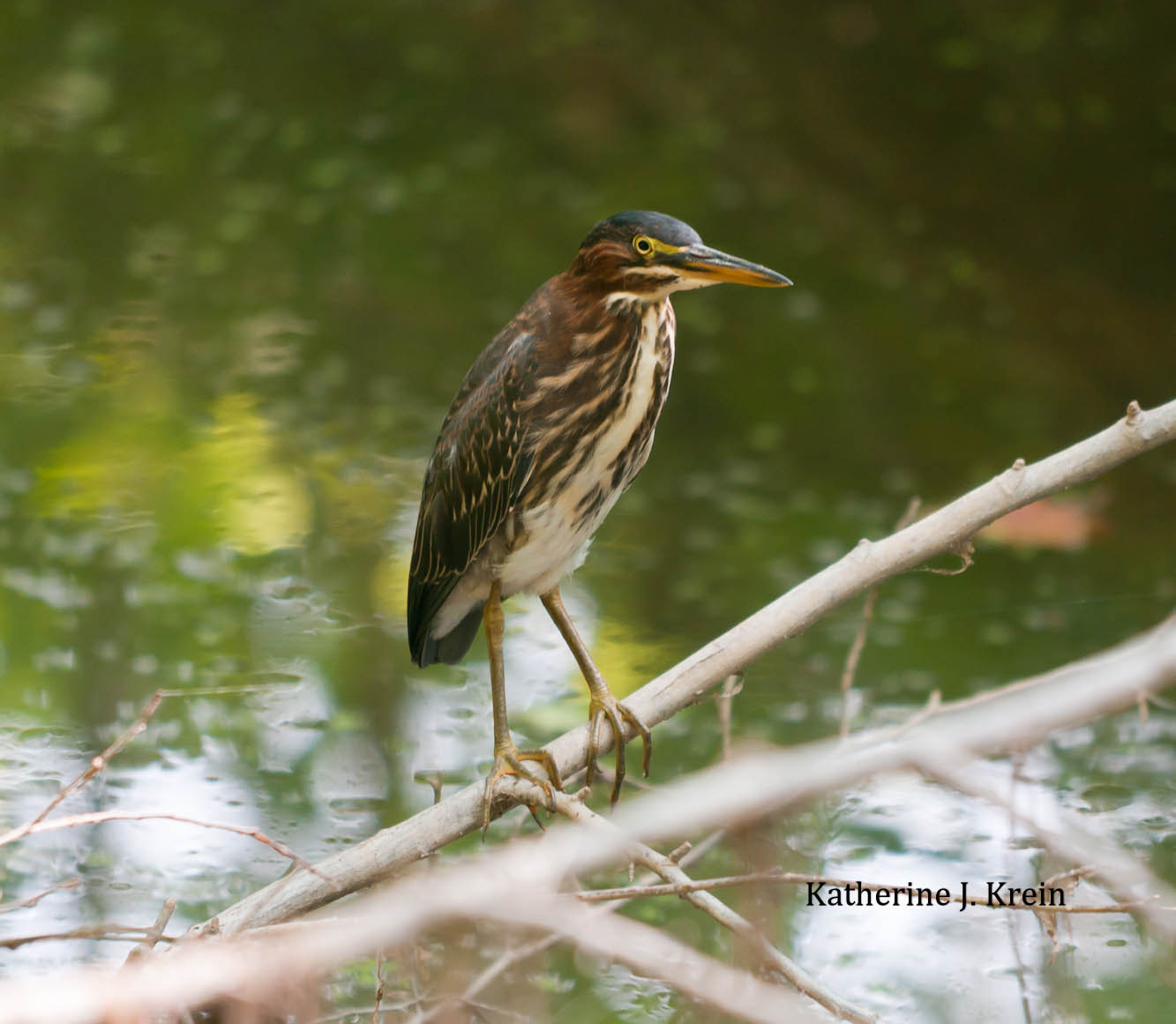
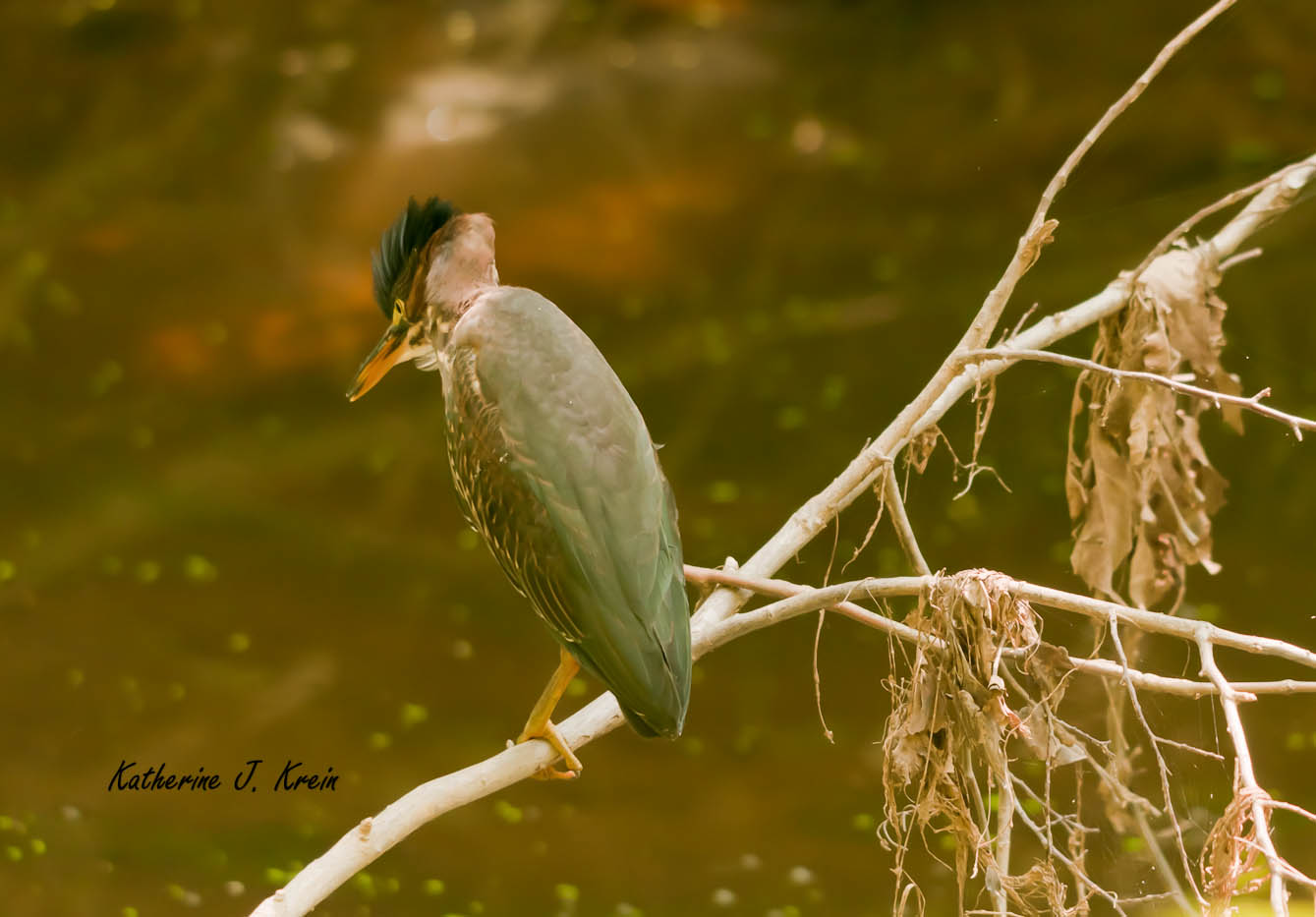
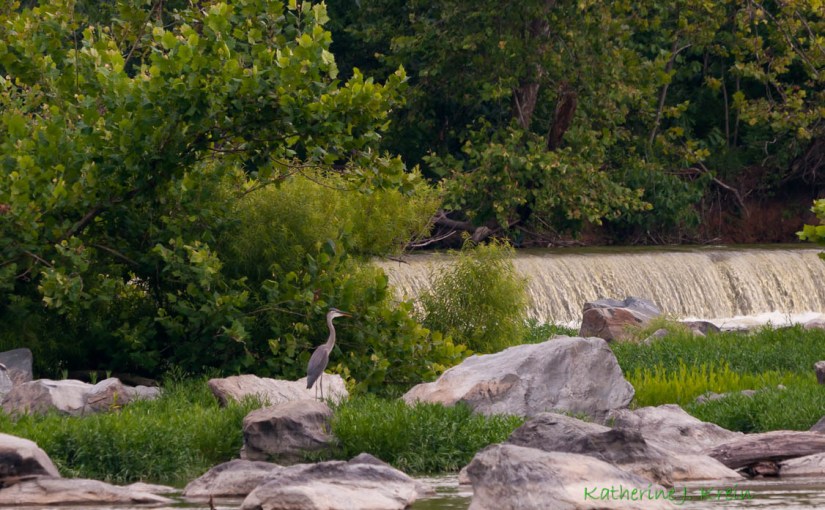
Great Falls Park in Virginia is part of the National Park Service network. It is a great place to find birds of all kinds. This Green Heron was hunting in the woods parallel to the river.
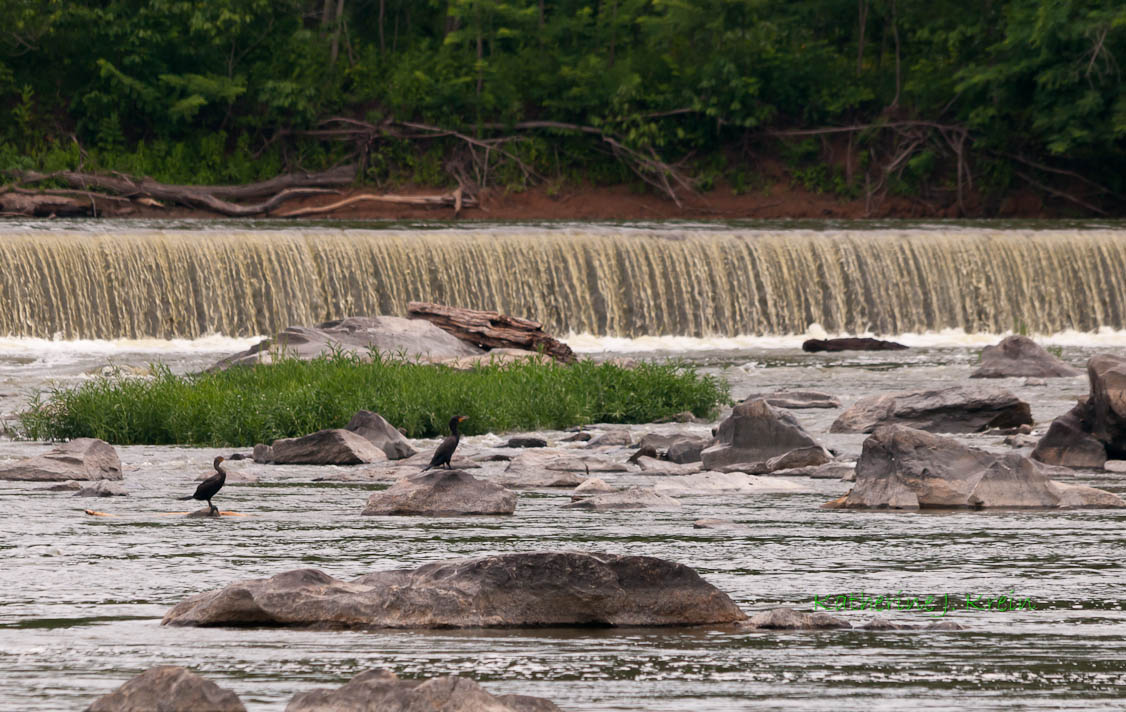
Herons hunting at the falls. Looking for food and perhaps courting.
The time of year was mid-summer.
Down river from the larger rocks provides a calmer settings
In the picture above you can see small ducks in the water.
This gives some perspective as to how big the herons are.
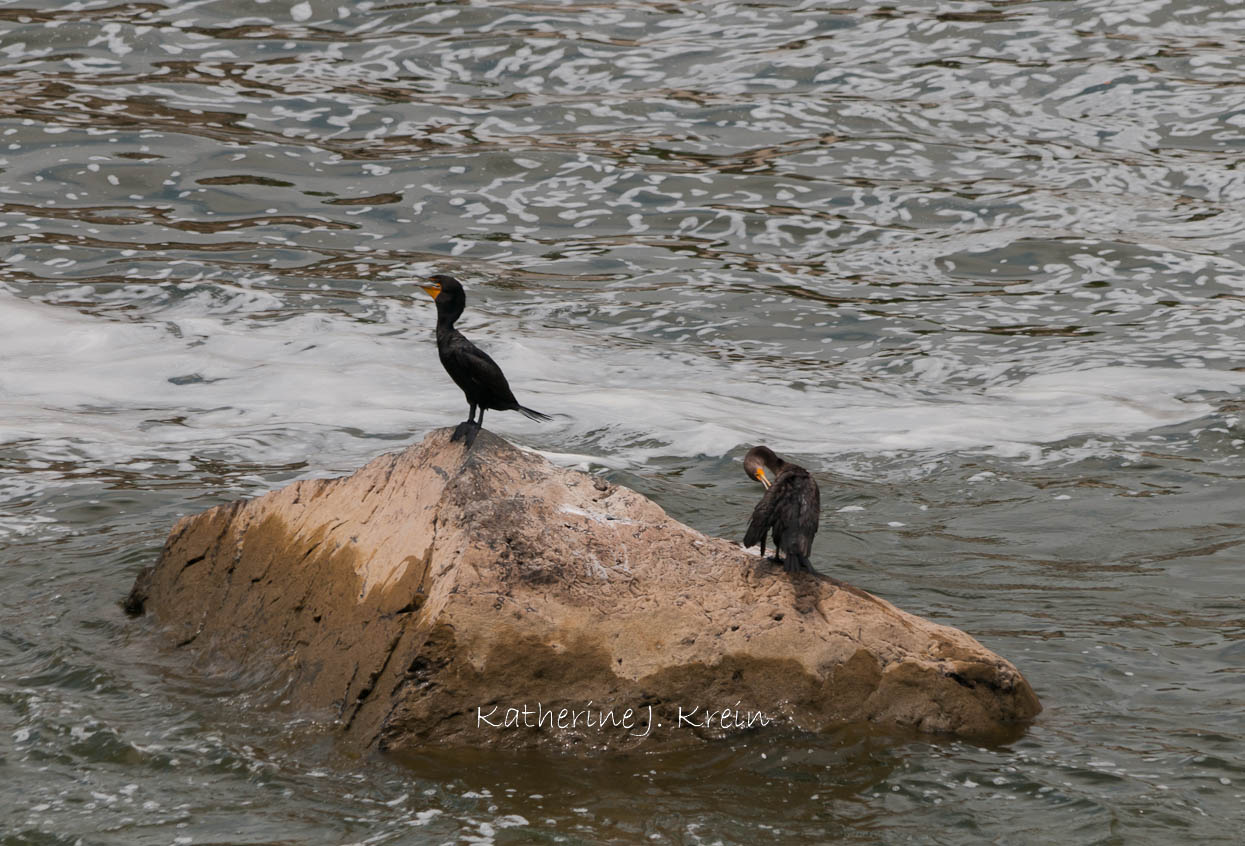
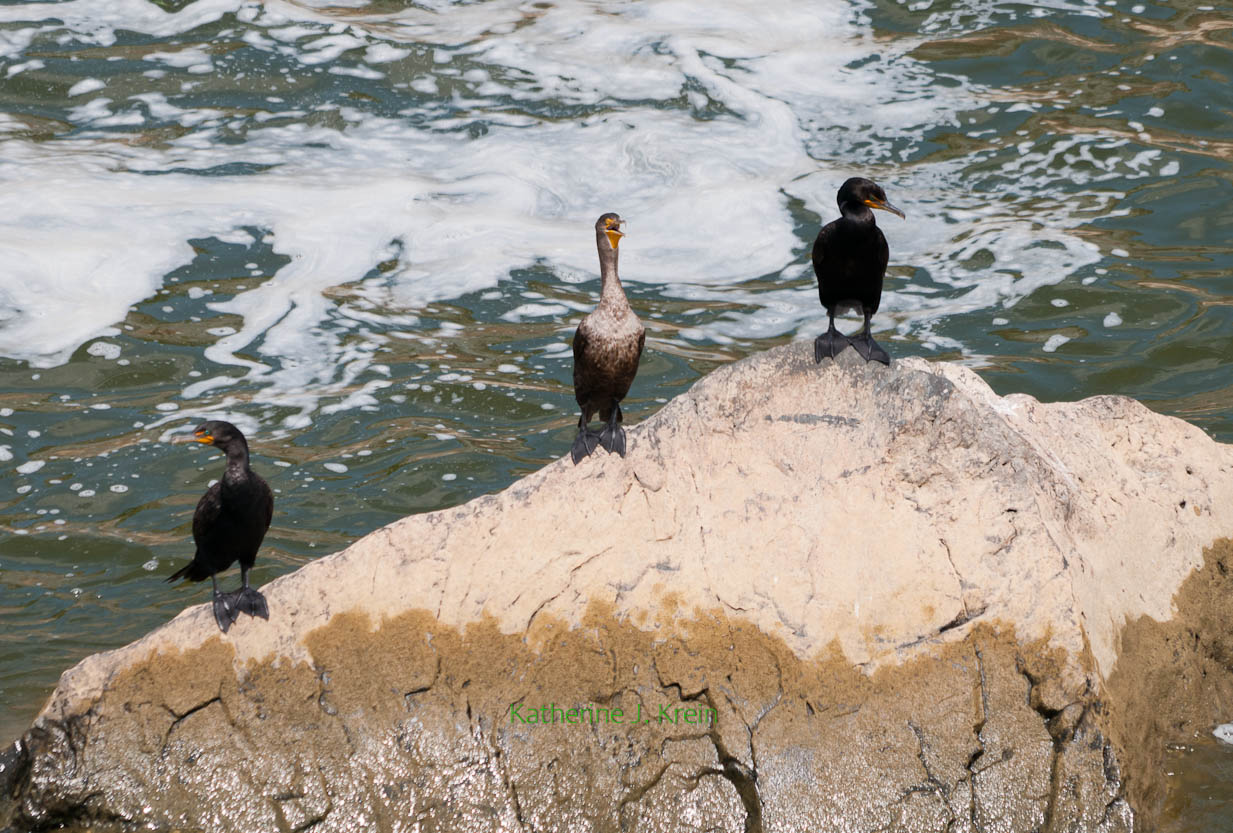
Here is a couple of cormorants. The double-crested cormorant has an orange throat and green eyes.
I do have a picture or two that show the green eye at closer range. Perhaps I will post it later.
One couple down river and one couple up river.
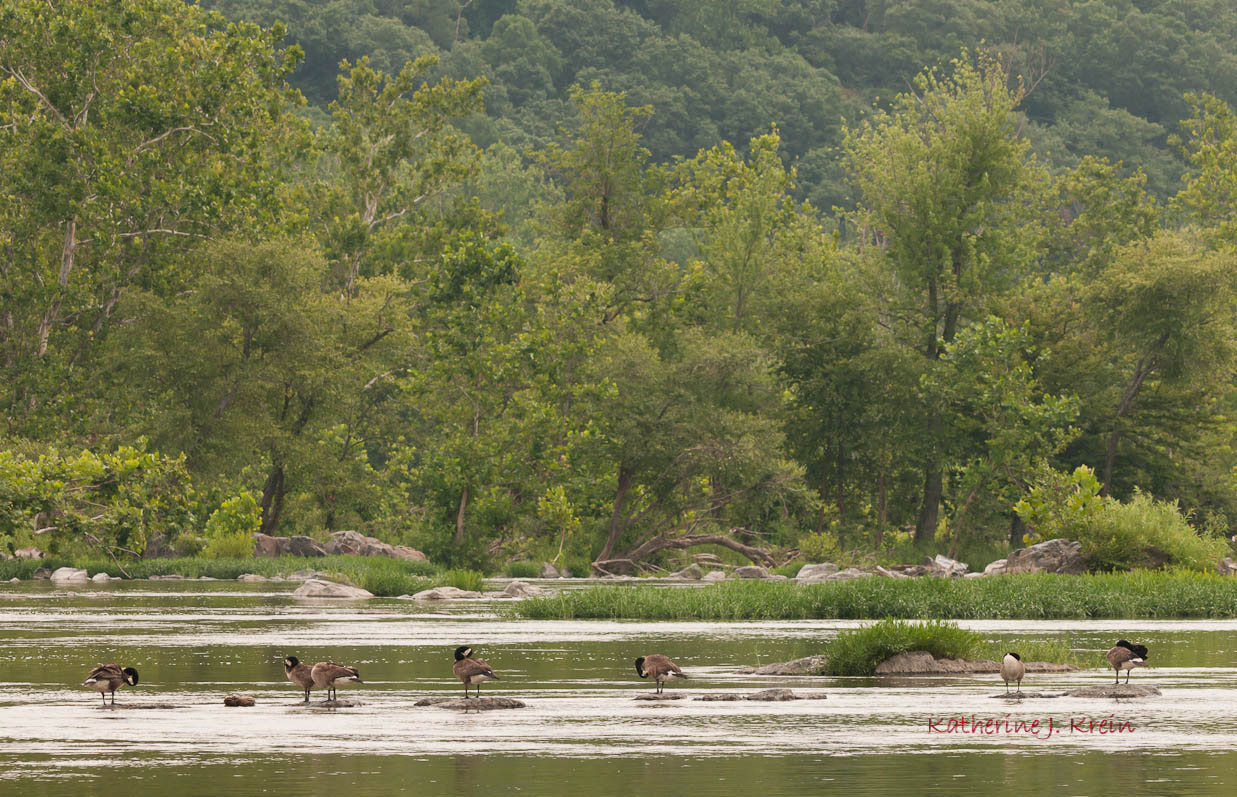
Geese all in a row.
Here is a picture of three cormorants. I can see the green eyes in all three.
You might only be able to see one. Look to the far left.
Lift the veil and speak your mind.
Truth and honesty need to be employed.
Hidden meanings and innuendo is drama for the stage.
Between you and me speak clearly, no double entendre.
Simple words with simple meanings are best for clear communication.
Little room is left for wild imaginings.
There is nothing wrong or insulting with being elementary.
This opens the door wide for a larger audience, and
hopefully more accurate interpretations.
Be careful with your angry, hurtful words.
They will not be forgotten.
You can make your point without them, and this
will leave the door open and the bridge intact.
No insults should be allowed. You can honestly tell
how you feel without going on the offensive.
Communication is an exchange.
There is always two or more sides to every story.
Actions might speak louder than words.
However, when motivations are left unspoken,
no clear understanding is communicated, and when
reasons are not explained, mistakes will be repeated.
No resolution has been made possible.
Cooler weather, bird migrations, and changing colors are welcomed by me.
Thoughts of baking fills my head as sweater weather arrives.
The cold mornings make staying in bed more acceptable.
Warm slippers become necessary when getting up to make coffee.
Work must continue as dark mornings descend upon our routines.
Thoughts of bedtime come earlier as the days grow shorter.
Hibernation is not an option for most people.

Religious observances and celebrations of the harvest begin to arrive.
Hopefully joy begins to fill your heart this time of year!
The red wolf you see pictured above was at the Salisbury Zoo in Maryland many years ago.
There were several barriers between me and the wolf which made it hard to capture a clear image.
The time of year was fall. We were on a Thanksgiving trip. The zoo was a pleasant side trip.

Since this time I have read a little about the Red Wolf which is native to the U.S.
They are listed as critically endangered and the U.S. Fish and Wildlife Service has a recovery program.
They were monitored at the Alligator River National Wildlife Refuge in eastern North Carolina.
Lately I have been reading reports in both AP(Associated Press) news and ABC news about the success of restoring
the red wolf population.This is encouraging news.
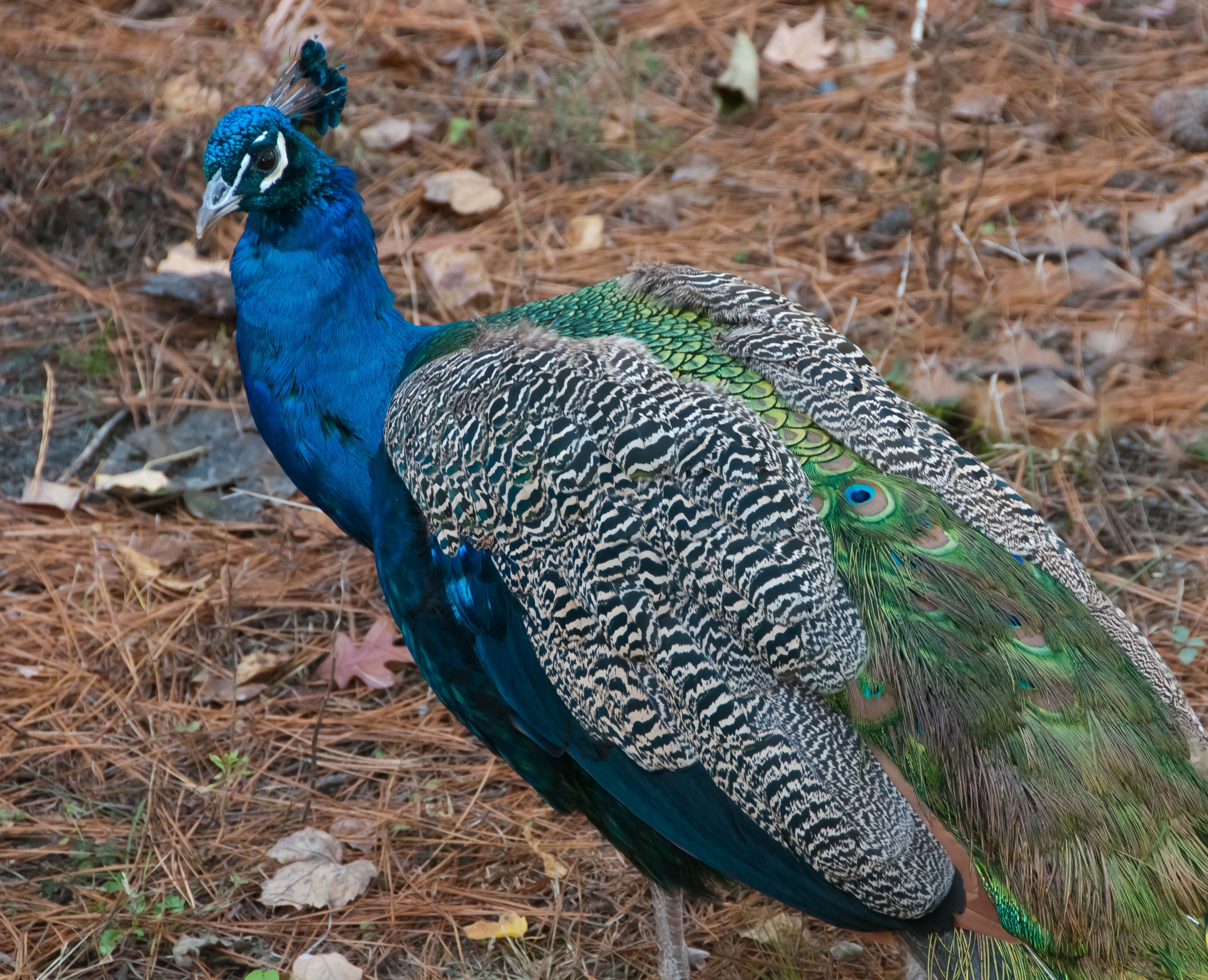
Since I recently mentioned peacocks in my previous thoughts about butterfly eye spots,
I decided to show a peacock (or peafowl) from the same zoo (Salisbury, Maryland). The picture is from the same trip.
I was disappointed it would not open its feathers for me.
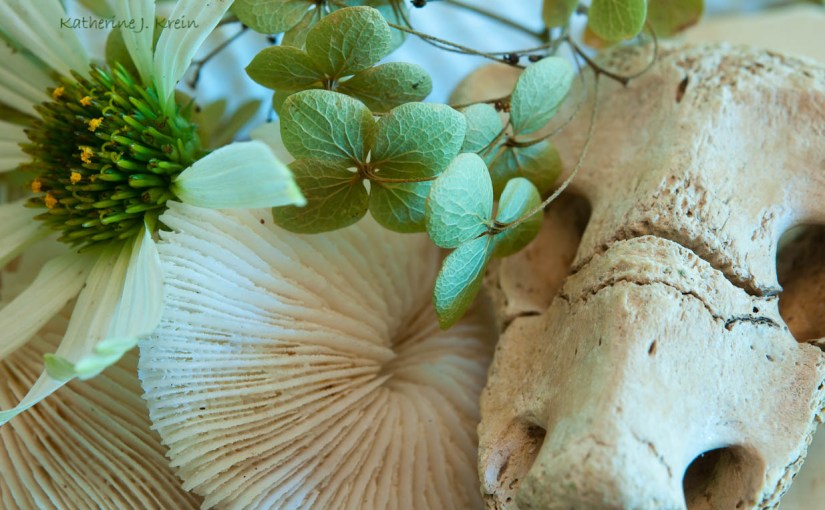
A skull with a fracture between the eyes
indicates a fatal injury.
The sharp & brittle shell with an accordion
design lends support.
All life has been bleached out of both.
The freshly cut greenery from the garden
brings color & contrast to the scene.
It also brings time forward.
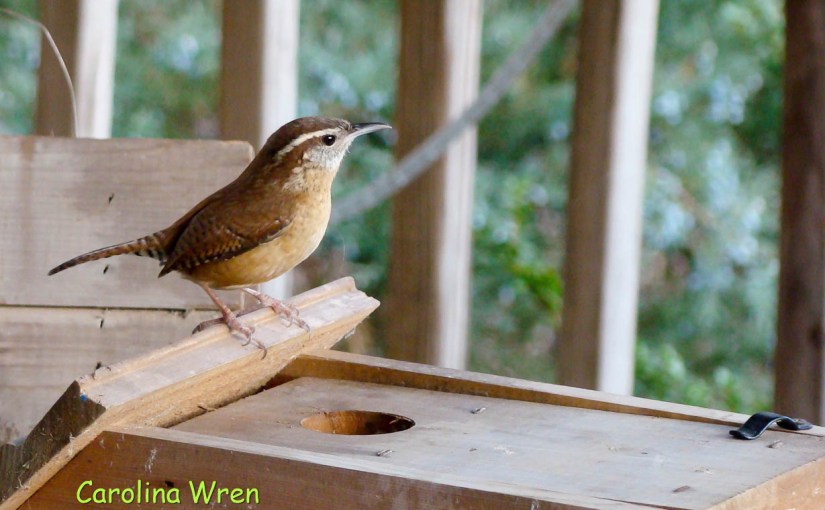
Looking out my kitchen window this morning I saw a molting Carolina Wren at the suet feeder.
It reminded me of the picture above. This picture was taken many years ago,
and it was recently rediscovered.Yesterday after reading an online article about birds,
I finally realized the sad story that this picture tells.

As you can see the Carolina Wren sits atop a wooden birdhouse. The time of year was late fall.
The birdhouse had been attached to our back fence, though it had never been very secure.
Some big birds would regularly knock it down. It was on the ground when I picked it up and decided to take it in.
On our deck I had opened it and found a big tuft of auburn colored human hair, almost the same color as this bird.
I remember how odd this was. I had not been cutting hair, and no one in my family had that color of hair.
Some bird had found this hair somewhere in some other yard or space and filled the bird house with it.

The article that I read the other day told us to keep our bird houses up because some birds spend the winter in them.
It specifically mentioned the Carolina Wren.Suddenly I realized the mistake that I had made. This Carolina Wren was trying to reclaim its home that it must have painstakingly filled with hair to keep warm throughout the winter.

It is hard to remember what I did with the hair. I hope I left it outside, so it could be reclaimed.
We do have many alcoves throughout our property that this little bird hopefully found to nest in for the winter.

I always have good intentions for the wildlife that find a home within our garden. However this showcases how dumb mistakes can be made without fully thinking things through. I find solace in the fact that most people make mistakes.
Even worse...many people do not even care.

I do feel confidant that our little wren here was resilient. They are one of the cutest and loudest birds to grace a garden.
It started with a dream of building a pond to grow water lilies.
The expectation is to have fish, however, this was not my first intent.
I had been building my garden for about six years before we put in the pond.
I had built up the yard with truck loads of dirt.
A wall was built to hold the dirt in place and stop erosion.
A patio was built to blend and level the yard with the deck.
My goal had always been to build a beautiful habitat for relaxation,
and to hopefully attract some wildlife to our yard.
The miniature garden tub you see above was built by me.
It was more difficult to make than I expected.
Thankfully it turned out pretty well, and it still holds strong.
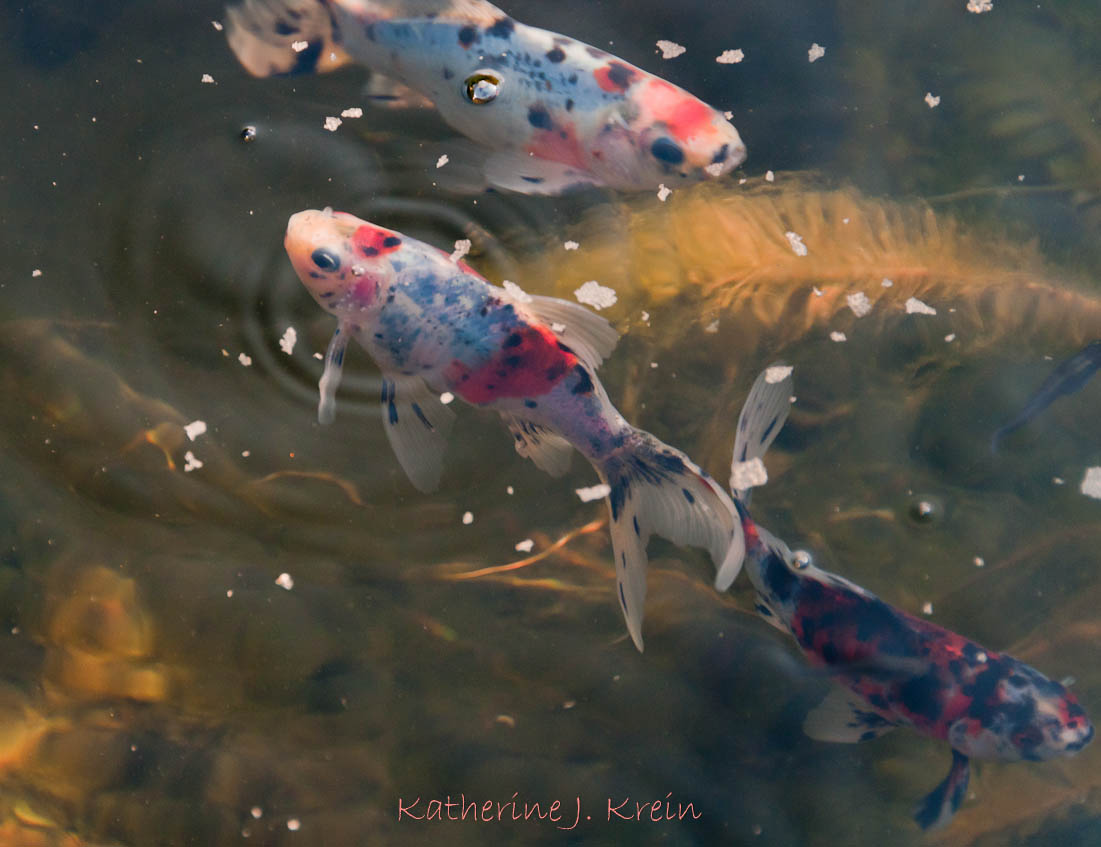
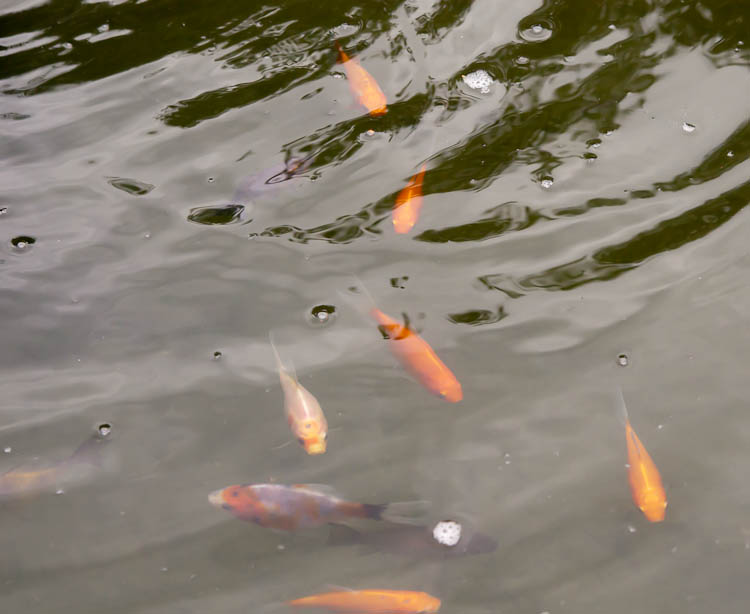
My daughter named these fish Prince, Purple Rain, and Thunder.
They were very small when the pond became their home.
They grew fast throughout the summer.
Only one made it through the winter to live another summer.
The dragonflies and frogs arrived soon after.
The birds arrived in the beginning.
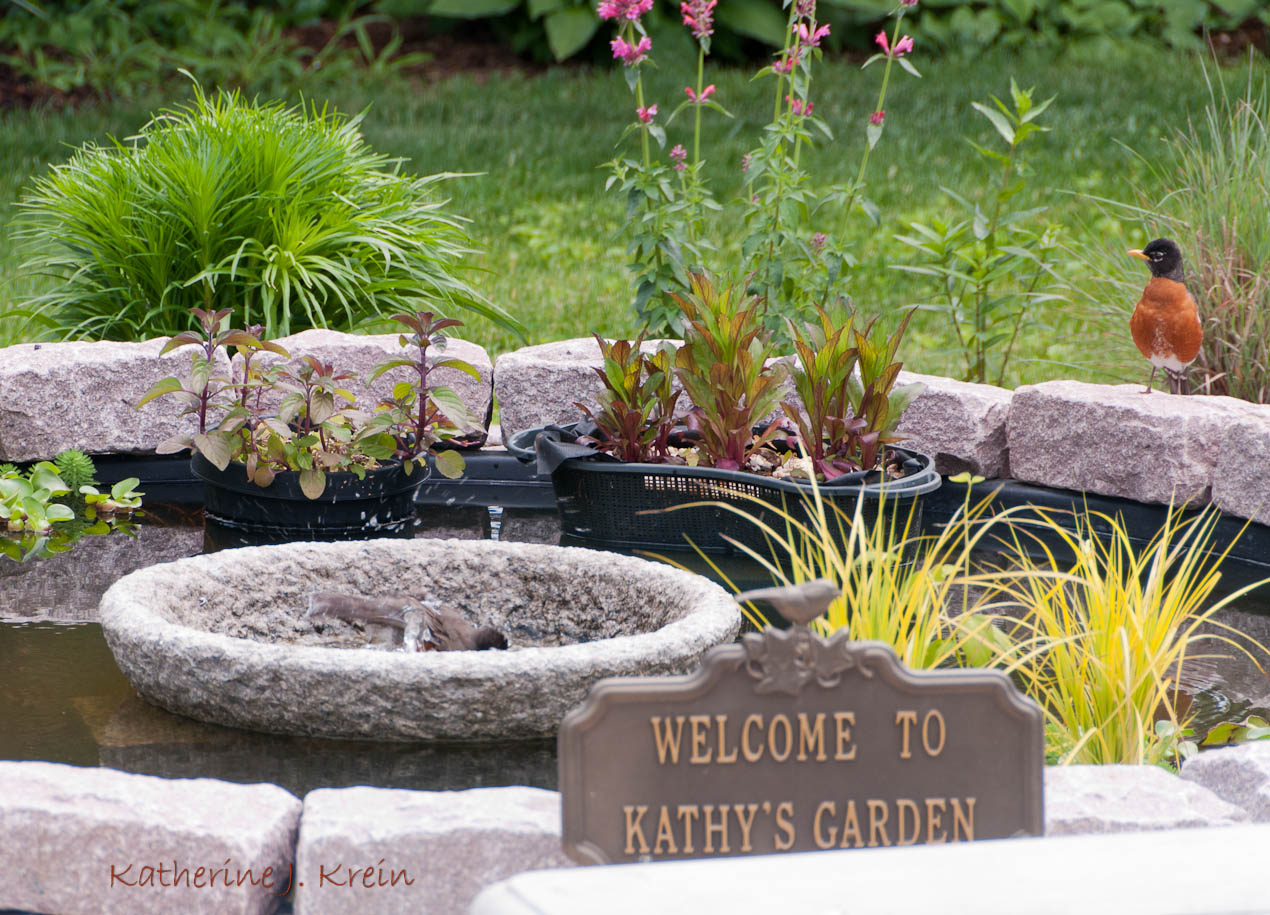
Here a robin stands guard while another robin takes a bath.
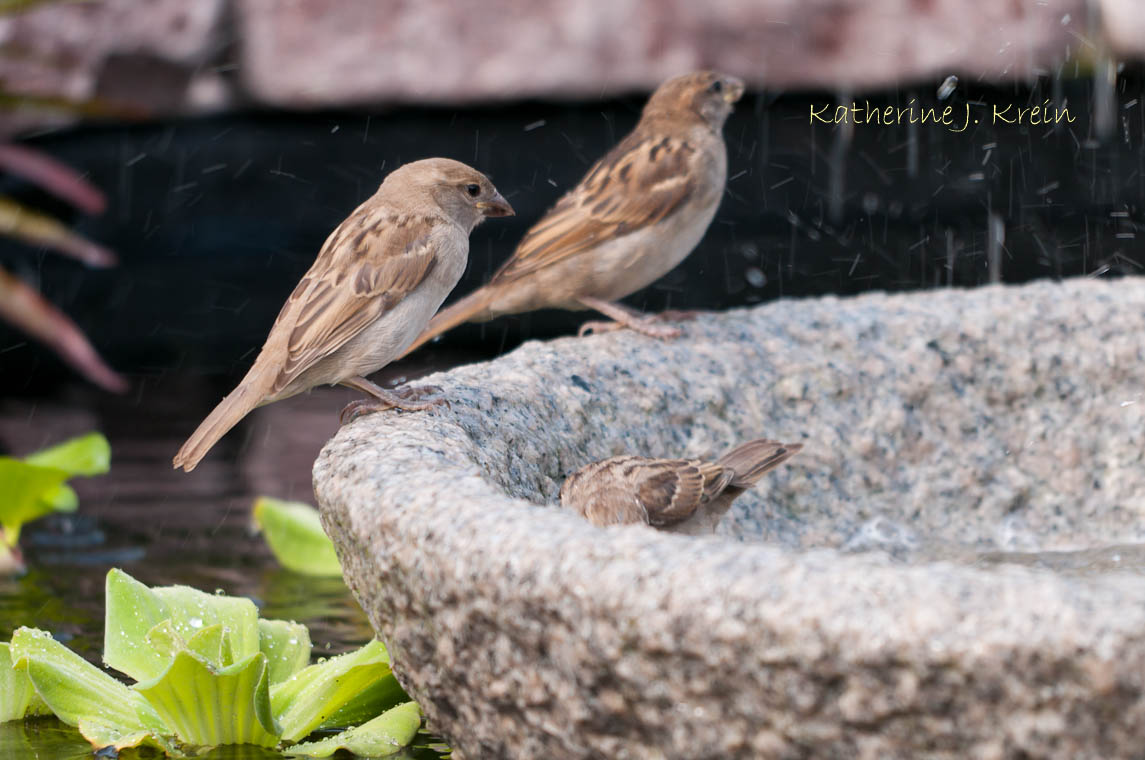
Soon the robins were crowded out by other birds.
The size of the water spout determines which birds will bathe.
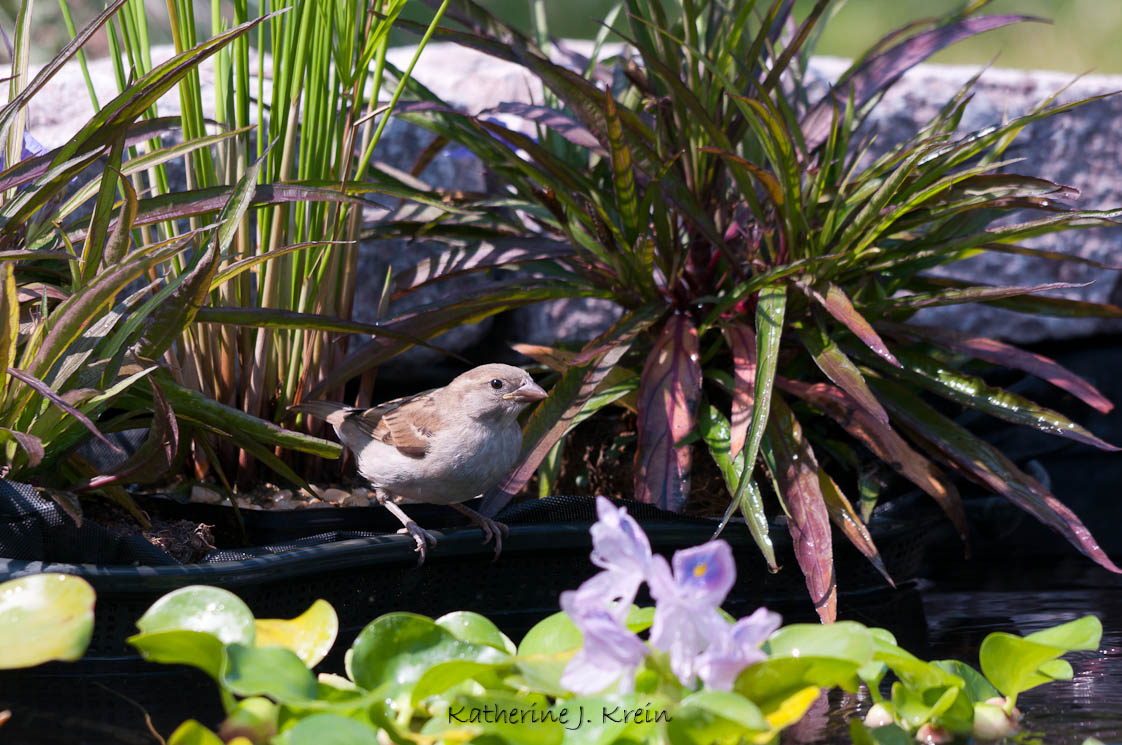
The bird you see below surveys the pond and builds up courage to enter the bowl.
The water hyacinth helps shield the fish and filters the water.
One summer I brought in water hyacinth from a local garden center.
Five days later the pond begins to fill with fish.
There must have been fish eggs hiding in the hyacinth.
I ended up with ten or eleven unexpected fish guests that summer.
The water lilies have been the real heart and soul of our pond.
In the beginning I tried many different types and colors.
We have had yellow, white, peach and pink.
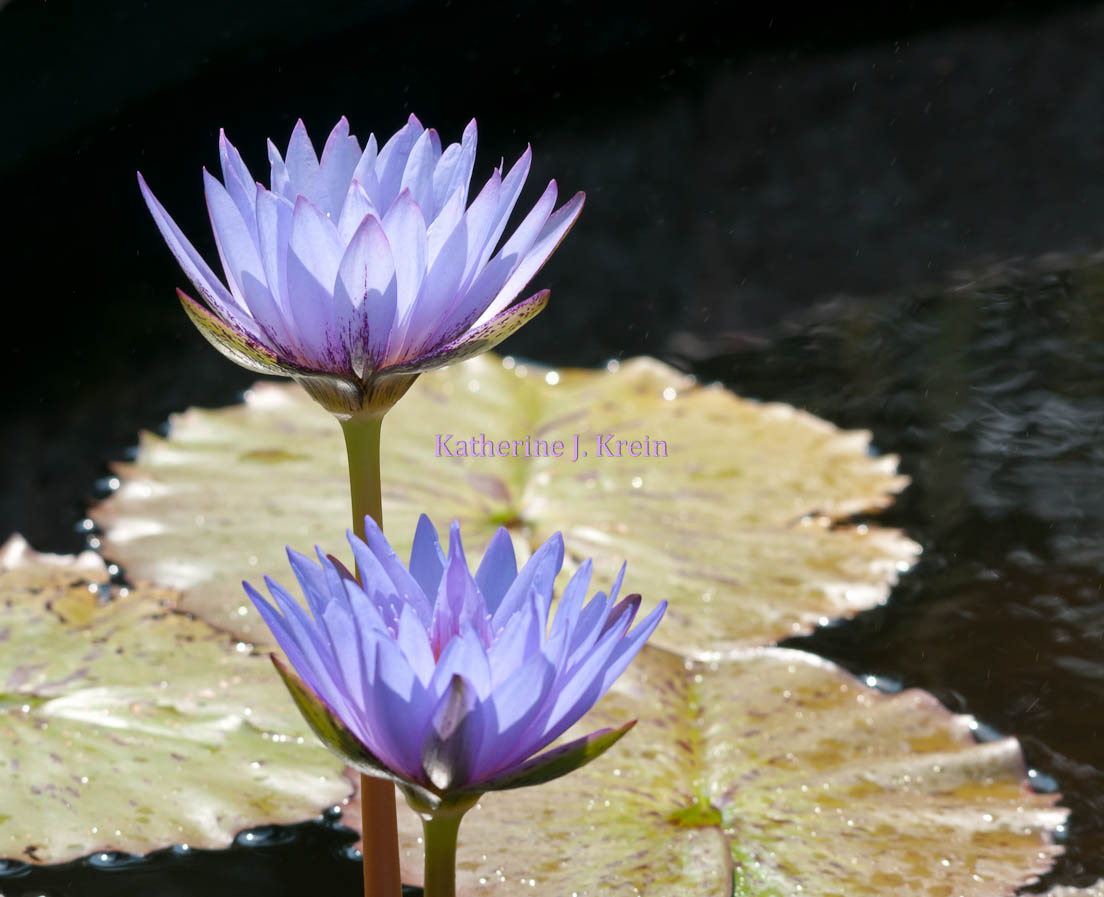
Pictured below is a tropical water lily that is like an annual.
It cannot survive our winters and will not come back.
I had this one only one summer.
Currently the pink Colorado is the sole survivor.
It has been an epic survivor and blooms prolifically every summer.
My pond has been a real blessing for me. I can see it from my kitchen window.
It has been worth every cent I have spent on it.
There are some days when the garden seems quite, and I will go out and sit.
If I am patient and sit quietly, I begin to see the life around.
There are peak hours and slow hours. There is a natural ebb and flow to life.
The garden has helped me to believe that impossible things can be made possible
with work, imagination, and faith.
The garden and pond have changed over the years.
In the beginning it was almost an unhealthy obsession.
Time, age, and family circumstances has tempered my obsession.
It was largely ignored a few summers, and partly tended a few.
The garden has been patient with me and has taught me patience.
Everything takes times, and mother nature can survive neglect.
She is constantly reinventing the garden,
Sometimes to my delight, and other times to my chagrin.
Still to this day it is a work in progress.
I am already beginning to think about what
I might do early spring to change things up a bit.
It is important to have goals.
It is also important to be realistic with our expectations,
and most importantly to always be aware of our priorities and promises.
Believe in the WE.
Smile more.
‘Black Magic’ Taro and a boisterous pump and fountain bowl.
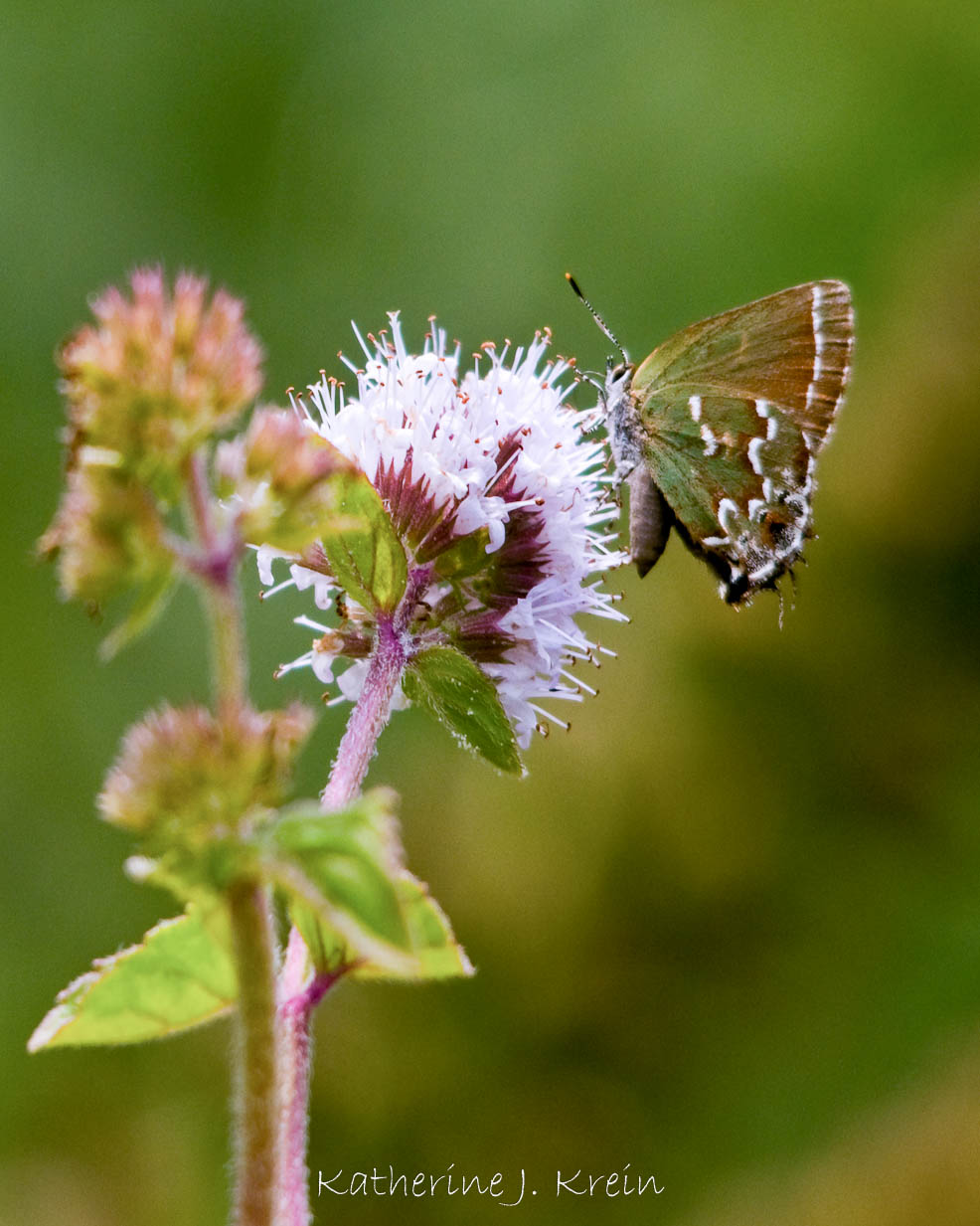
This green,brown and white butterfly is called a juniper hairstreak.
It has one orange and black eye-spot.
The plant is a water mint which was very popular with all our visitors.
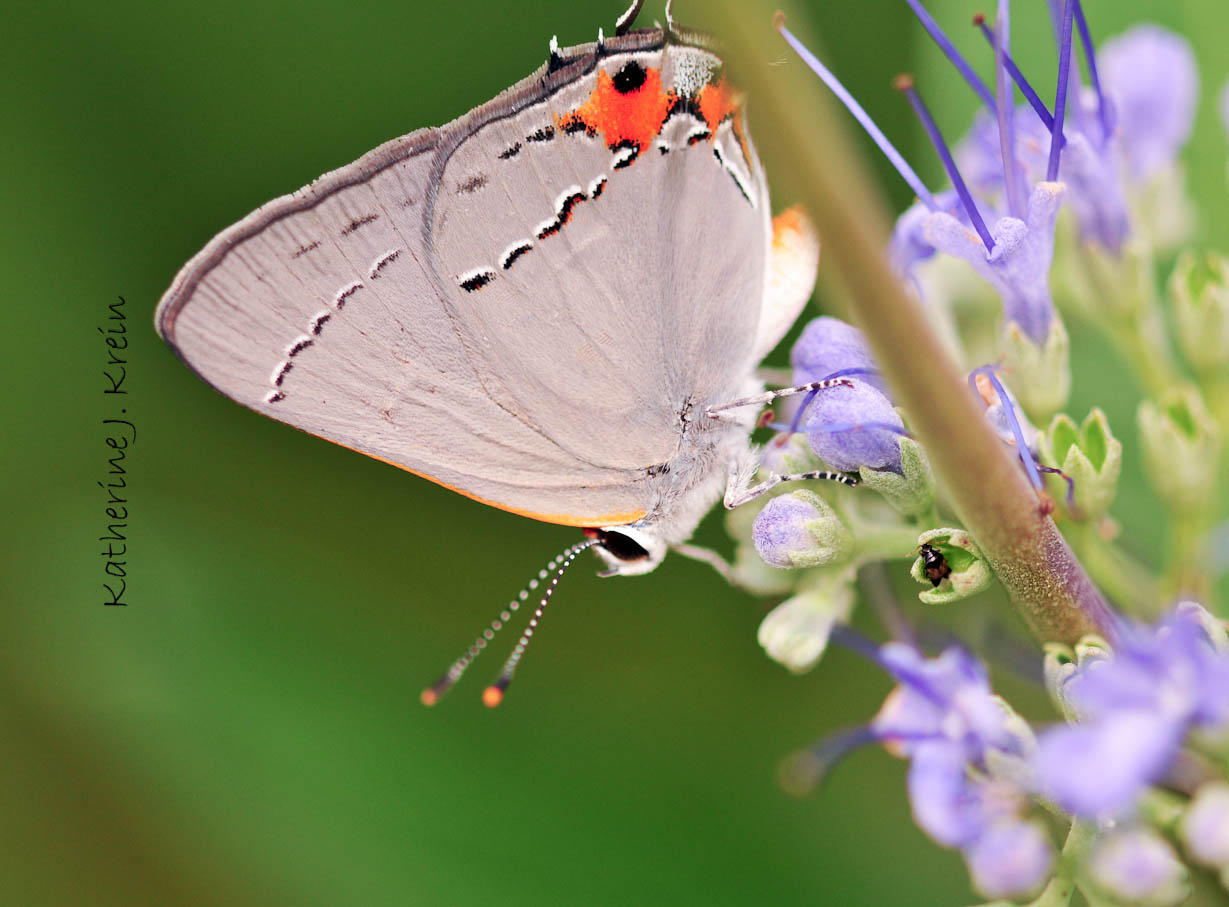
Here is a little grey hairstreak. This was my first picture with a new camera lens.
The plant is a blue mist shrub which was also a popular choice with all our visiting insects.
Here you get a better view of the orange and black eye spots.
This is the most common type of hairstreak.
Both the juniper and grey are very small.
These pictures make them look larger than they are.
My recent posts have focused on eye-spots and seeing faces in patterns.
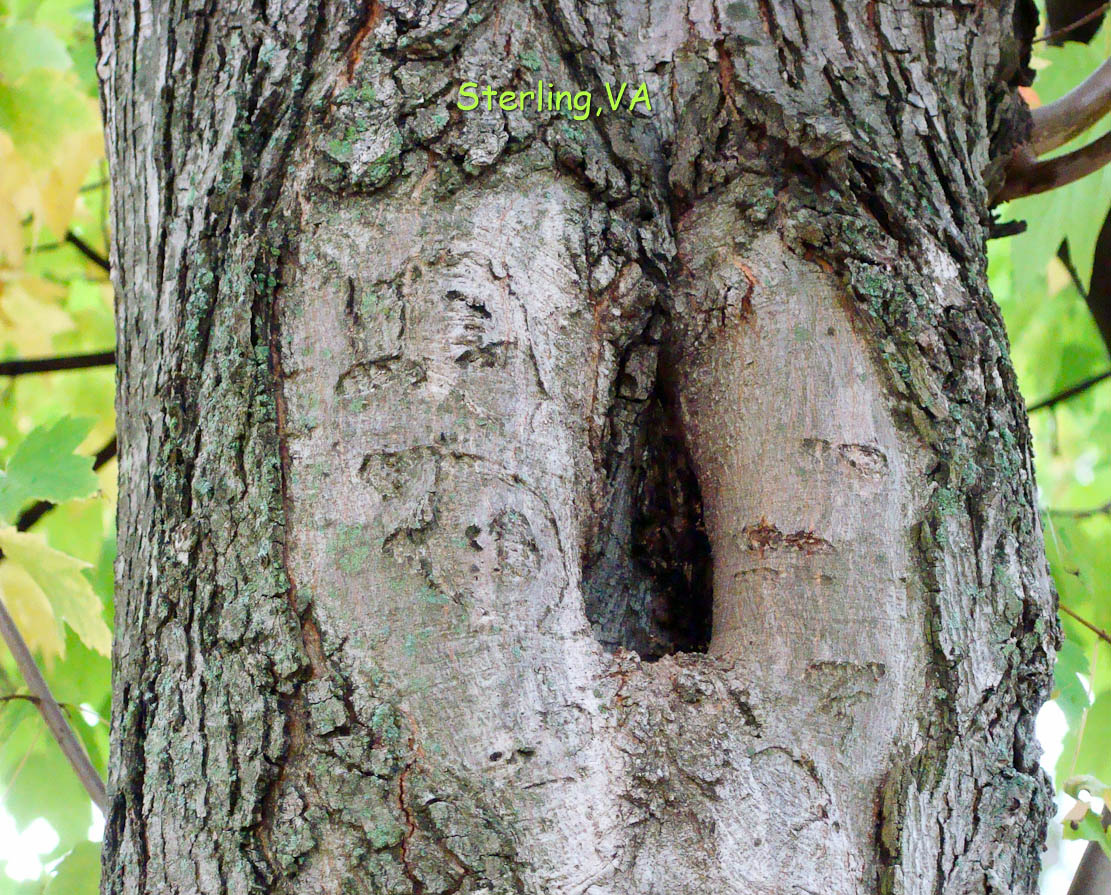
Here is a close-up of the silver maple tree that was sacrificed for our flower pond.
Can you see faces in the split bark?
I used to see two faces here, and today I saw something new.
I called them my tree people, and they were trapped within its trunk.
I like to think that when the tree was cut down their spirits were set free.








 movingforwardslowly