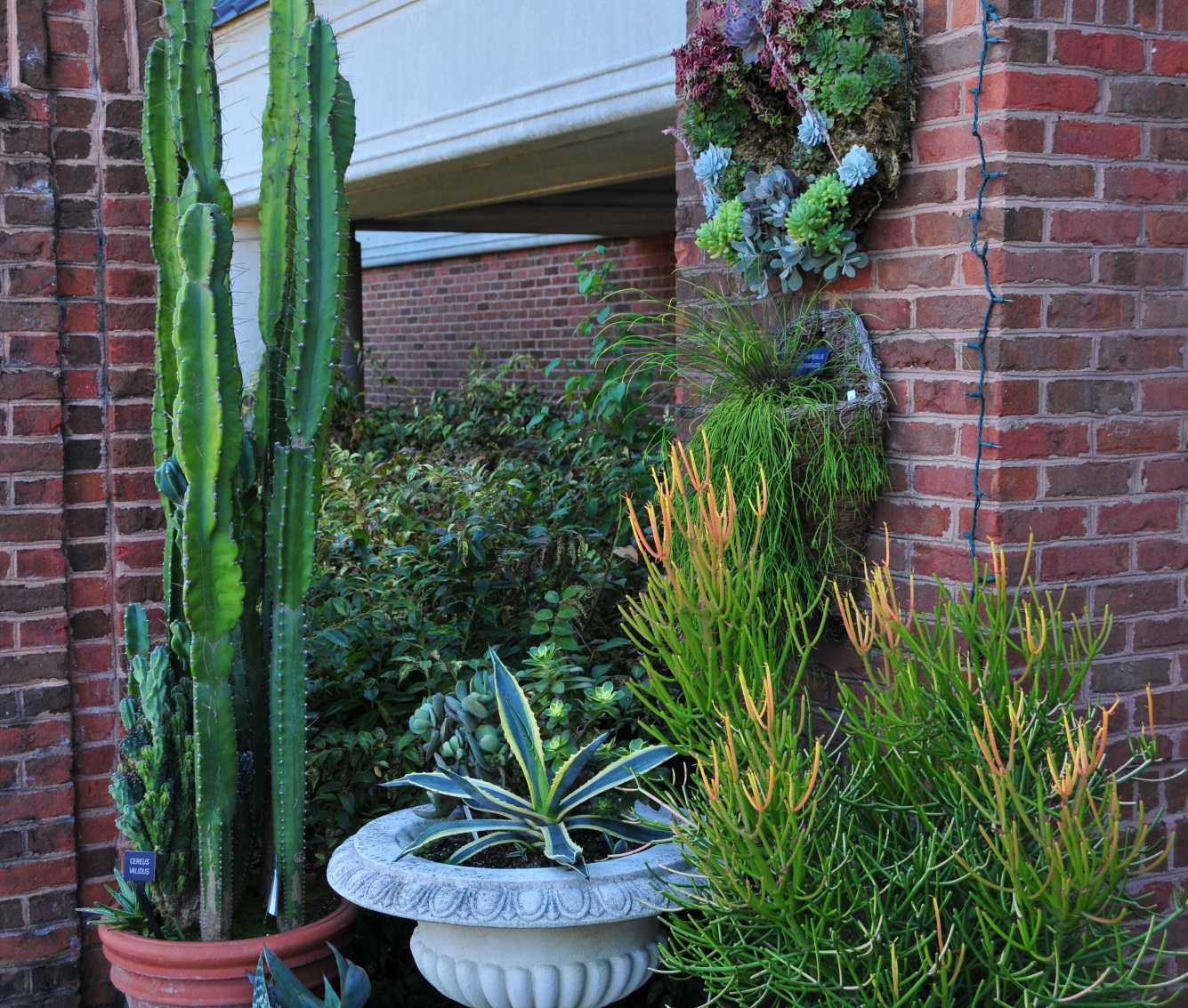
This picture was taken outside the door at Meadowlark Botanical Garden in Vienna, Va. I think the year was 2011 (Update: I went back to the original file. This picture was taken 10/12/2008)
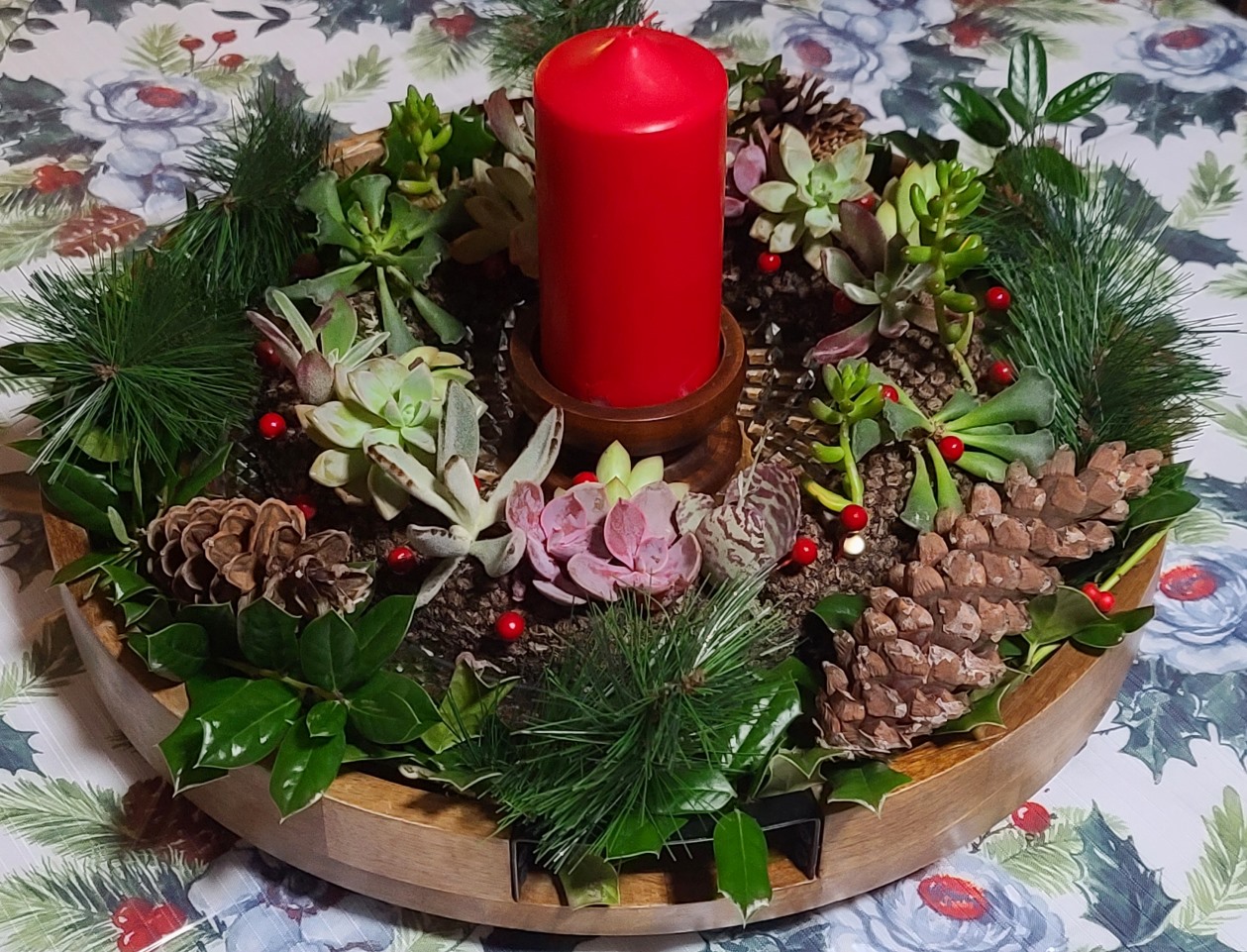
Here is the picture of the succulent wreath that was my inspiration for my 2023 holiday wreath. I found the picture today.
I still plan to improve on my own wreath-making. My second wreath will be more seasonally appropriate. Wish me luck.
2/11/24– Today I decided to include a picture of my 1st attempt at a succulent wreath. My next attempt will not be holiday themed.
"Sing and dance and scrapbook is all they know how to do."
This sounds wonderful to me.
This movie is upbeat and funny. "No troll left behind" is the king's motto.
Poppy is very pink and perky. She bubbles over with optimism.

To tell the truth, I have not watched it all closely with my full attention.
However, its music and songs have been drummed into the background of my brain.
Currently, my daughter does not want to watch anything else.
She shakes her head and sings at the top of her voice,
"Put your hair in the air!"
I would highly recommend this movie for family friendly entertainment.
I went looking for my old troll doll. It had green hair and never any clothes.
I played with trolls long ago. They are timeless.
This past year has been a year of emotional growth for me (yes, even at my advanced age.)
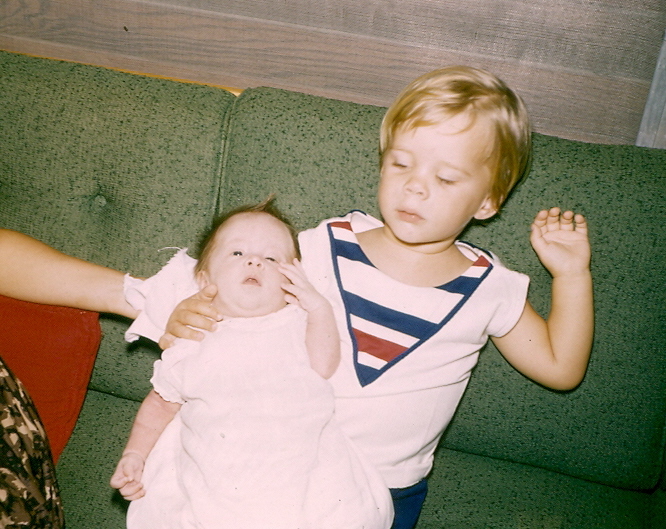
Here is a picture of me when I was anywhere from 1 to 3 months old. My sister here is 2 years older than me.
I had to laugh when I saw it in my father's slides. She does not look too happy to have a baby sister.
I amazingly sensed her emotion and put up protection to my face. (Smile)
To be fair to my sister, I can never remember her actually hitting me.
I always looked up to her and adored her.

I still play with the numbers during my idle time. I was doing that today while I was waiting for something.
I have previously written about the numbers 226 or 622 because these numbers connect me to my father.
What I have never mentioned is the fact that all three of his children had the same due date two years apart.(1955,1957,& 1959)
February 26th was the auspicious day. His first child, my brother, was born early, his second child, my sister, was born late.
His third child, me, was born right on the due date. If you go 9 months back in time you arrive at graduations.
I never could connect it to an important event in my parents' lives since their wedding anniversary was in early September.
Oh well, all of this is history now.

I am ready to move forward into 2024 with patience and resilience. My daughter's favorite radio station's motto is
"Always encouraging", so my daughter repeats this frequently...echoing the words.
This acts as my constant reminder that we should always give hope, confidence,and courage in our spoken words,
and we should follow through in all our actions.

The other day when I was at a store doing self check-out I was encountering a few problems. There was a young man
waiting patiently behind me at a respectful distance. I smiled at him and I thanked him for waiting patiently.
He smiled back and responded, "Take your time." His graciousness was greatly appreciated by me.
I would like to pay this forward and work on patience with everyone I encounter in my daily life,
and always be encouraging. This is my biggest goal for 2024.
I do plan to work on other goals...always being patient with myself.
In search of some unique jewelry gifts for my daughter,
I have been going through boxes of inherited trinkets and beads.
I rediscovered some crafting supplies I purchased long ago.
Re-using & re-designing is a earth friendly practice I like to employ.
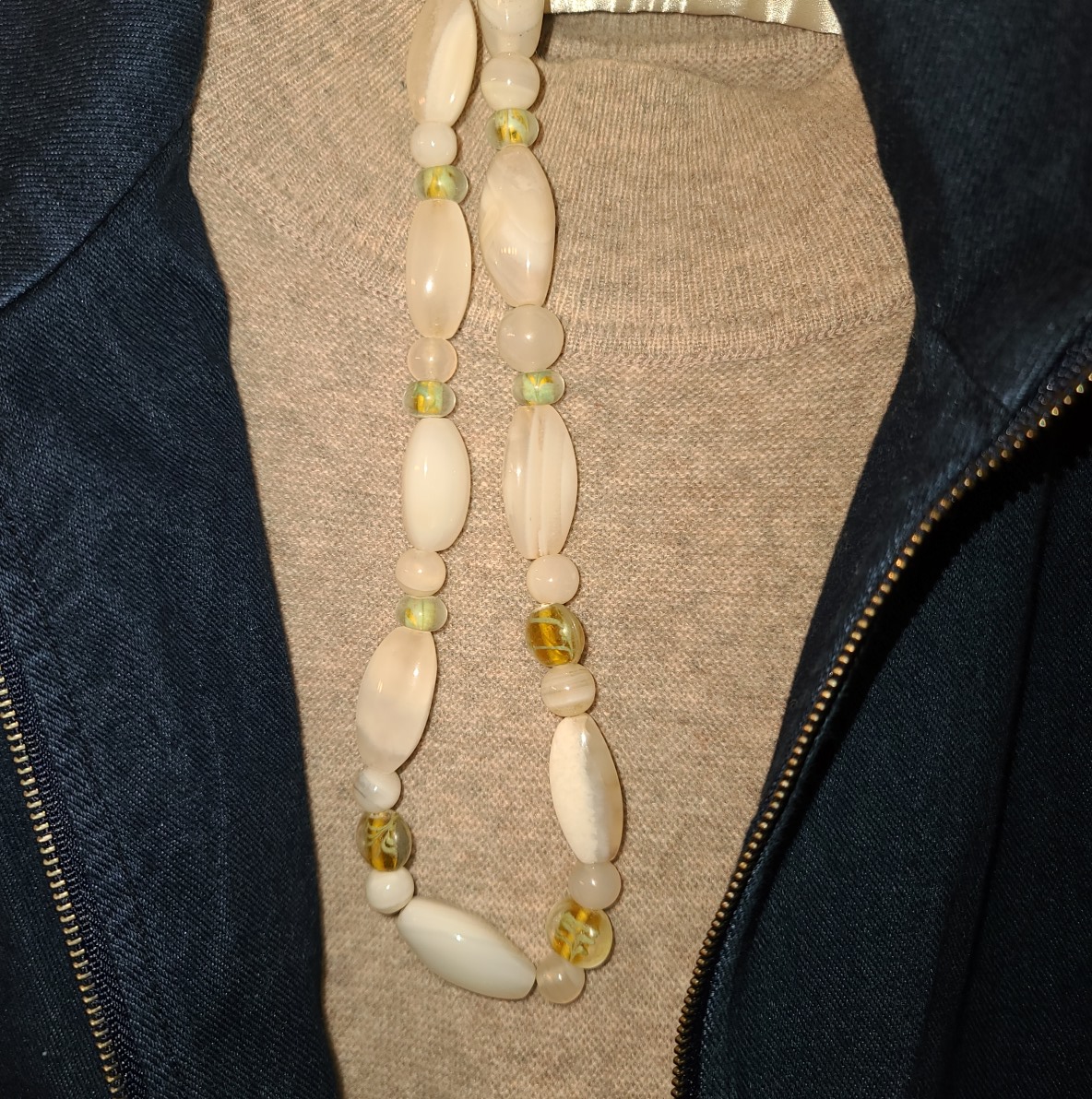
My mother had a very long white stone necklace with black fabric spacers.
It was ugly in its original design, not to mention the length made it too heavy.
Since I am a scavenger at heart,
I disassembled a part of it to re-use.
The necklace fasteners I found in my old crafting box became useful.
I chose the one that had an upbeat message: "Peace begins with a...Smile"
Possibly in the upcoming new year I will get back into jewelry crafting.
Below are a couple of pictures.
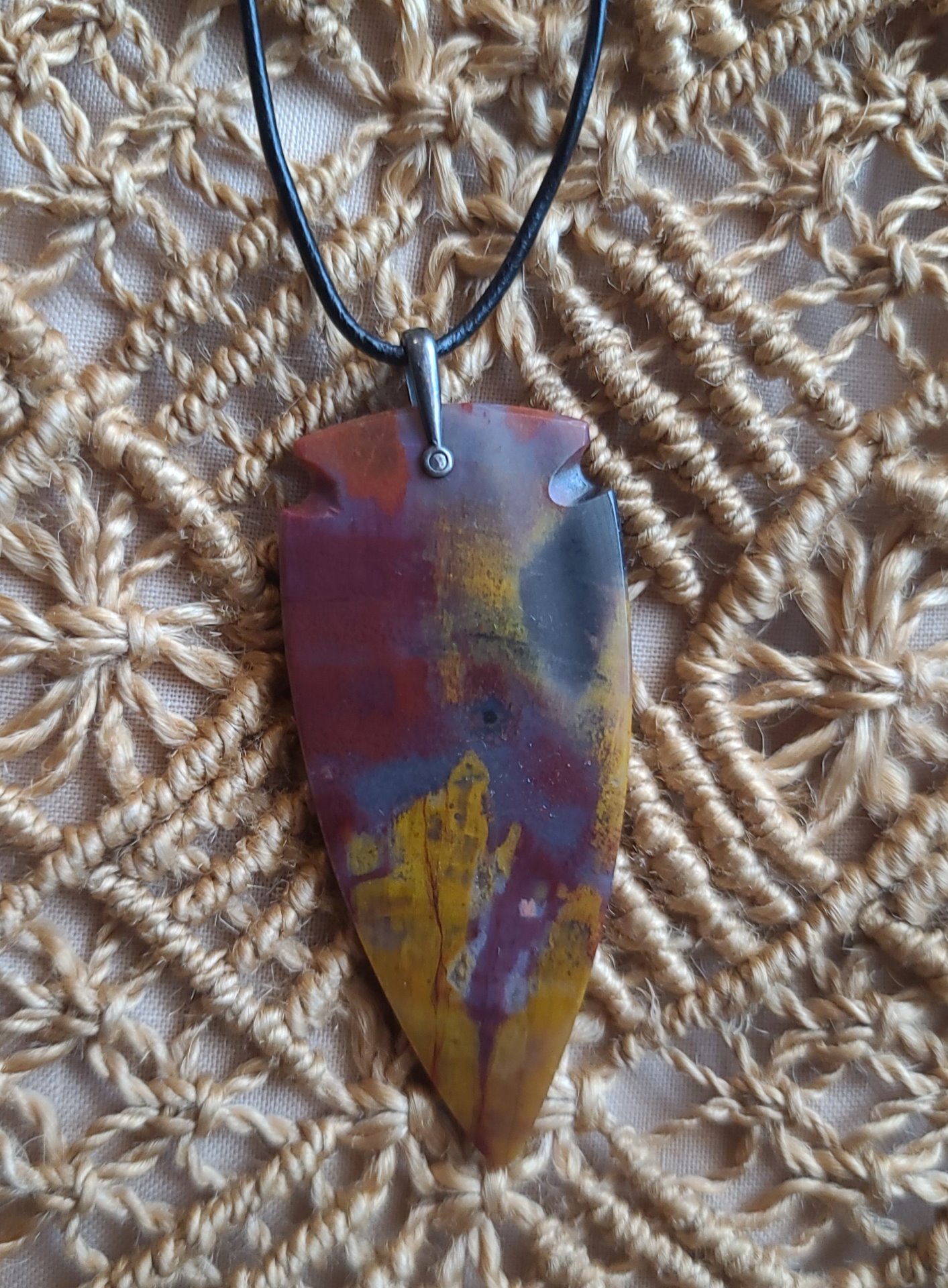
P.S. Another interesting find is an arrowhead charm.
I think it is made of petrified wood.
Today I have been thinking about our visual culture.
The images that have come into my mind are the ladybug, Ruby Gillman- The Teenage Kraken, and the Chinese Zodiac Dragon.
Out my window are the real life images of the birds that make our garden their home.
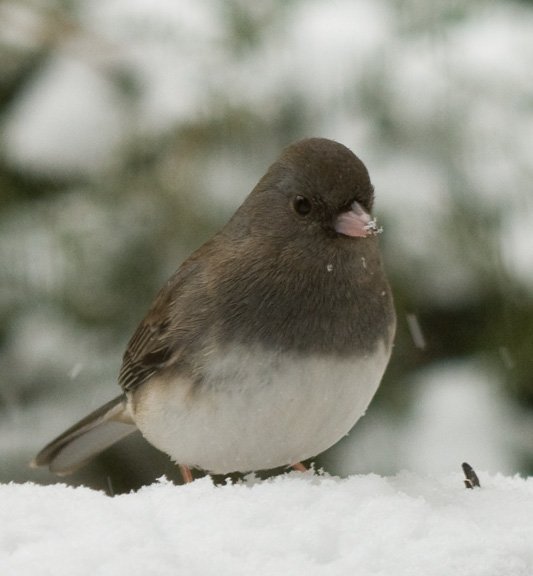
I have been seeing more dark-eyed juncos. These come and stay in our garden for the winter months.
Some call them the snow birds. The females and males are colored differently.
The picture here is a female dark eyed junco, and the males are a darker gray almost black.
I began seeing them around about a month or so ago.
Today there are several of them out around our bird feeders.
It is raining and they do not seem to care if it rains or not.
I think they prefer snow.
I am still hoping we will see some of the white stuff this winter.
Traditionally February is our snowiest month here in northern Virginia.
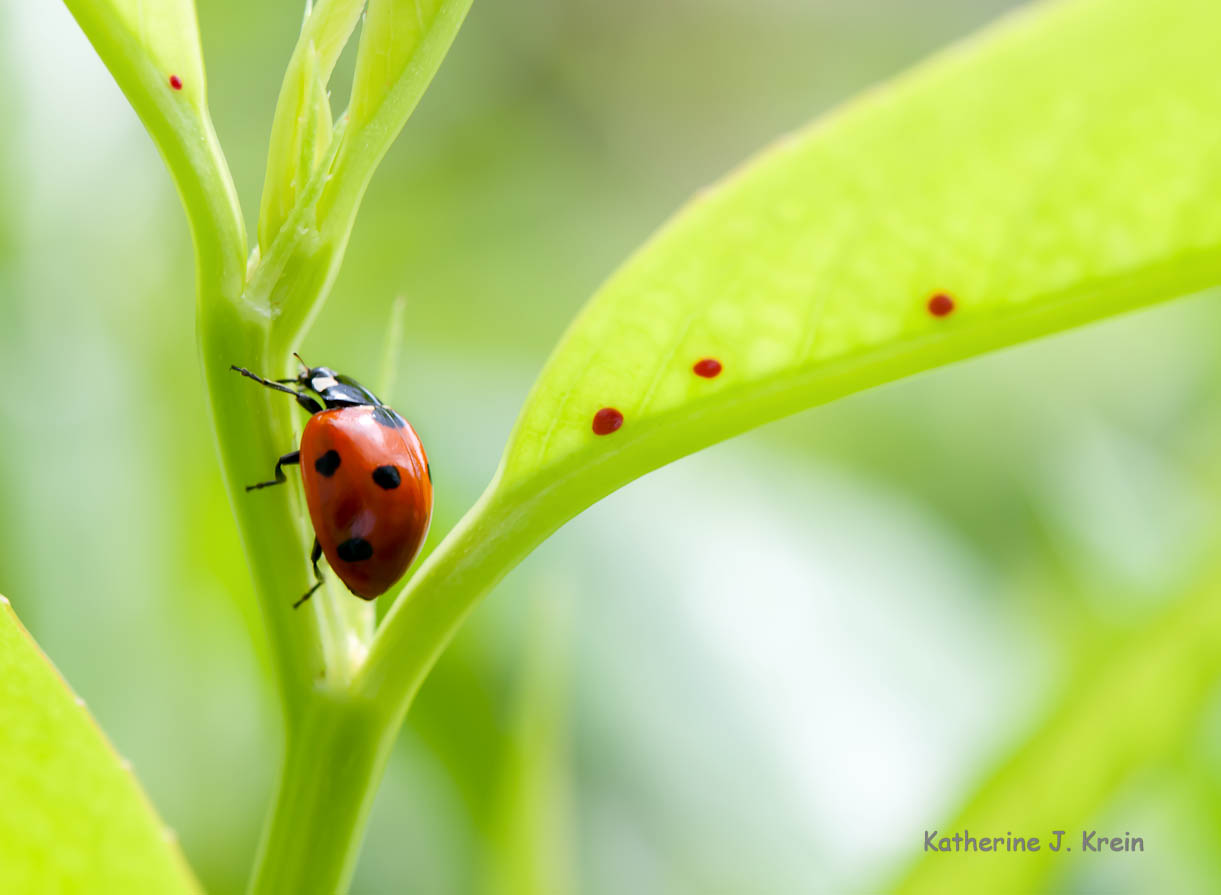
Here is a ladybug image from my garden long ago. Ladybugs or Ladybirds have been associated with the Virgin Mary by some people.
Yesterday morning was gray and dull as I looked out my kitchen window.
I almost thought I was in a dream when I spotted a tree in the yard diagonally behind us.
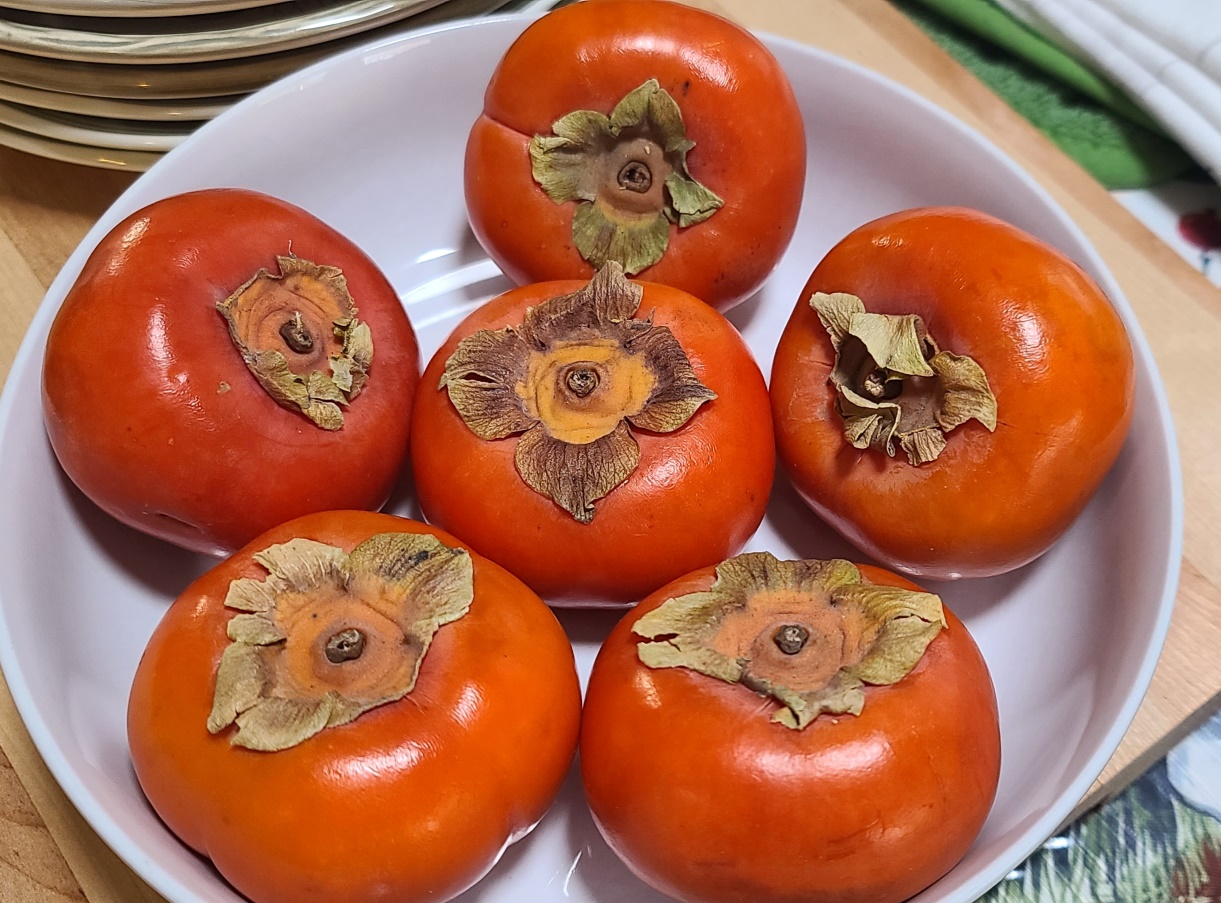
All the leaves were gone and it appeared to be covered with orange decorations.
They looked like tomatoes. This was when I had to pinch myself to make sure I was awake.
I remember this tree being planted long ago when it was young and small.
I think the Asian family that planted it has since moved away.
The tree is the perfect screen because it is no longer small, and yet not too tall.
It has spread wide across our corner view.
I have never in all the years since it was planted noticed it having orange decorations.
I wondered are these pods or are they fruit. I was unfamiliar with the tree’s name.
I quickly searched the internet, and discovered that it must be a Persimmon tree.
I don’t know the people that live there now.
It does not appear they have any interest in its fruit since it is mid-to late December.
I had a full day of errands ahead of me so I went on about my business.
I made a mental note to see if I could find a store that sells this fruit.
My early morning sighting was very fortuitous.
I knew a store that might sell this fruit, and it turned out that my search for it sent me outside my normal path, and this particular shopping center was right where I needed to be to accomplish my most important task for the day.
I found my persimmons (and they do look similar to tomatoes.)
I have since read a little about this fruit, and it made me pull out and clean my dehydrator.
I will update later with what I decided to do with these.
If I get the courage, I will drive around the neighborhood to see who lives in that house now.
It would be a shame to let all that fruit on their tree go to waste.
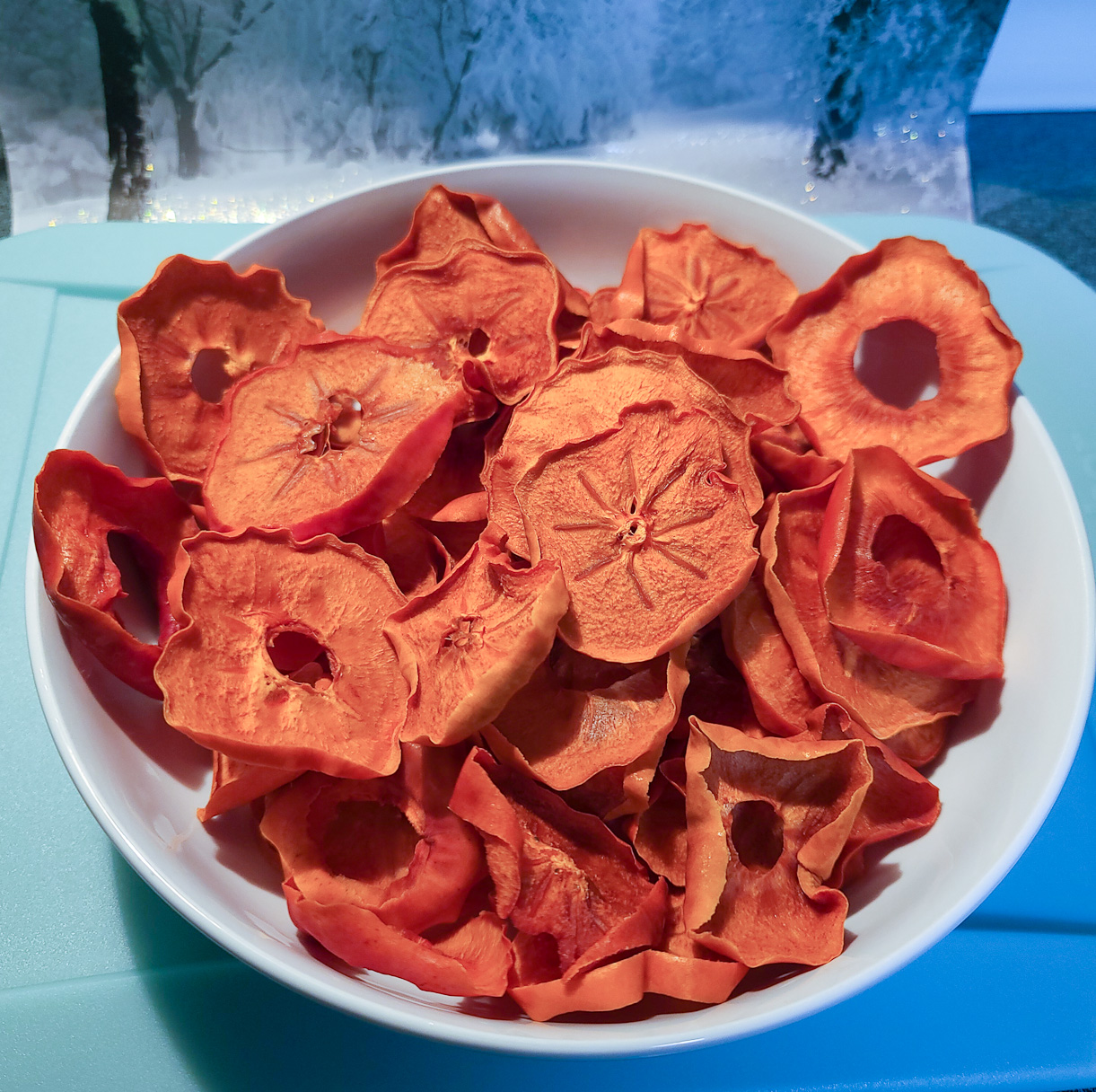
12/22/23 update: I sliced the persimmons and dehydrated them. I saved a few from the drying process to use in baking. I love the flavors & spices of gingerbread,so I looked at several different recipes. I could not find one that completely satisfied what I wanted to try, so I improvised.
I ended up going back to my old traditional Pillsbury cookbook, and found a classic gingerbread recipe. I then improvised by adding a puree of ripe persimmon and pecan halves (about 1 cup.) I decorated with some dried slices. Here are a couple of pictures.
The cake should be good with a little eggnog ice cream and gingerbread flavored coffee. If you don't like gingerbread, another option is a big juicy gourmet pear half filled with a dollop of cottage cheese and topped off with a dried persimmon slice. Sorry no picture of this. This might be my husband's option.
As I prepare my menu and table ideas for our upcoming holiday dinner, I have been thinking about my mother and all the table arrangements she made over the years. Above is just one example where a picture was taken of the table before a dinner party. For our holiday dinners my mother would go out into our yard and clip evergreen branches and holly branches. She would add to this a few ornaments or store bought roses. As I remembered these details, I decided to make a table arrangement this year.
Long ago I had seen a succulent wreath made by a local botanical garden. I remember being impressed and thinking I would like to try and make one like it. This time of year is not ideal for such an idea, however, when I saw a sphagnum moss wreath for sale, I became interested in the idea again. I was able to get succulent clipping sent to me from an online source. They were not like I expected them to be, so I am unsure of how successful the growing process will be. The looks of the wreath are not bad, and I will try again next year. I see it as a learning process and I am a beginner.
I decided that in order to be a holiday dinner arrangement I would need to add more seasonal items, so I went out into my yard to see what I could find. I was surprised and delighted to see that the holly bush in our front yard (that I had never been able to successfully eradicate) had grown tall because of my neglect, and was full of red berries!
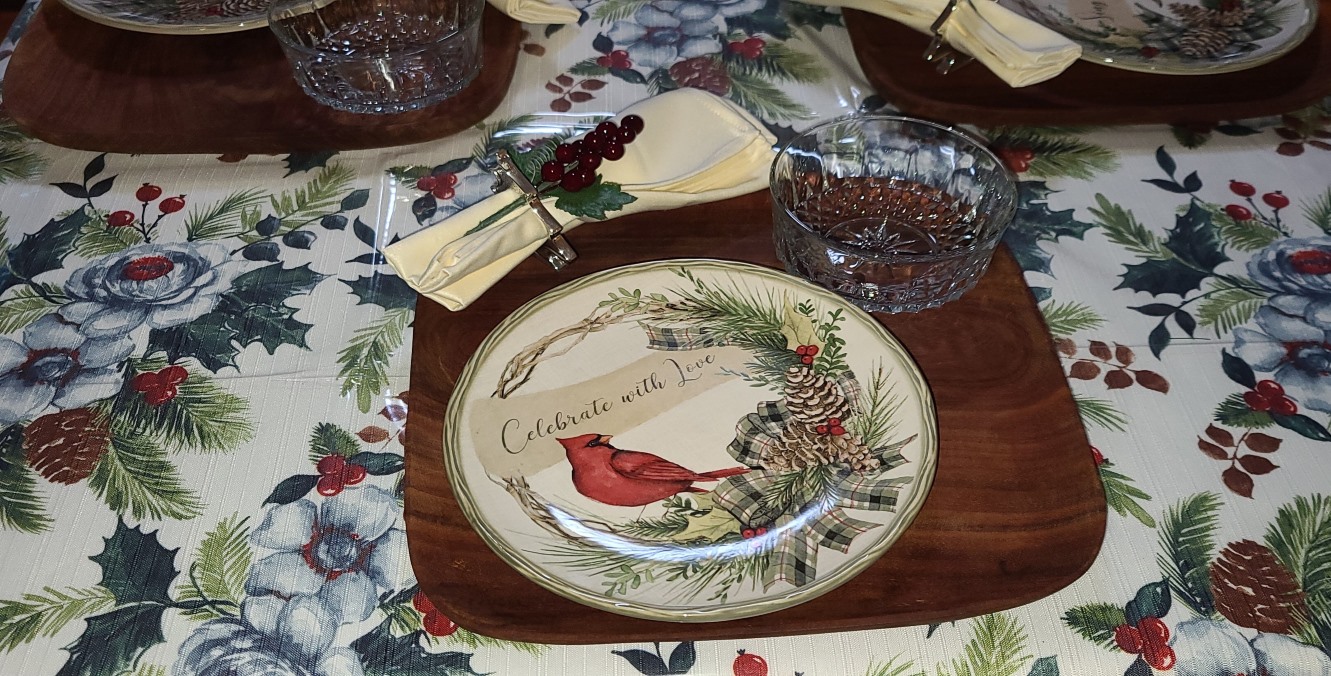
After completing this I began to think about how I would set the table. I had inherited wooden plates which will work well as a base for more decorative holiday plates. I am still working on the table at this point. Here is a table setting idea. I will continue to work on more ideas. Hopefully when the table is all set for our dinner, I will update with a better picture. I just learned this week that “tablescaping” is the word used these days for making centerpieces and coordinating dinnerware. There are a lot of great ideas out on the internet.
P.S. I have a clear vinyl tablecloth protector over the cloth. This should be removed before a formal dinner, however with my family, I might keep it on.
Update 12/21/23 — The succulents are growing, and it receives bright early morning sun which makes the wreath have a lovely glow!
The clouds on Friday were spectacular.
There were fish and angels and flowers galore.
A long feathery spine spanned the horizon.It was alive and free.
It seemed like a coordinated effort between the wind and elements above.
They were putting on quite a show for all to see.
It came to my attention at lunch time when I ventured outside.
When it was time to leave for the day the clouds had been tamed.
Today is Sunday and it is raining outside my windows.
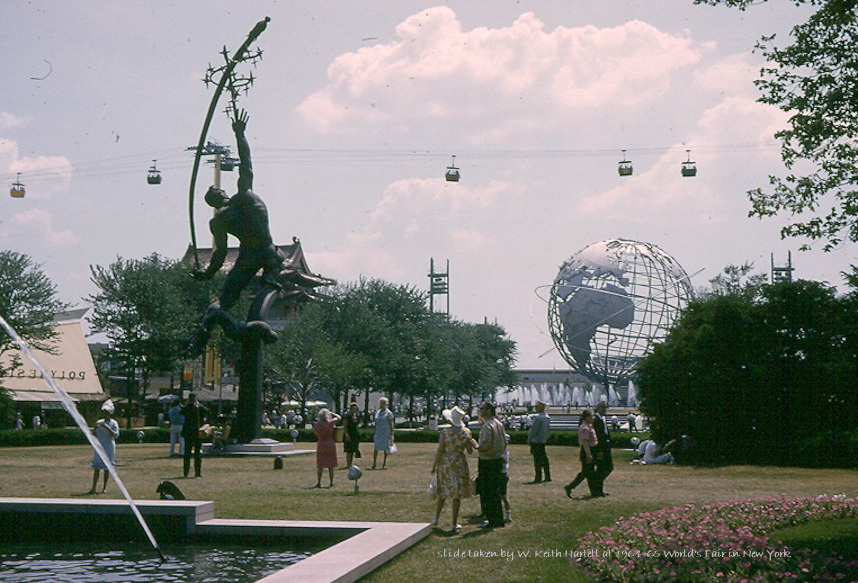
Here is another slide taken by my father, W. Keith Hartell at the New York World’s Fair. The large bronze statue is called the Rocket Thrower, and you can see the Unisphere in the background under the aerial tramway.
Look at the fashion. Most ladies are wearing dresses in this picture. This was normal for this time period.
My last post on my tree of thoughts featured a picture of my great grandmother named Hadassah (aka Hattie.) I found her picture in some scans of my father’s old slides. I had gone through his slides and selected many to scan and copy onto a compact disc so he could view them as a slideshow. He was beginning to suffer from dementia, and I wanted him to remember his family as long as he could. I did this back in the fall of 2007. He passed away in June of 2013. I made other CDs for the rest of my family.
We had gone to the 1964-1965 New York World’s Fair. I am not sure which year we attended. I had scanned slides of the Unisphere, the Rocket Thrower (which was a large bronze statue), and this picture which features my mother, brother, sister and myself. Behind us you can see part of the Chrysler exhibit featuring a pentagram inside a pentagon. They called this logo a Pentastar. Their marketing under this new logo was extremely successful.
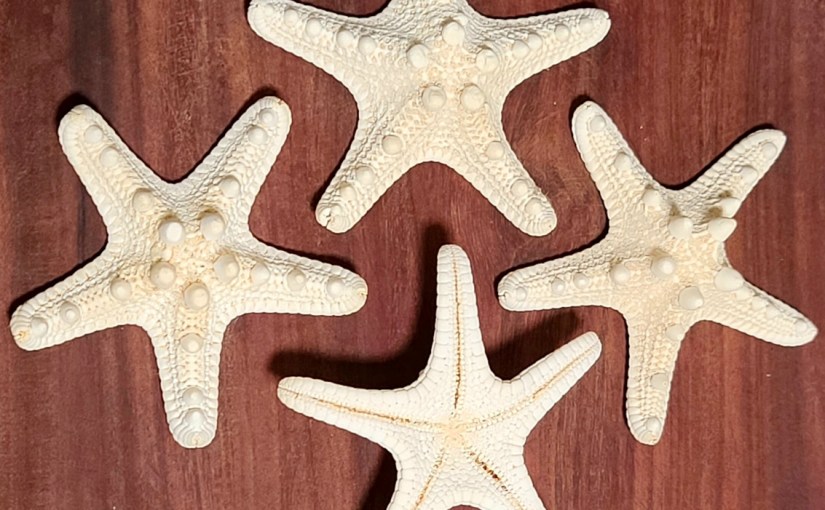
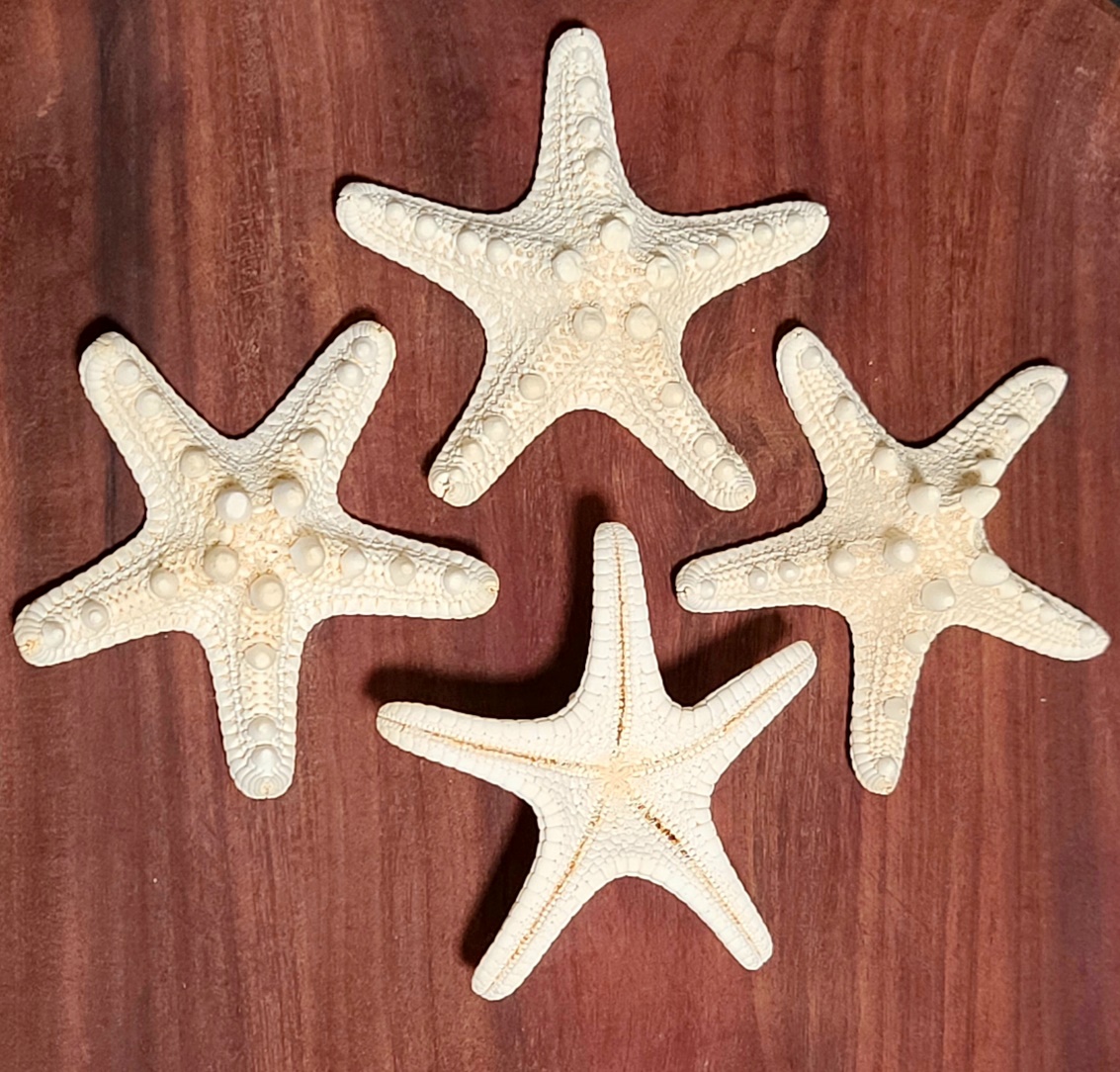
The Pentastar reminded me of a starfish. A five pointed star is everywhere in nature. Here is another example of humans profiting off of nature’s design. It happens all the time. And nature copies itself repeatedly. Written history claims that Pythagoras brought the five pointed star to the prominent position it holds today.
The starfish you see here in this picture were inherited from my mother-in-law. I took this picture with my phone today. I wanted to show how when you turn the starfish over you can see the Chrysler star very clearly, and the only difference is the background is another star rather than a pentagon.
Another example of a pentagram in nature is an apple. If you cut an apple in half along its equator then the patterns of the seeds is revealed… a perfect five-pointed star or pentagram.
The pentagram has been adopted by many different groups and given many different meaning.









 movingforwardslowly