Milkweed and Math

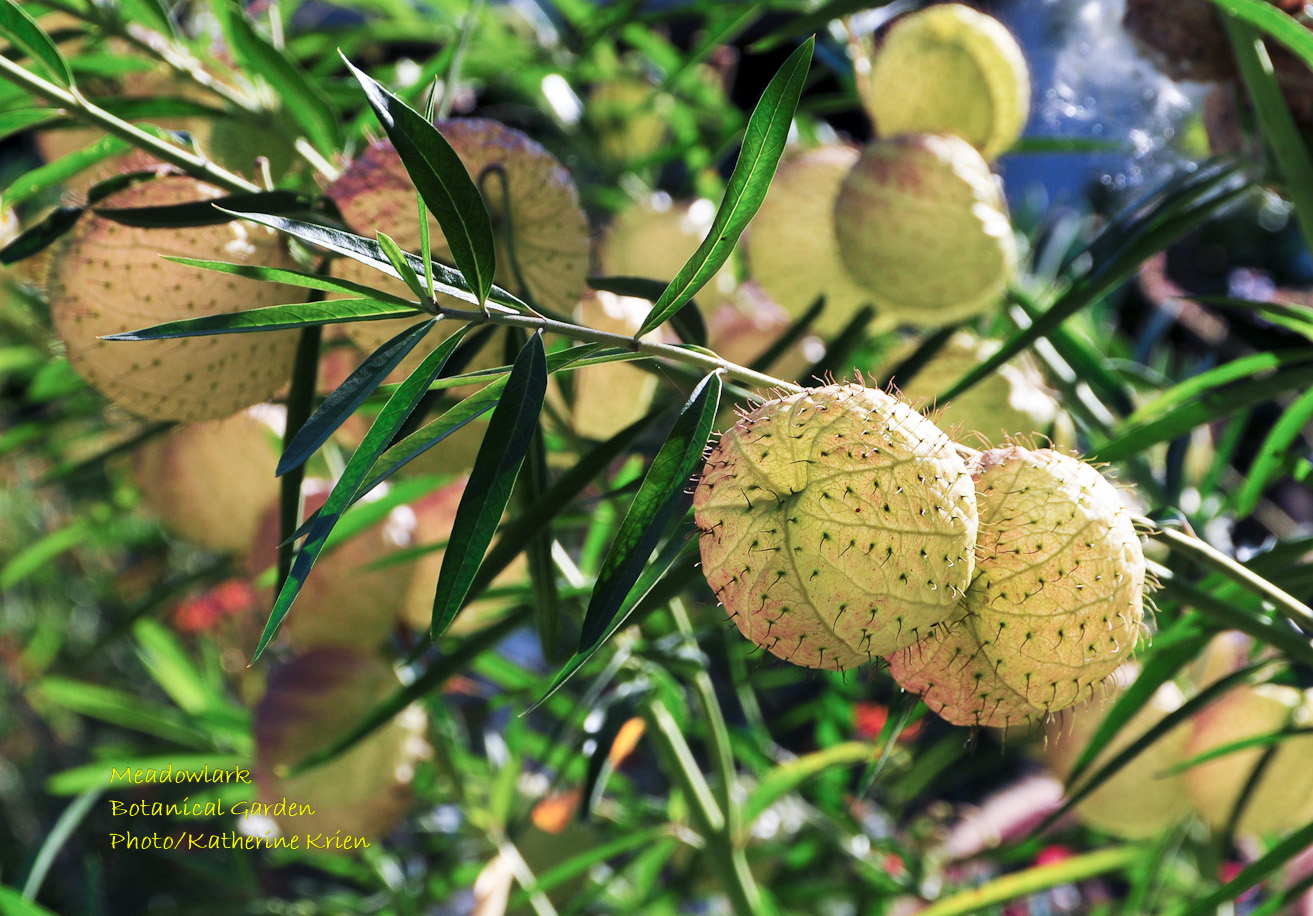
Hairy Balls milkweed aka Gomphocarpus physocarpus

I ran across this picture the other day when I was looking at fall pictures I had taken in the past. I did not know what it was. I don’t think I had ever learned its name. The search began for its name. I remembered it was a tall plant about 6 ft. tall. It was located near several short well-known milkweed plants. I still did not make the connection because I had only ever had swamp milkweed in my own garden. I had no idea that there was a milkweed species called Hairy Balls. I learned this yesterday when I finally figured out what this plant was. I knew I recognized the thin lance-like leaves of the swamp milkweed I grew in the past, but still I did not make the connection until I saw it featured on a garden blog. When I looked it up I was surprised to find that there is a math theorem called Hairy Ball theorem. I had to laugh.

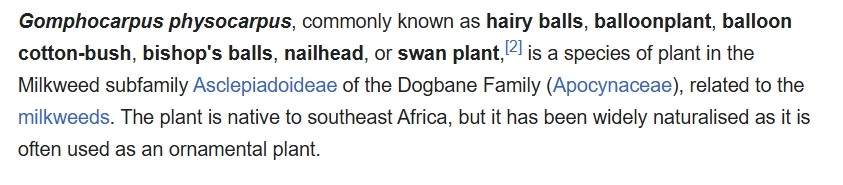
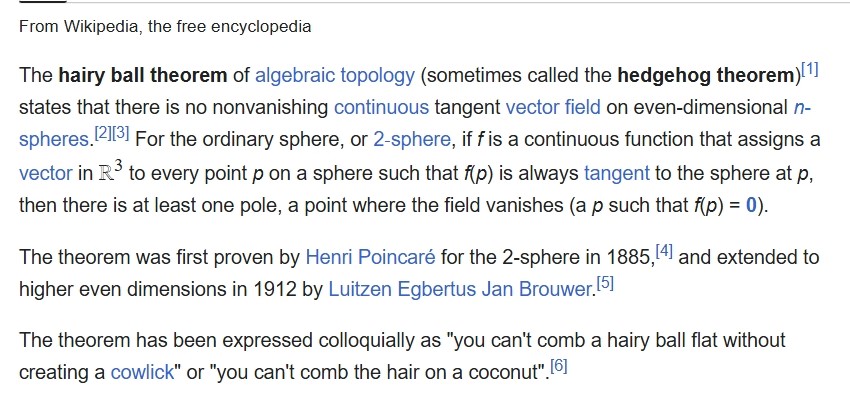
screenshot taken from wikipedia

(I was intrigued by the use of “carpus” since I related it to bones. It turns out when talking about plants it means “fruit”. )

I have no idea what this means in math. I am not schooled in algebraic topology nor am I a math genius, so it means nothing to me. However, I still find it interesting that people’s lives are devoted to studying such things. I am more interested in the beauty of plants that are tangible.

Please go out and vote tomorrow! 

Bless, Blessed, and Blessings

I have several thoughts on my mind this Sunday. I think I posted about the cardinal flower yesterday because Pope Francis has been in the news.
My thoughts and prayers are with him.

Last week I received my Virginia Real ID. This is my birthday month, and it was time to renew my driver's license, so since the law has changed regarding this, I upgraded to a real ID. I am good now for eight years before the need will arise again.

My inside joke is that I will be blessed next week since adding one year to my age will make my age 'code' for blessed. I see this word written on clothes, garden stones, garden fairies, etc. Making it a joke is one way to lessen the thought of 'older age' or 'old age'. I don't feel old.

This hypertufa planter I made 14 years ago is still standing strong.
The inside needs to be redesigned with new plant material and fun features.
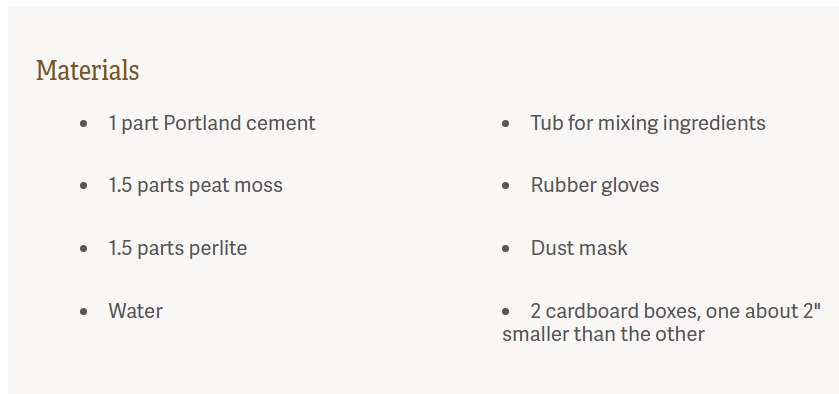
I found the recipe online at gardeners.com. Here is a picture.
You can find directions at the above mentioned website. I did not follow these exact directions when I made mine years ago. If I remember correctly I found the directions in a book or magazine. They were not complete directions, so I had to improvise with how to make the form. I used a big old picnic basket that I lined with a super-sized, plastic, heavy duty garden refuse bag. I used gloves to slap the mixture on the sides. It was much harder to make than I expected. Once you start the process, you have to finish it. I was very blessed that it turned out as well as it did. The only reason I made one is because I kept seeing them at an upscale garden center, and I really wanted one, though their price was more than I could justify or felt comfortable paying. 

Since I will be blessed this year (ha!), I should redesign the planter with some new mini or dwarf plantings. It currently holds a dwarf azalea, and some dwarf hostas named "Mouse Ears." These are drought tolerant. I still have the faded fairy with the word "Bless" on it. I will look for more garden decor with the words: bless, blessed, or blessing. Also I need to look for an automatic way to water it.

Looking ahead with plans to improve some things is a good way to feel positive right now.


Can You Guess the Correct Number of Gumballs in this Machine?

I was introduced to the “gumball problem” when I read about a mall contest that offered a prize to the person that could most accurately guess the correct number of gumballs in a giant machine. This image is AI generated.
There is a statistical theorem called the Central Limit Theorem that addresses this problem. If you want to get technical, you can research this theorem. I looked to Microsoft's co-pilot to explain it in simple terms. I wanted to make it understandable to school children with short attention spans.
Ask Microsoft co-pilot if you want to dive into another math challenge.
If you want the most accurate average, it is best to have a large number of random educated guesses. The more guesses you have, the more likely you are to arrive at the correct answer.

Also, having a diverse group with a range of perspectives can lead to a better average that hits or gets closest to the correct number.
Here is my editorial opinion: I think the "wisdom of crowds" can be used in many ways. We all want to be right or think we have the best answer, and the best way of arriving at it. However, I think it would be far more interesting to see many different methods of trying to guess the correct answer. This way you can learn something about how different people think about different problems, and the many methods you might try. Keep in mind the gumballs have to stay in the machine. You cannot remove any during the contest, or else the number will change. 


From Year to Year

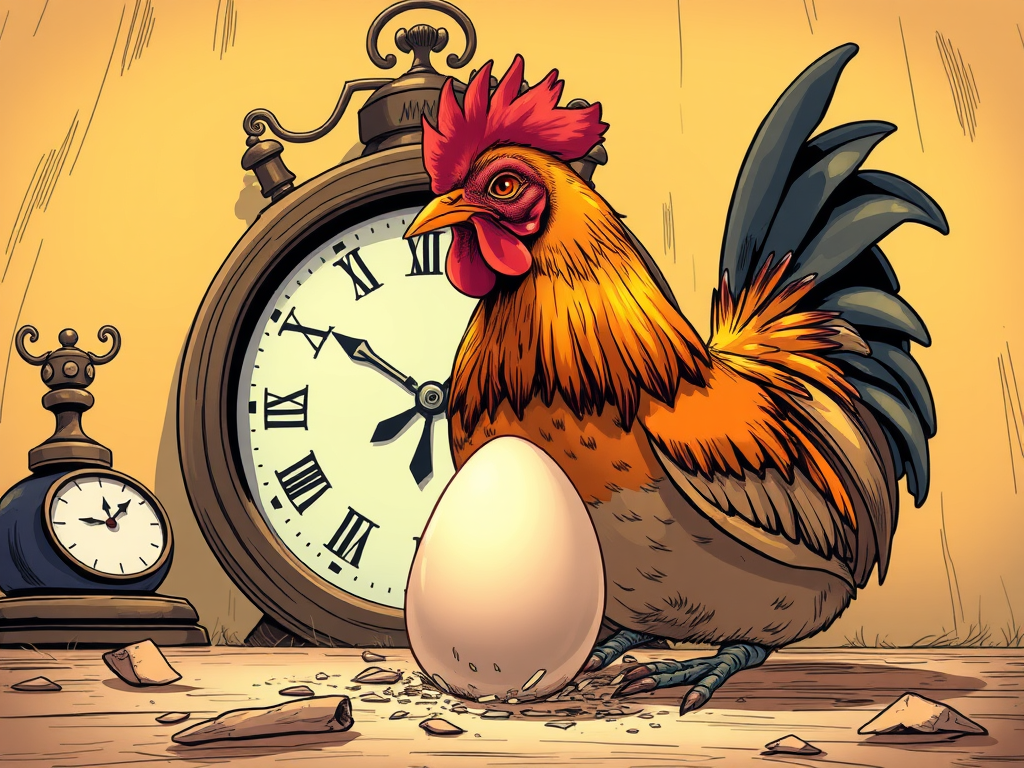
Which comes first? The chicken or the egg. Does it matter?
Soon 2024 will be left behind in an archive older than time itself.
The year becomes new again in 2025.
There is a beginning and an end to every new year.
The ever-moving hand of time turns the dial of this transformation.

Those of us who live within time's framework must follow along.
What would it take to escape this framework?
Could one enter into a melting pot of the past, present, and the future existing all at once? Could one move freely from one to the other, and to the other? Would you turn into a chameleon in the process?

Keeping track of the chicken and the egg would be nearly impossible.
Does it really matter who came first?
Side note: I was inspired after reading some Ogden Nash poems, and reading about Puff, the Magic Dragon. The year of the dragon is coming to an end soon.
The new year requires some introspection before it begins.


The Numbers Do Not Always Tell the Real Story.

Update: If you have followed my story over the years, you will know that I have been obsessed with numbers for a long time. Definitely since both my parents died in the year 2013.

After all this time I still do not know the full reason how and why it all got started. I can tell you that it has made a huge imprint in my life. Sometimes I feel a little smarter, and at other times I feel like I was grossly mislead.

Today the world feels completely different than it was when I began this journey. The world appears to have fallen off its track. Maybe, the world has always been this way. Perhaps this number journey forced me to open my eyes.

People on the ground who follow the news, the stock market, and any data set, can tell you that the numbers do not always tell you the reality of life on the ground, on the front lines, and in the trenches. Real life is a lot messier than the numbers can show. Many truths can hide in this mess.

People like to throw numbers around to justify their decisions, and to make it look like they are making the correct policy decisions. The tricky part is that the numbers tell different stories to different people. And unfortunately, those with enough power can manipulate the numbers to their advantage. Sometimes the data set is so small (compared to the whole) that it is irrelevant in the big picture.

When my life felt like it was spinning out of control, I was made to think that I could use the numbers to control my world. What I discovered was that the numbers controlled me, but only to the degree that I allowed. If I let the numbers fall into the background of my life, I have much more control of it, and much more control of my happiness.

There is power in the idea of “mind over matter.” You can use this power to create motivation. My actions can take matter and mold it into something useful and hopefully something beneficial for others.

Data takes only a snapshot of one moment in time. Life on the ground, on the front lines, and in the trenches cannot be fully defined in a snapshot. If you look only at data sets, you can be grossly mislead.