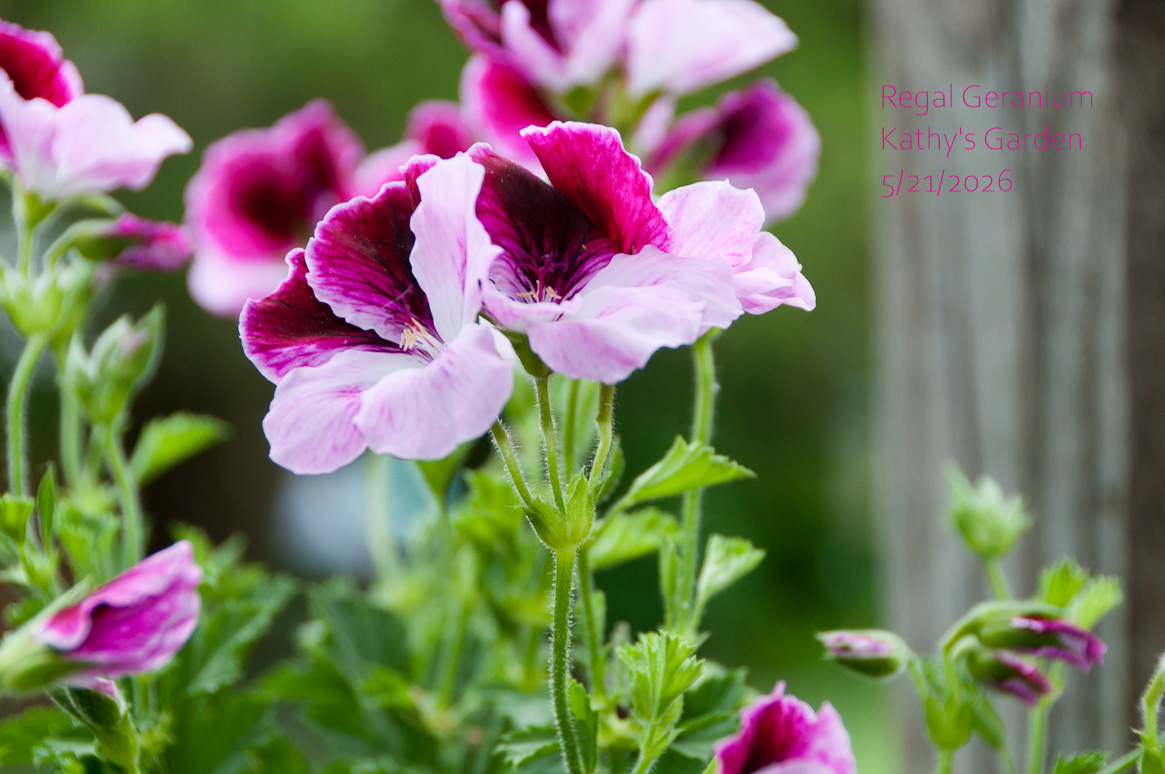
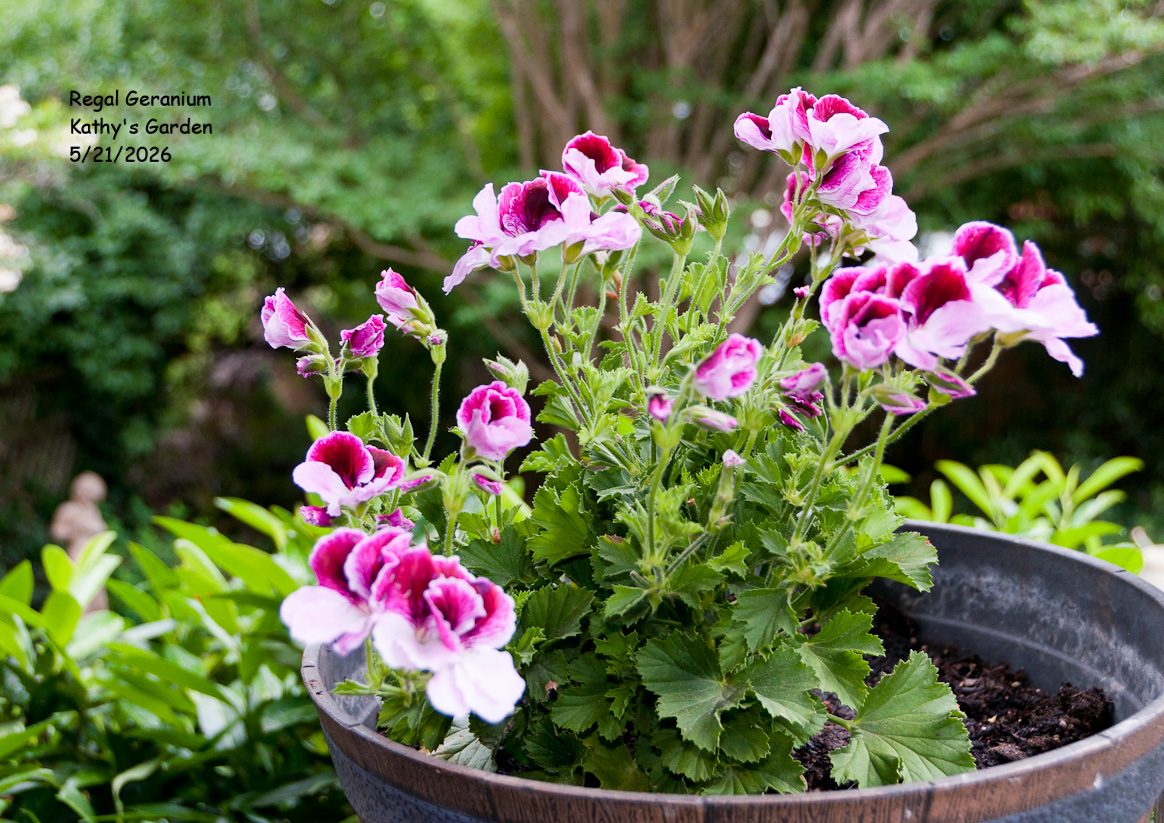
Whenever it has been possible I have been working at garden improvement. I have been mostly focused on pruning and working on growing a few vegetables. The gorgeous Regal Geranium pictured above was an impulse buy. It is proving its worth these days. I have it potted on our deck and I can see it from my kitchen window.
We have a long weekend coming up after tomorrow. I plan to spend more time getting the garden in order. Hopefully, the weather cooperates, though we do need the rain, and I was so happy to hear the steady rain last night. We even had some lightning last night which was a blessing because it fixes nitrogen and will help the beans I planted the other day.
“Lightning drives atmospheric nitrogen fixation by using its immense heat and energy to split tightly-bonded atmospheric nitrogen molecules. These separated atoms instantly bond with oxygen to form nitrogen oxides. Rain then washes these compounds into the soil as nitrates, acting as a natural, plant-ready fertilizer. “
I don’t have much more to say today. However, I was inspired to post a picture of the beautiful geranium on our deck.
I decided to show the second picture I took. I don’t like it as well as the top picture, however, it gives you a better perspective of this annual.
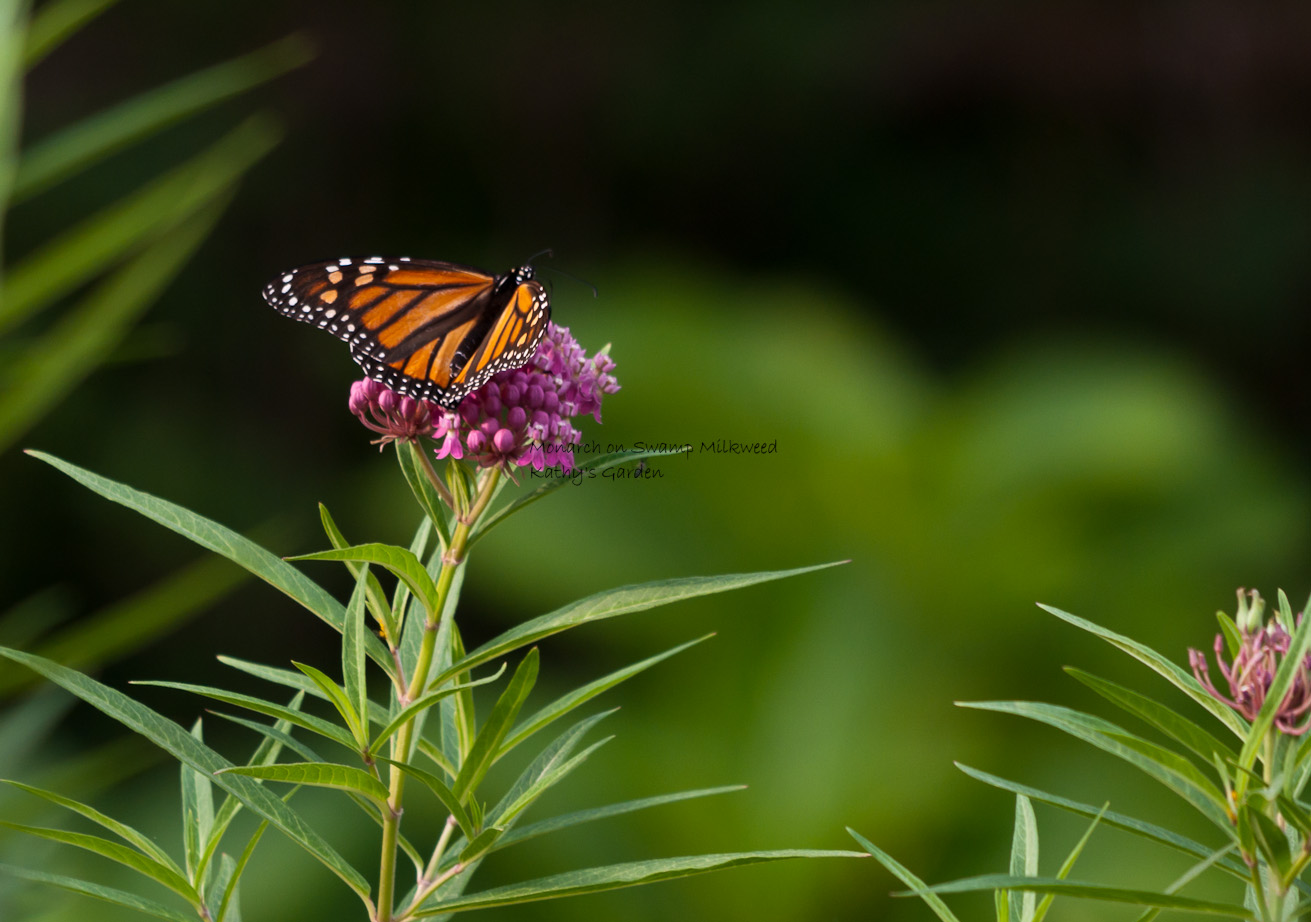
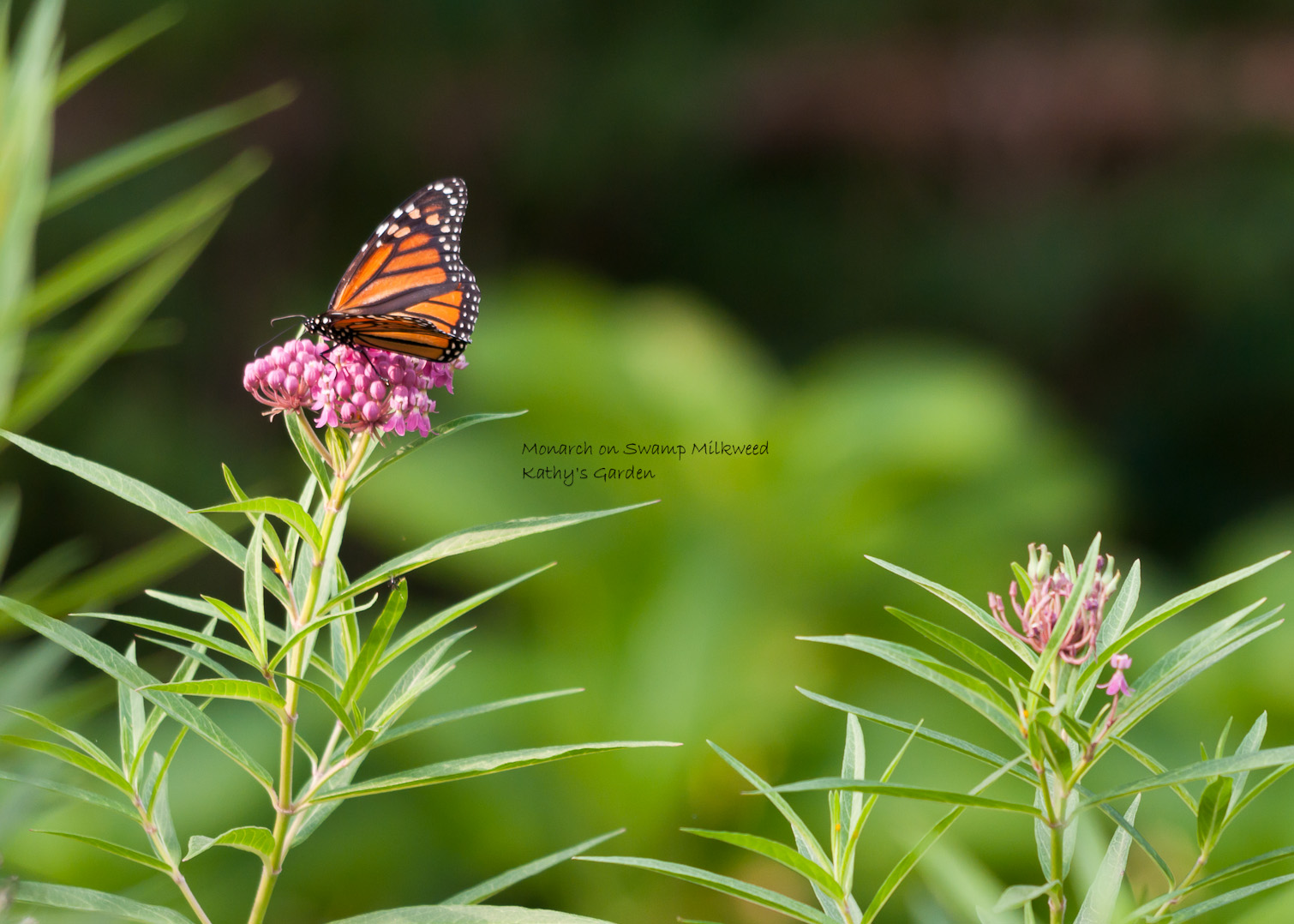
These pictures posted above are old pictures from my garden when I grew Swamp Milkweed. They are a host plant for the Monarch Butterfly.
At my school there are several common milkweed plants by the school entrances closest to the staff parking lot. The common milkweed (Asclepias syriaca) looks different than Swamp Milkweed (Aslepias incarnata). Both are host plants for the Monarch butterfly. Today as I was leaving school for the day I was surprised to see a Monarch butterfly on one of these common milkweed plants. It seemed odd to me especially since just the other day I posted about Monarch Pass. I cannot remember seeing Monarch butterflies in Virginia this early in the season. In my home garden I don’t normally begin to see them until the middle of summer. I pulled out my cell phone to take a picture but I could not get one before it flew away.
Today I wondered if Monarch butterflies are seen around Monarch Pass, Colorado. I also wondered how high the monarchs can fly. I read that they can be seen around the Monarch Pass area from early May through October, though this is not how this location got its name. As to how high they can fly, I read they “typically migrate at altitudes of 800 to 1,200 feet.” They are capable of soaring much highter. I don’t know how accurate this is.
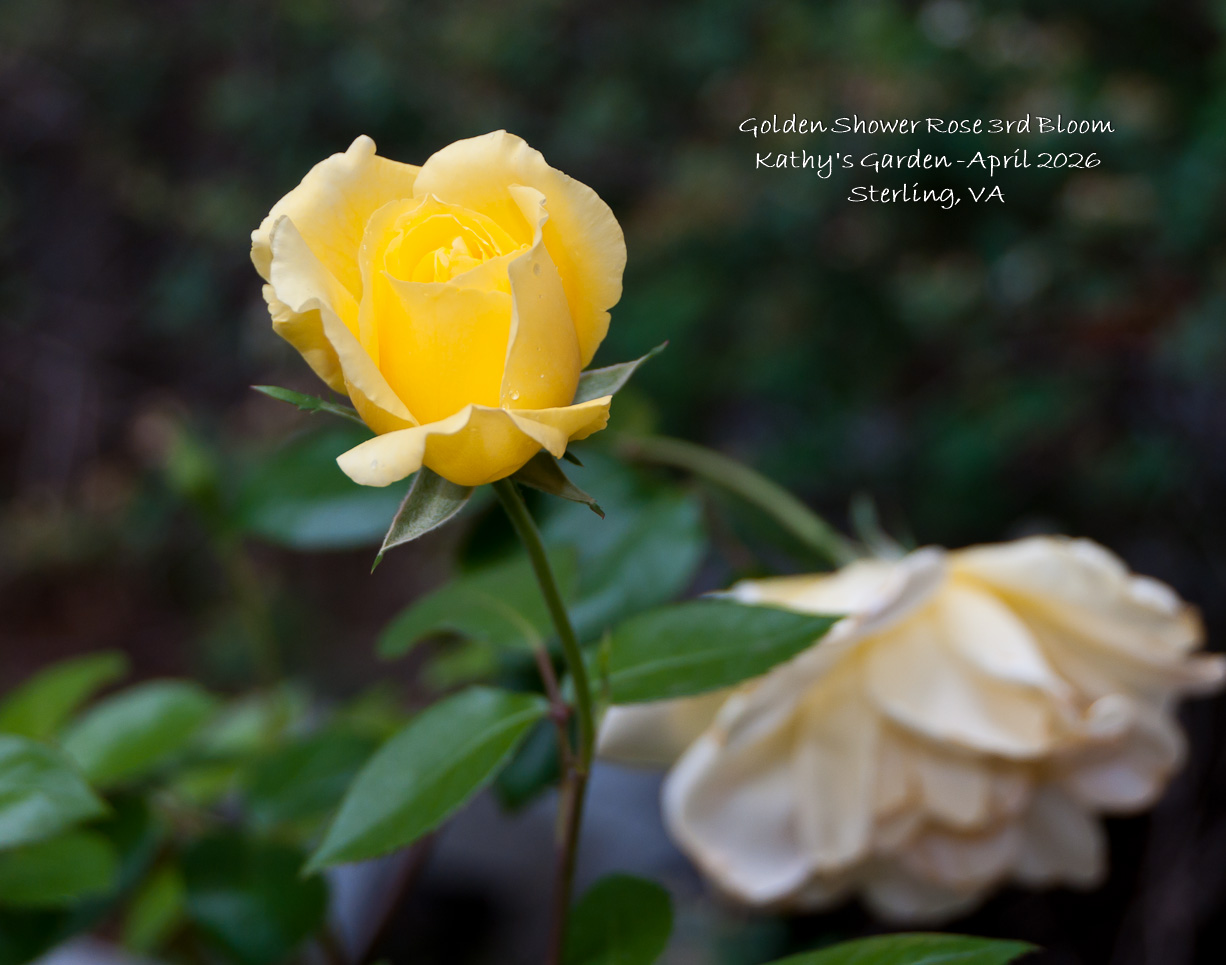
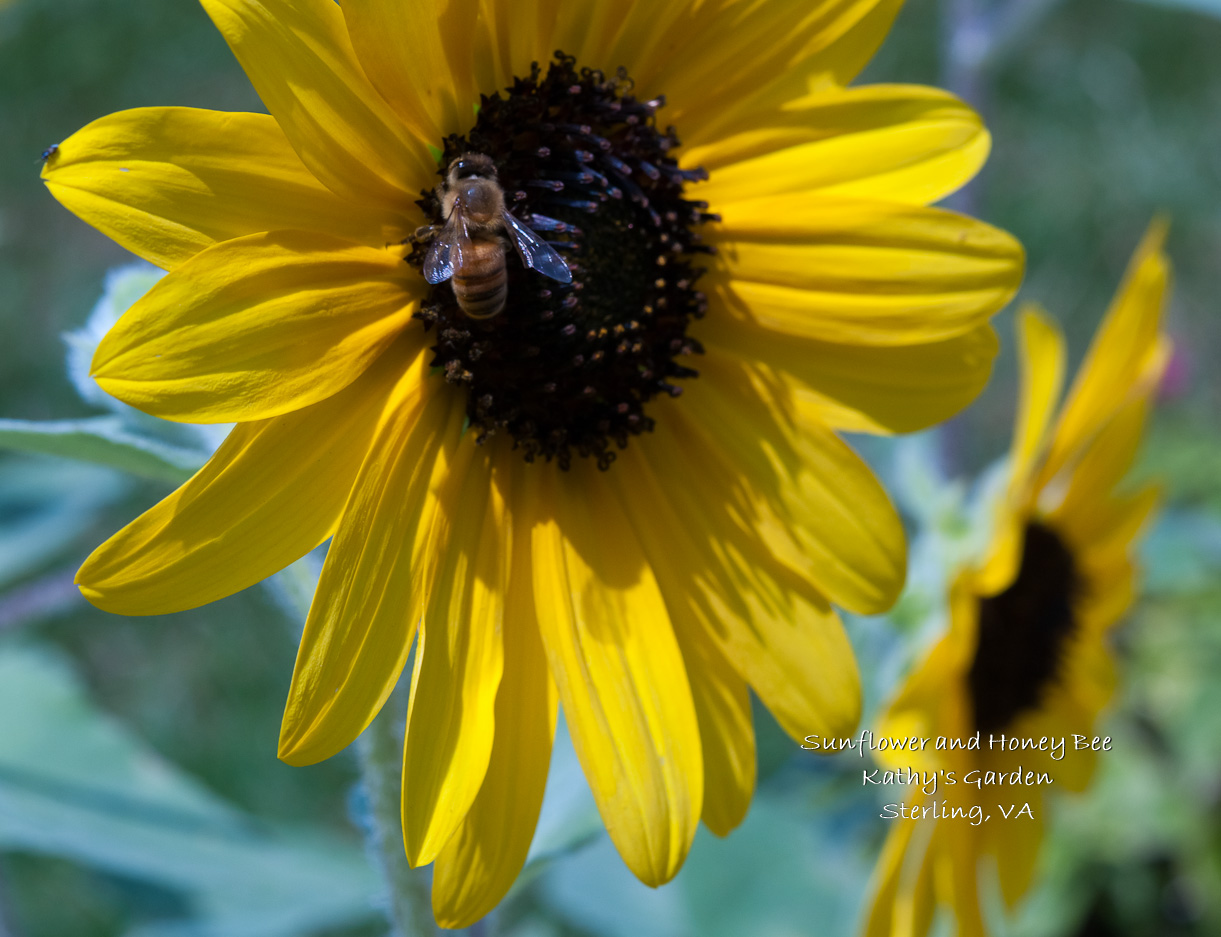
I missed the first two blooms. This is #3It was good to see this old friend todayNot yet blooming…I am hopeful.Sunflower from a past summer.
I continue to work hard in the garden whenever I get the chance. This weekend was productive since I got my husband to help me clear away the ivy from the old stump and cut it partially down. The camellia was also pruned, though it needs a little more work to shape it better. At least now it is no longer overshadowed by ivy.
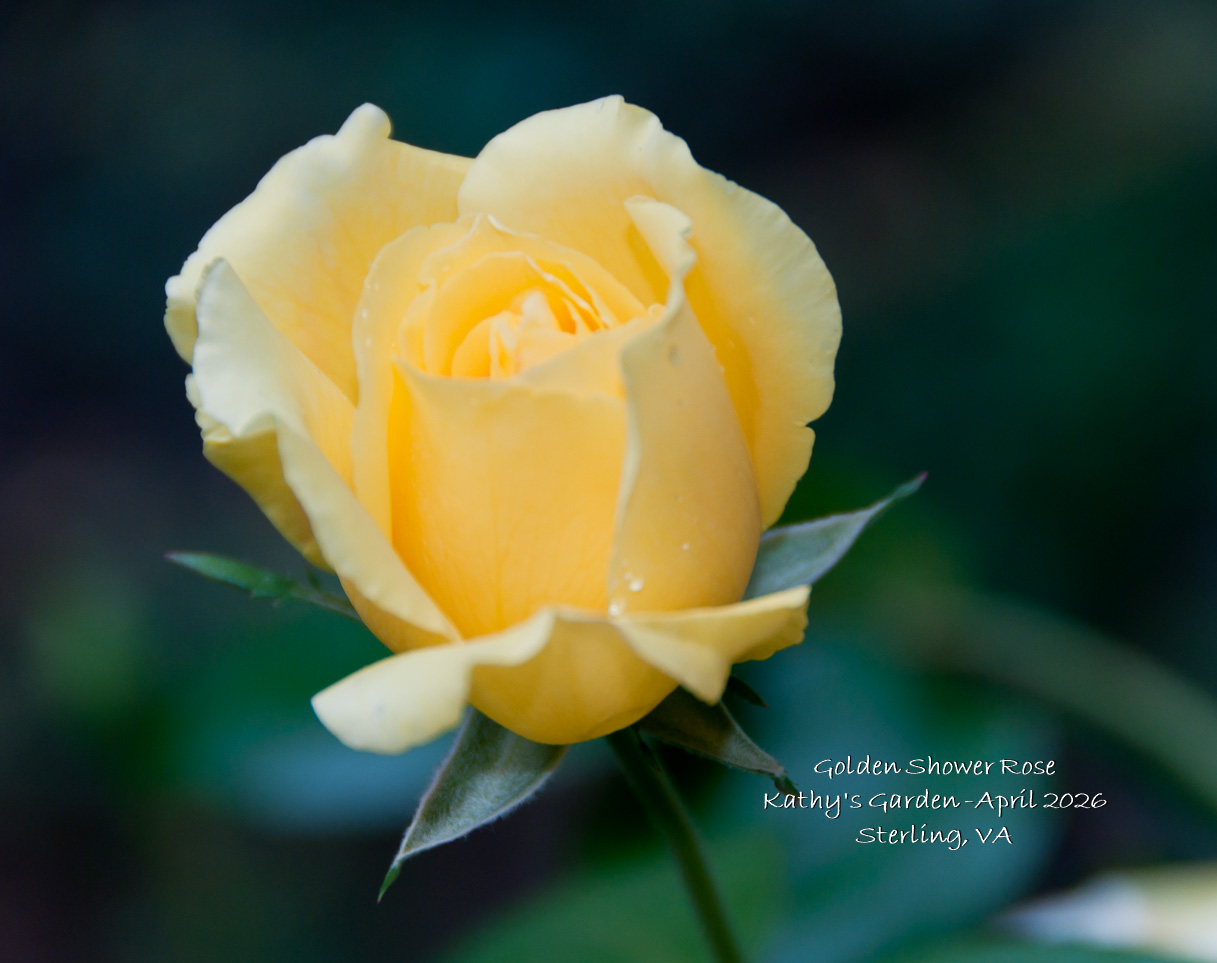
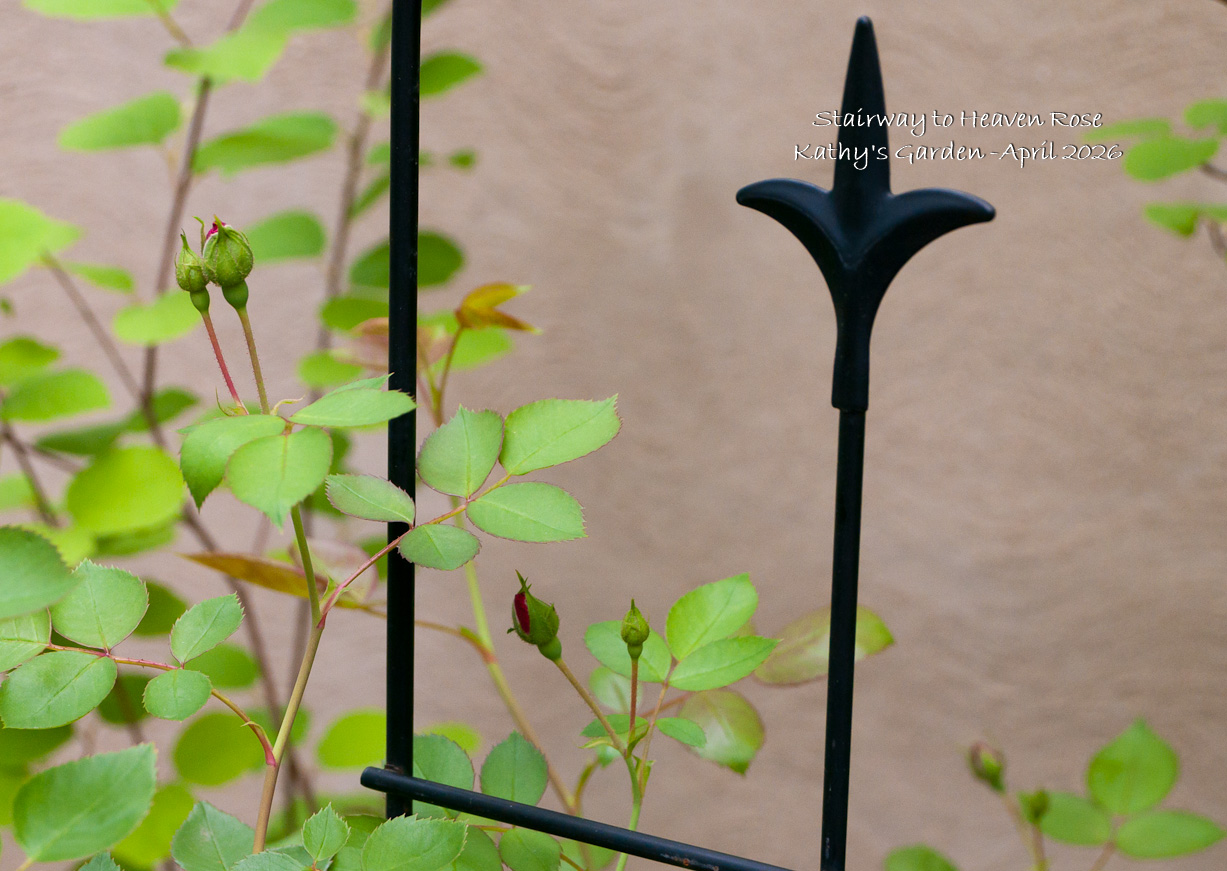
I also did a little pruning on an old deciduous azalea by cutting away some dead wood. It is still blooming so I was not too aggressive. Some weeding was done. I am constantly surprised by my garden’s resilience. The roses pictured above are true survivors. The Golden Showers rose has been with me for over 20 yrs. I used to have four trellises full of them. They have a complicated history in my garden, and the trellises were removed many years ago. Three fothergillas were planted in their place. They are a slow growing shrub, though now since it has been several years since I planted them they are much taller and fuller. They are much easier to care for than the roses, however, I have two rose climbers left. One section of Golden Showers is still with me, and a Stairway to Heaven rose that has been with me for about 15 yrs. I did not want the work of roses, especially since they are on a side of the house that gets ignored by me, and they constantly have to withstand my husbands desire to put tools and equipment in their area. They are true survivors.
I posted the picture of the sunflower from several summers ago since I love its golden color, and the birds and bees love it. I will have to plant more this summer.
Speaking of ‘golden’ reminded me to make a book recommendation to any readers out there that might read my posts. Right at the beginning of my spring vacation, which is always the week before Easter, I read the book Theo of Golden by Allen Levi. It was just what I needed to get me ready to tackle my garden and pond during my break. It uplifted me and made me realize that there are many kindred spirits in this world of ours. I would definitely recommend this book. It focused on the important things in life, and was a study in human personality and connection.
Have a great week and stop to enjoy the beauty of our natural world!
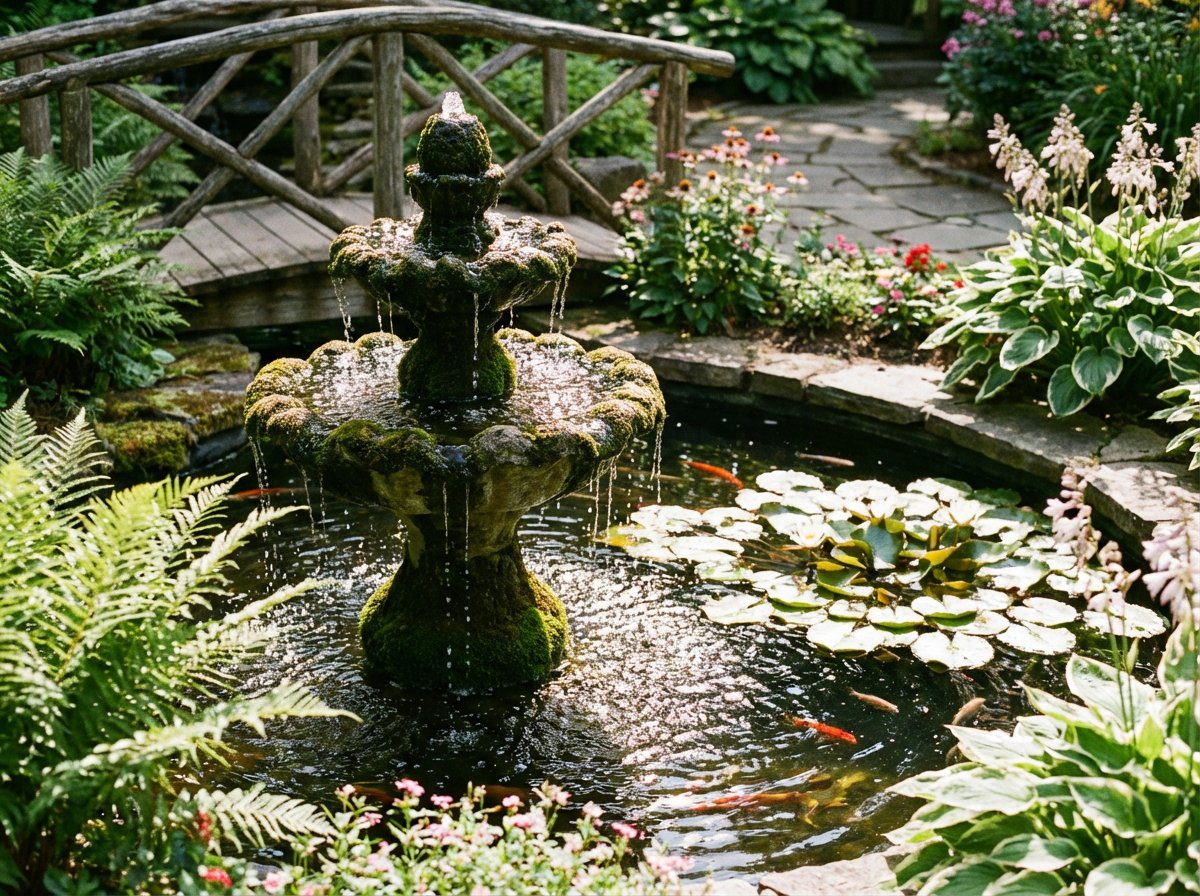
A moss-covered stone fountain overflows into a peaceful koi pond surrounded by lush garden greenery.
This lovely picture was created by the new image generator on my WordPress site.
This is not my garden nor is it my pond. However, I titled this post Let the Water Flow because this week, with a great deal of help from my husband, I finally drained our garden pond and cleaned it all out. The fountain is now flowing and the birds are rejoicing. In the past I posted about The Gift of Procrastination, and now I can attest to the fact that there is a downside to it. At first I told my husband that we are getting too old for this, and now, after going to a garden center looking for some special tubing to attach to my pump and then connect it to the fountain bowl, I found my inspiration to keep going. The older lady that helped me looked about my age or a little older. She told me she was in her mid-seventies. She had already unloaded two truckloads of plants before I arrived at the center. I can only pray that I can do the same when I reach her age. My husband is her age.
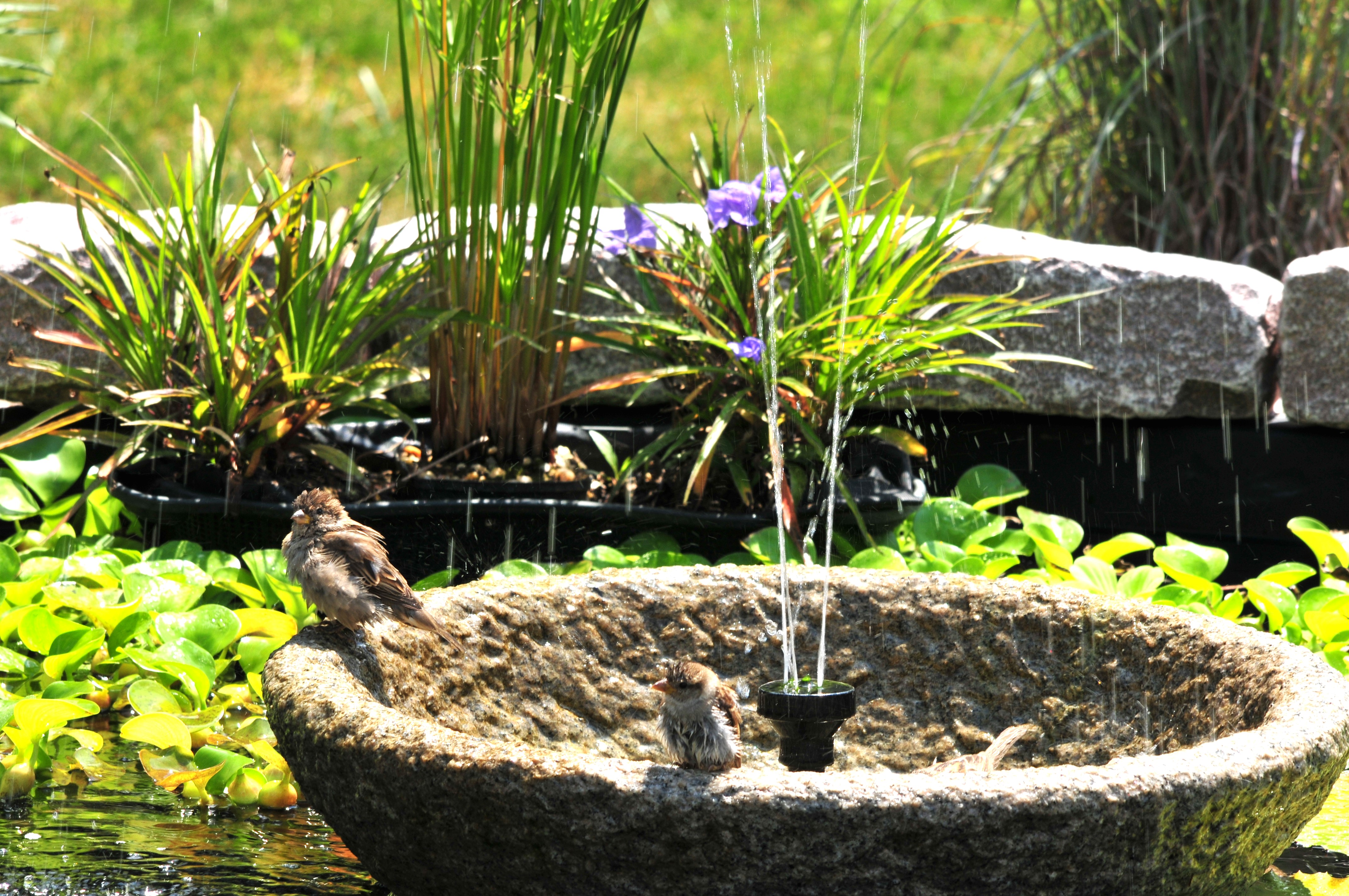
I told the lady, Michelle, that I was doing it for the birds. It is still too early to put in any water hyacinth or water lettuce. I will try to post a picture of some sparrows enjoying our pond in its early days.
I am not using this fountain sprayer anymore because the water evaporates really quickly in the summer. I am using a gusher with maximum flow so it spills over the edge back into the pond.
While working to clear debris from my garden this week I uncovered a little bird seed holder that I had somewhat forgotten. It has these words (“His eye is on the sparrow and I know he watches me”) engraved in the bowl. I looked up these words and they are attributed to Civilla Martin in 1905. There is a sacred hymn written with these words. I will not go into the whole story, though it is an interesting story about how she gained her inspiration for this hymn.
I hope to continue letting the water flow and get back into the routine of garden maintenance. This is where I find the greatest peace.
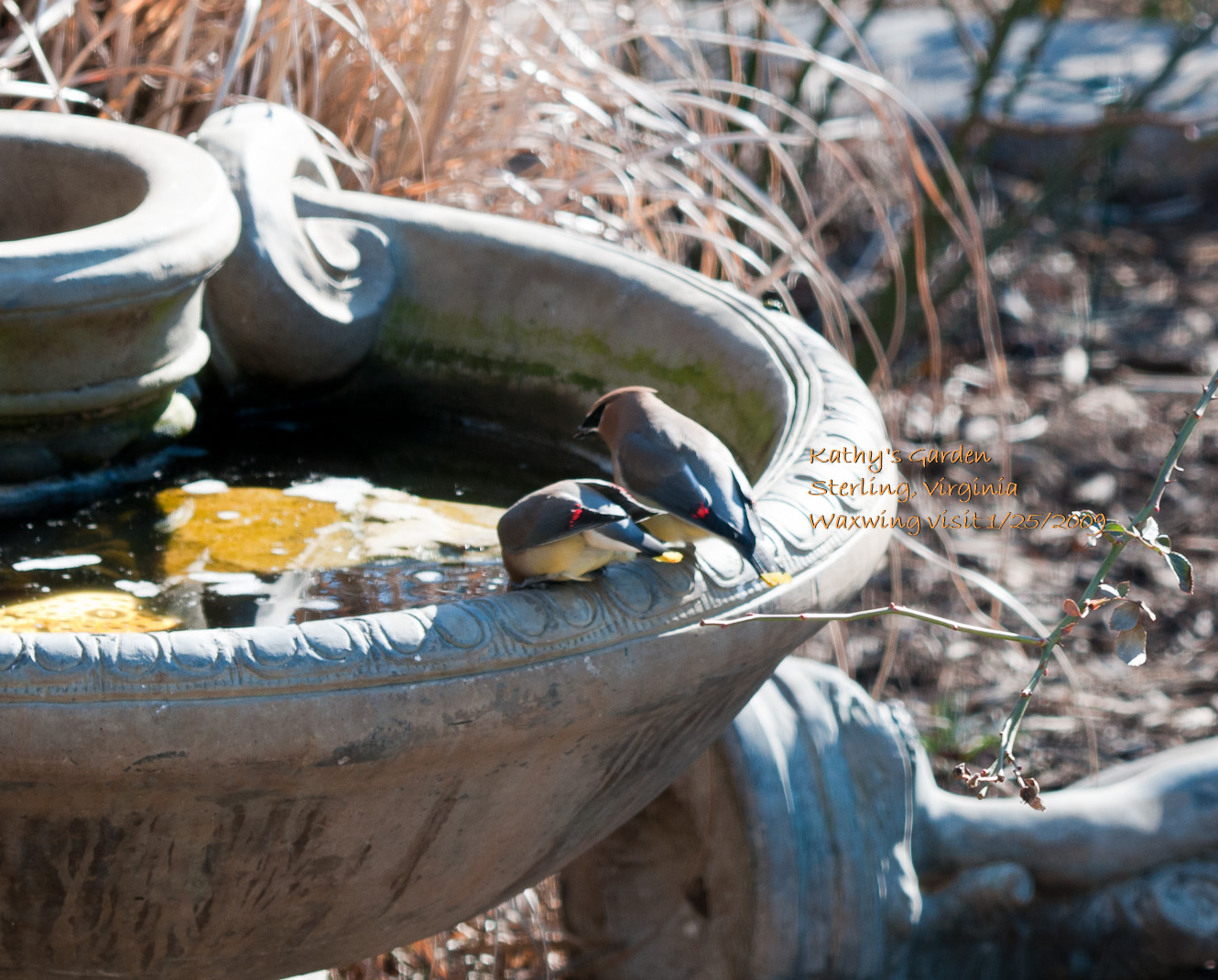
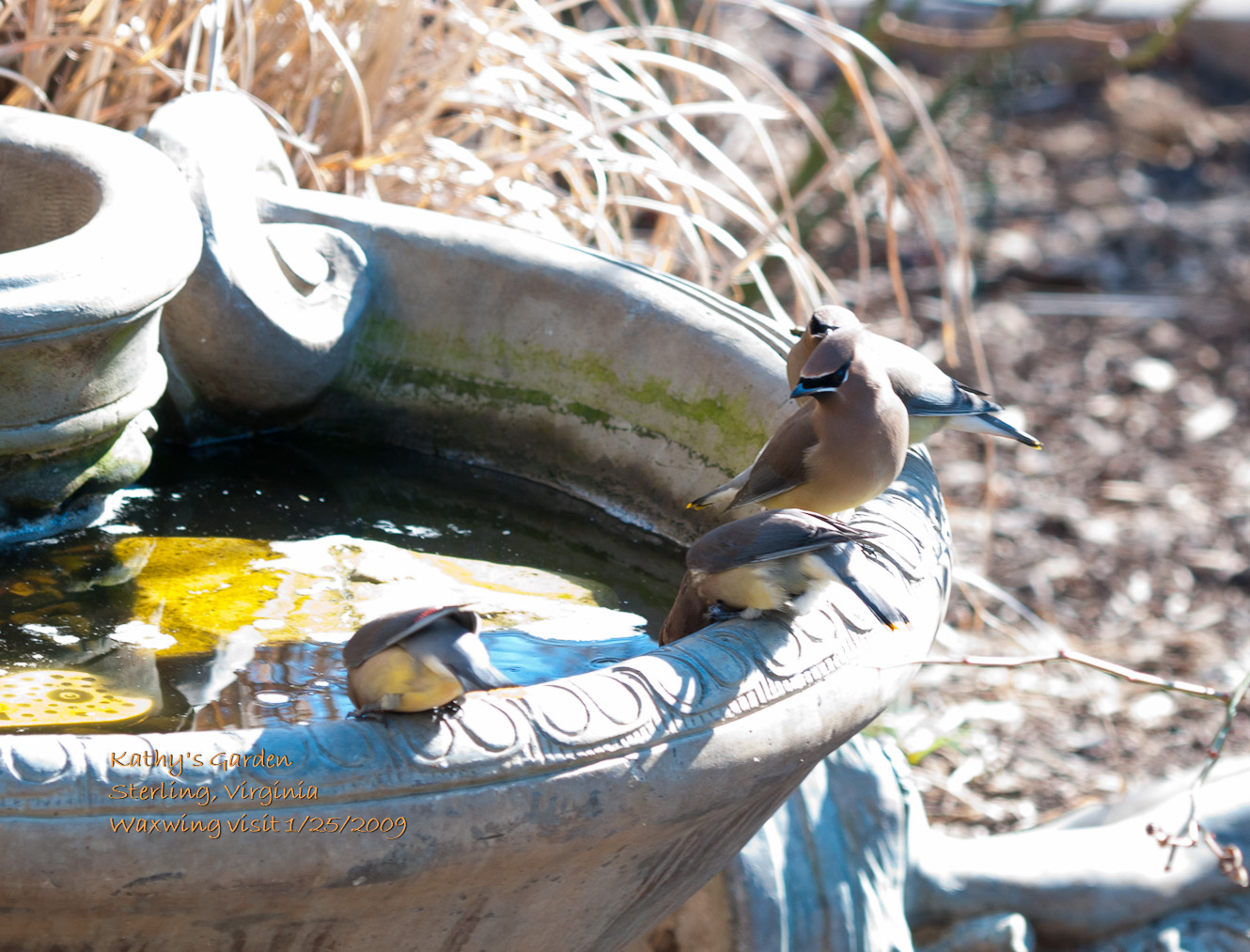
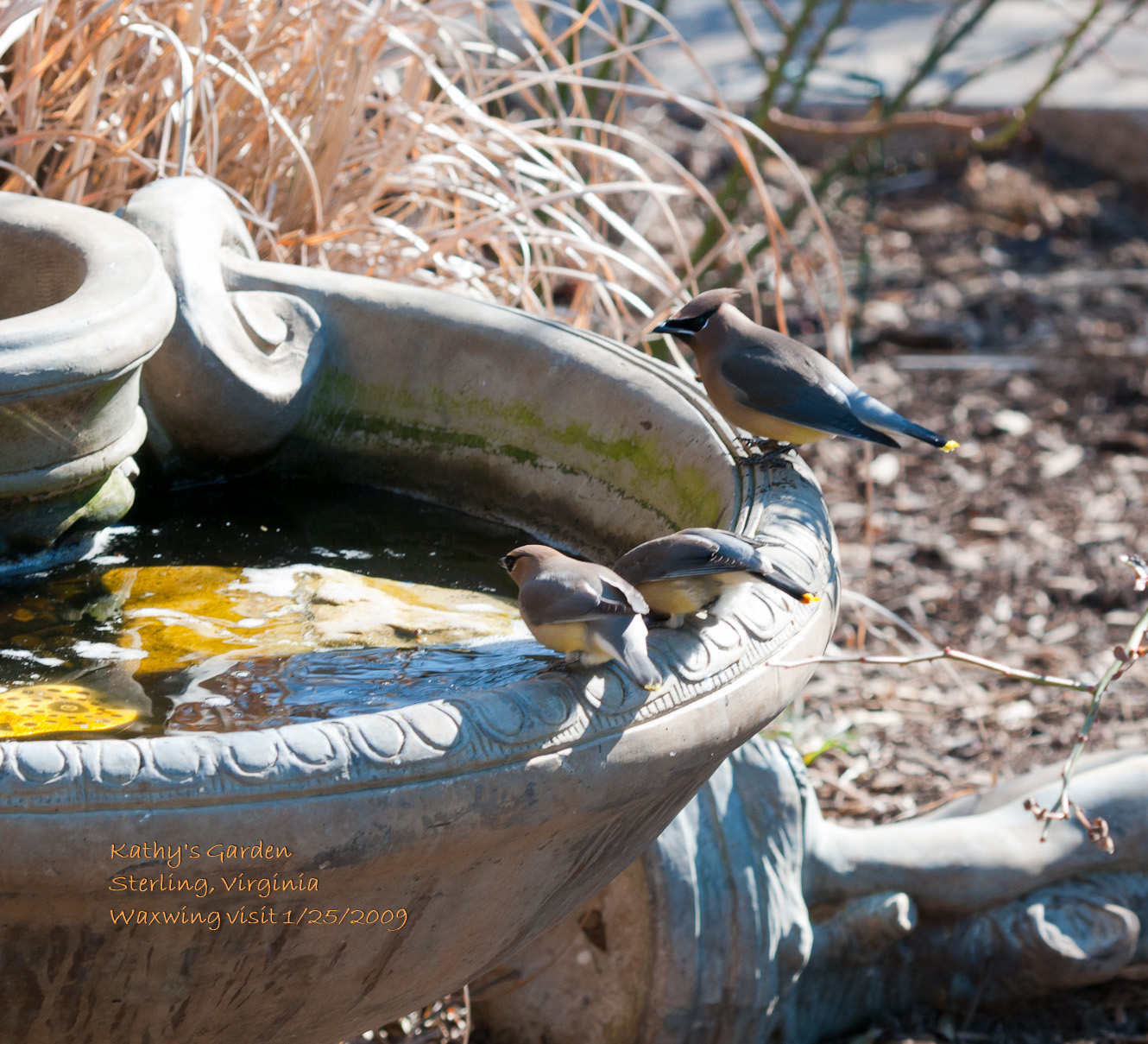
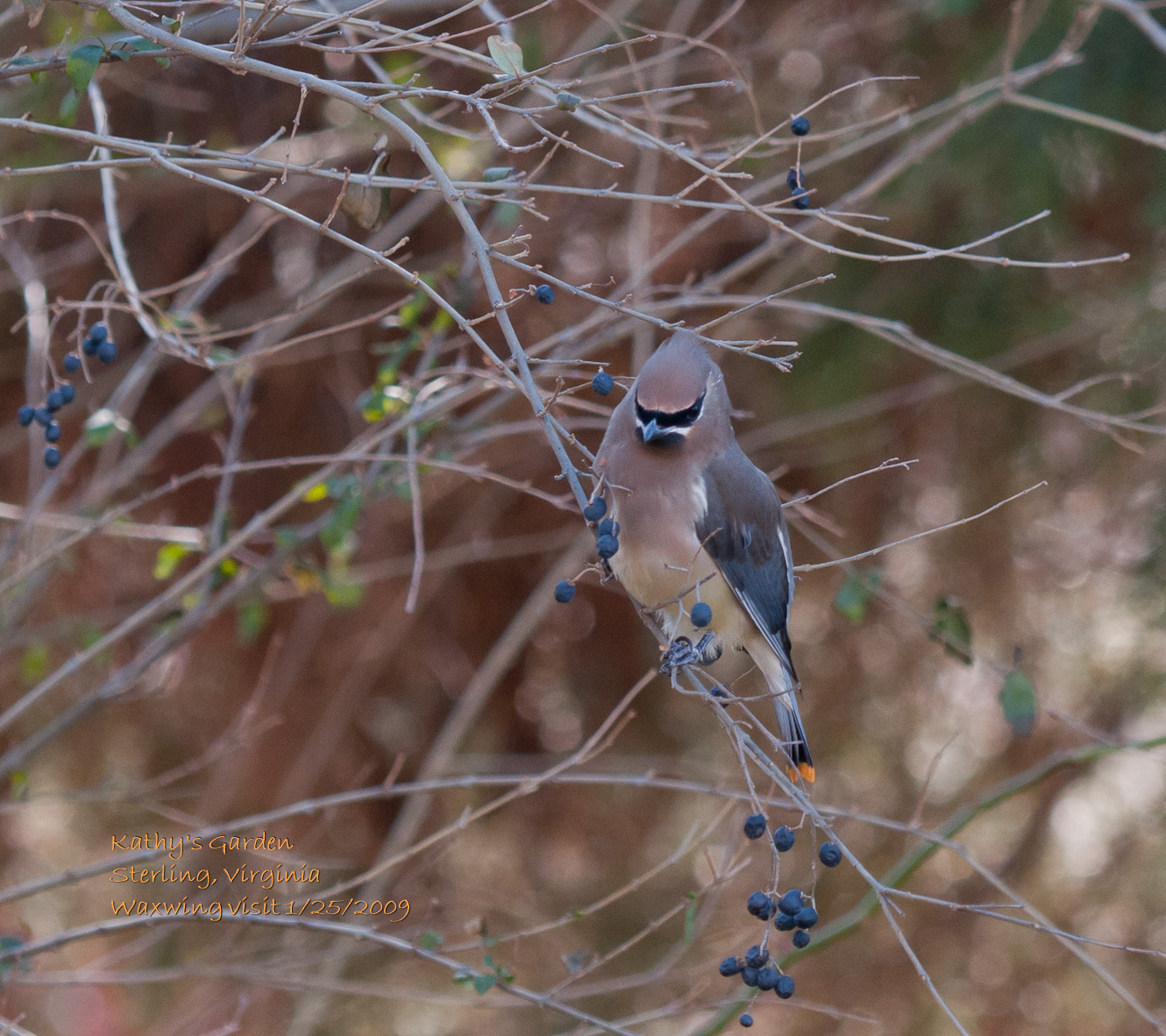
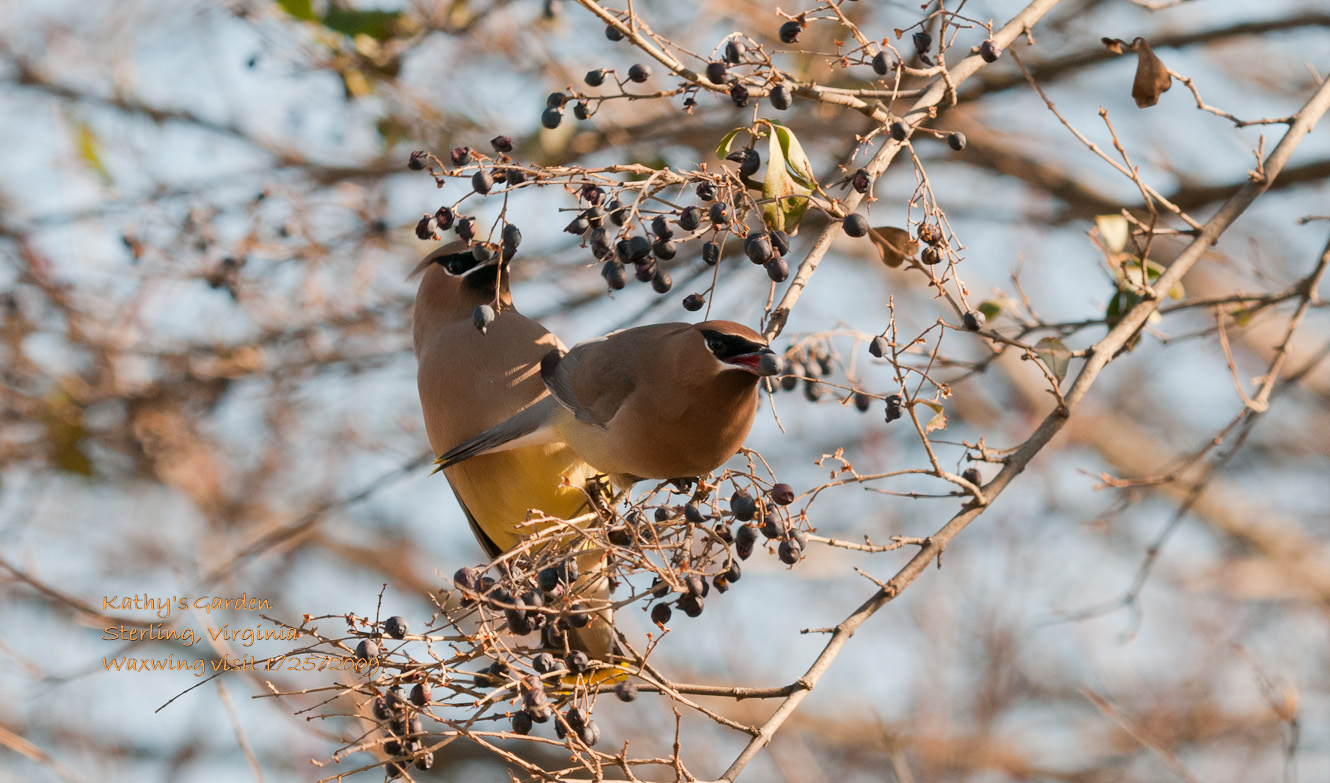
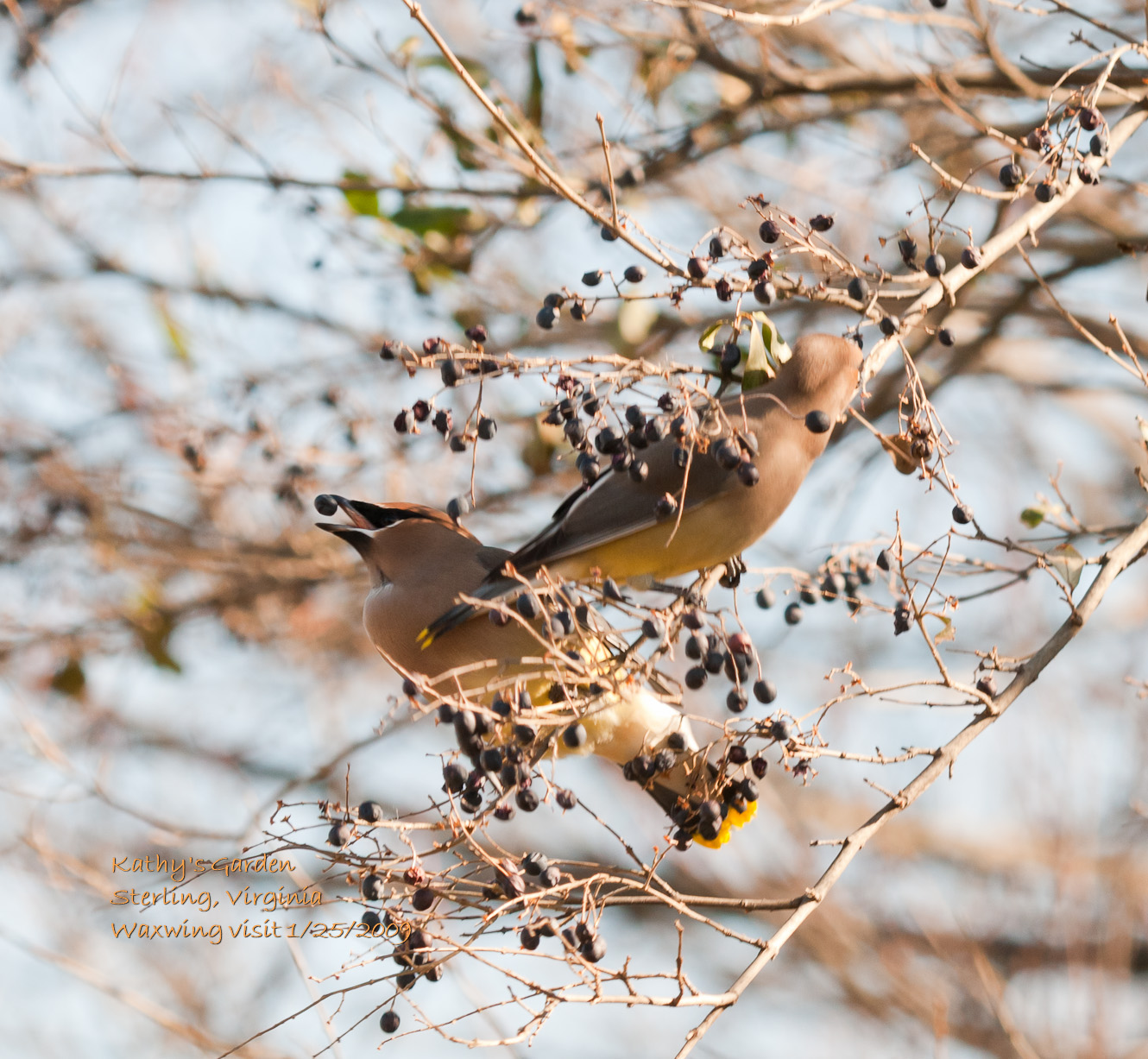
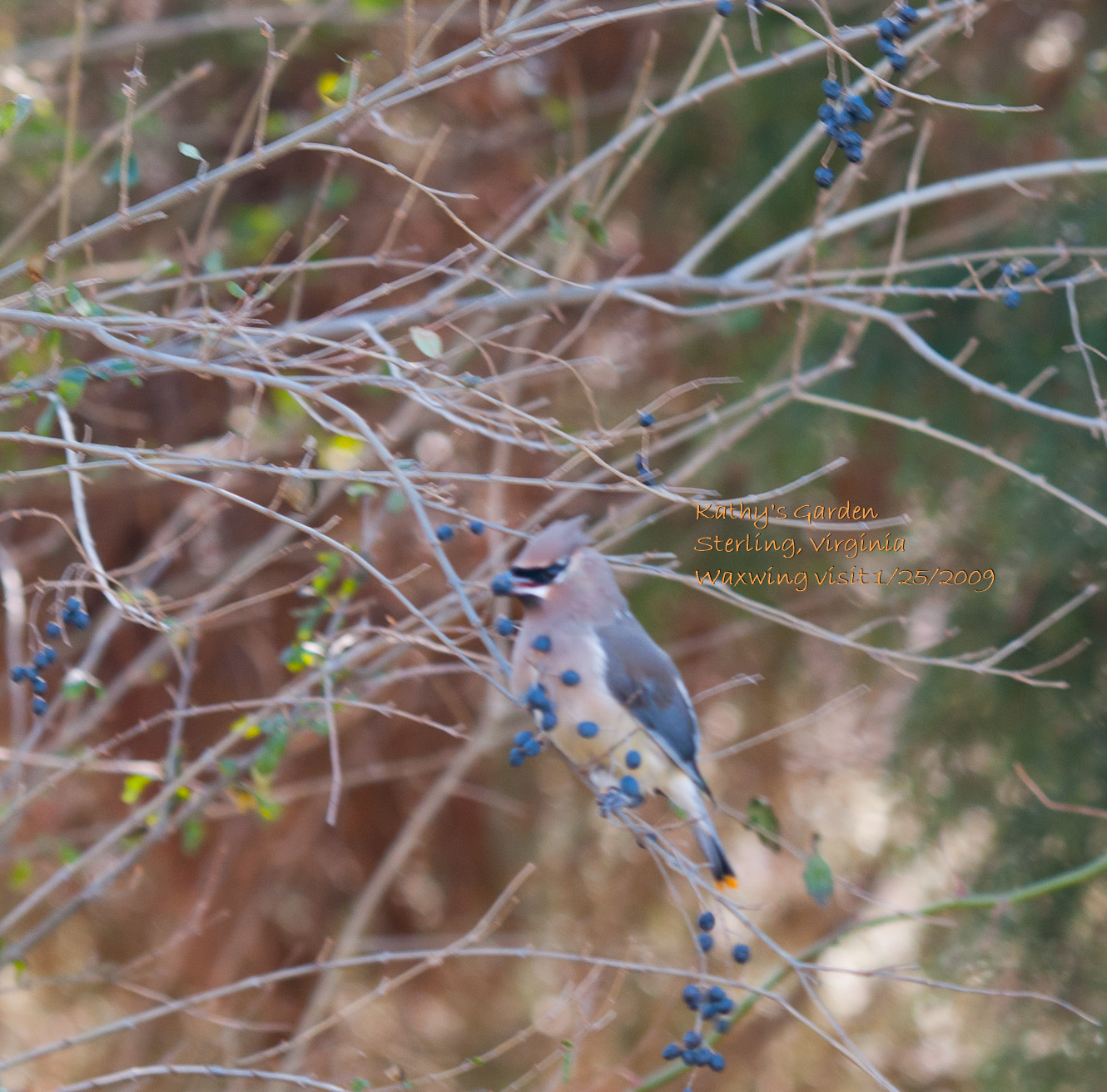
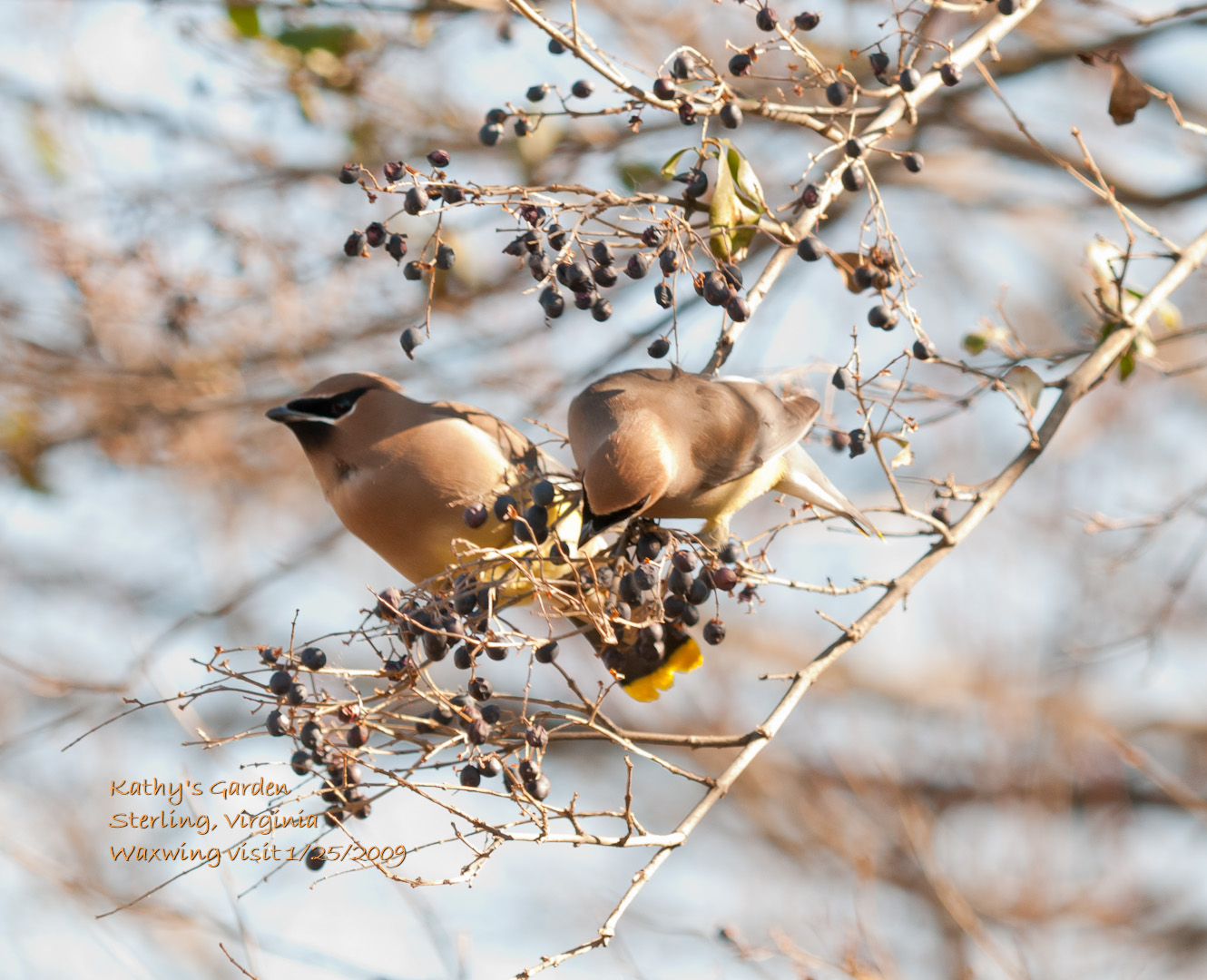
The Cedar Waxwings are a bird that secrete a reddish orange waxy substance, though not all of them have it in these pictures. I read that it has something to do with attracting mates. These pictures are from January 2009. I am posting them because this was the first time I witnessed them in my garden, and today they were in my garden again. Today they were mostly interested in my fountain bowl that was full of fresh water from the recent rains. In these pictures it was the middle of winter, and the fountain bowl was pretty sad looking, though I did keep a heater in it so that the water would not freeze.

I was happy to see them again today.

I titled today's post Waxwings that Work mainly because the thought of the myth of Daedalus and Icarus came into my mind. I read a student version of this myth this school year, and in this myth the wings of wax melt when Icarus ignored his father's advice and flew too close to the sun. Sadly, Icarus's mistake was fatal. There is much more to the myth than what I shared here (you can look it up.)
These pictures are not the best. The birds caught me off guard, and they move very quickly. They seem to be always on the move from branch to branch. Here they are enjoying privet berries. Today the berries are gone, and I did not see them do anything other than enjoy all the fresh water in the fountain.
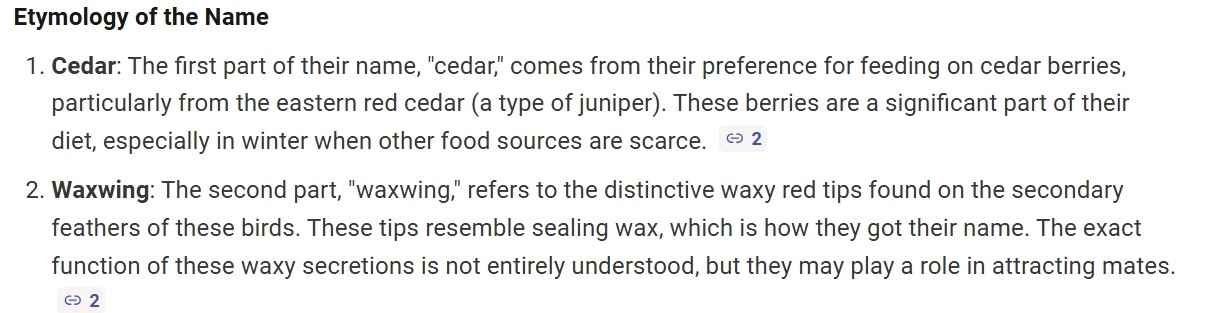
I will post a co-pilot answer about how they got their name.
With Saint Patrick’s Day being celebrated this month, I have been thinking about my heritage on my mother’s side of the family (the Irwin’s). She always said they were Scots-Irish. She even traced her family tree back to Rev. John Craig of Augusta county Virginia and the Old Stone church. She was able to visit it and take pictures before she died.
The book pictured above was purchased by my mother and it came to me when she passed away. I read the book and enjoyed it. It contains a lot of good historical information about the Scots-Irish in America, and their influence on American culture.
Here is my great aunt Bess Irwin, and her sister, my grandmother, Myrtle Irwin DeVall. They were proud to be Scots-Irish and their father was an Irwin. . Their father was a teacher, and his father was a doctor.
I have decided to honor the Scots-Irish this month!
Chinese Fire Horse 2026 image generated by AI. My daughter was born in a Metal Horse year. “Metal Horses are often described as ‘spiritual warriors’ due to their immense inner strength and endurance.”
President’s Day holiday, Mardi Gras, the beginning of Ramadan, and the Chinese New Year all will be happening this coming week.
My brother’s birthday was last week, and he wrote to me that his wife was making him an angel food cake. When we were growing up together our mom would often make him one with strawberries and whipped cream for his birthday. I cannot remember the last time I made one.
This conversation got me to thinking about making an angel food cake for my family. I have one of the special inverted cake pans that is very old, so I decided to search for a new one. This took me outside my normal day to day radius, and I had fun exploring the Galleria. I found a nice new angel food cake pan.
I have been researching recipes because this cake needs to be dressed up for more flavor. I did not want to make the standard strawberries and whipped cream version. I found a recipe that uses pumpkin puree and pumpkin pie spice. I happen to have a can of pumpkin leftover from the Christmas holidays. This recipe does use whipped cream with added crystallized ginger for the middle and top of the cake. I had previously read that “gourds, particularly bottle gourds or hulu are significant in Chinese New Year for symbolizing prosperity, health, and protection.” Since pumpkin is in the gourd family, the pumpkin angel food cake will be the recipe I use. If I can successfully make one and get a good picture, I will post it later. I will need to wait a day for the crystallized ginger to arrive.
I hope your week ahead is productive and festive in one way or another.
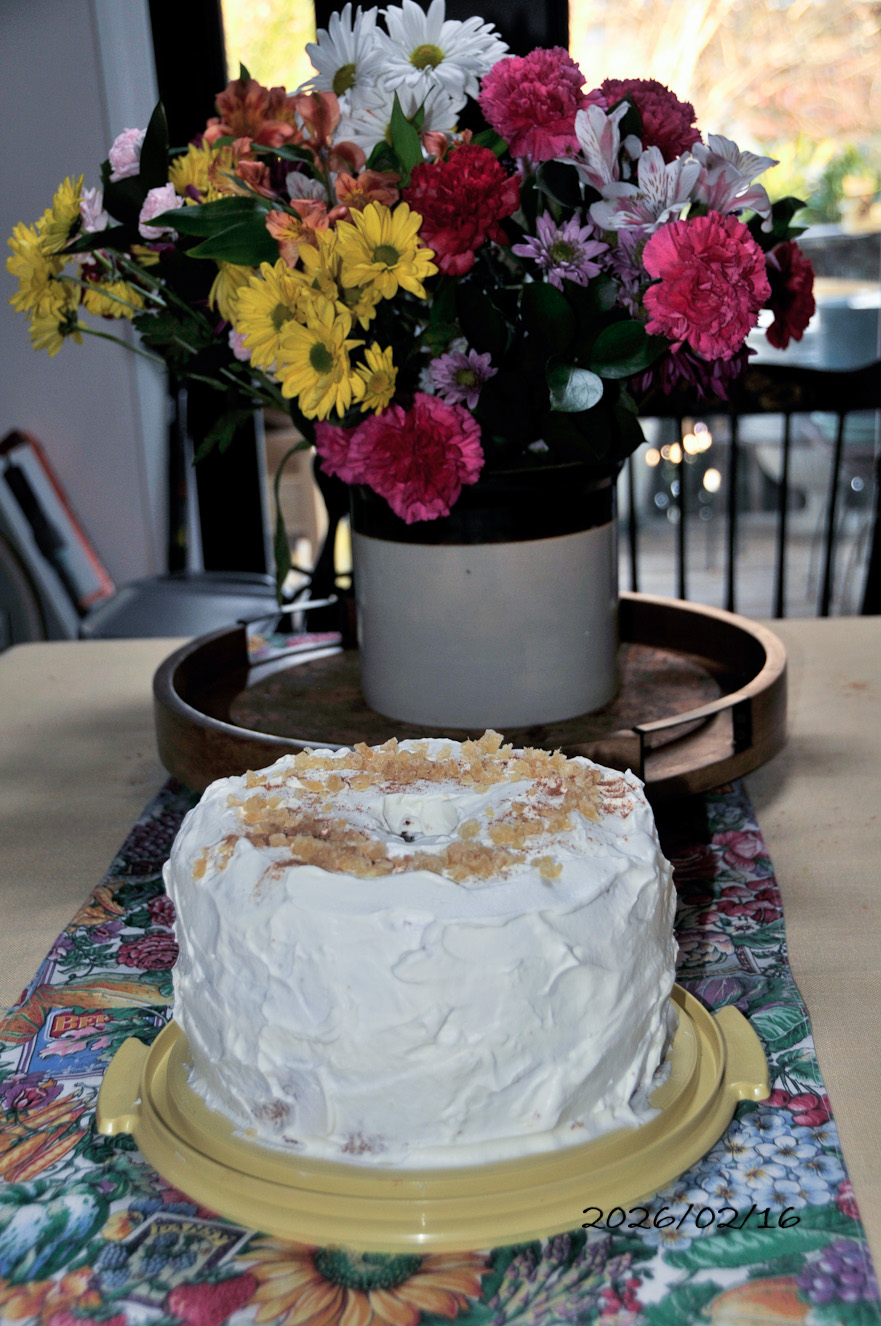
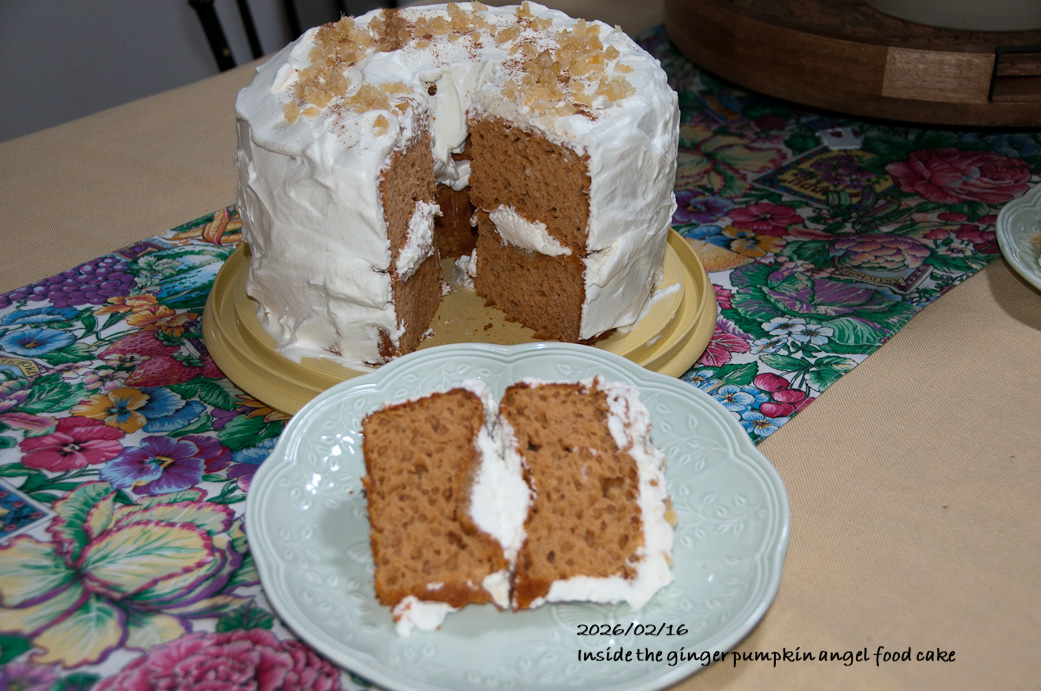
I made the cake. There were a few small problems I worked around. It tastes great! I am not a professional baker. This was the first time I made a whipped cream frosting. It was made with a pint of heavy whipping cream and 1/4 cup powdered sugar. It made more that I expected. I had not originally intended to ice the whole cake. It will need to be refrigerated. You cannot see it, but between the two layers is a crystallized ginger paste. I made the mistake of putting some in a food processer and it made a sticky paste of it. Fortunately I did not put all of it in the processor, so I had some to chop into smaller pieces for the top. I think this will be my early birthday cake.
This is how I am feeling today — worn out from baking cookies.
My husband shoveled our driveway yesterday. He said it is like blocks of cement out there. The temperatures outside have been varying between the mid single digit range with wind chill at zero or below, and when it warms up it reaches the low to mid 20’s. I have stayed inside cooking and baking. At least we have been well-fed.
I received a Spring 2026 catalog from Vermont Bean Seed company recently. I shopped for seeds and indoor grow lights yesterday. My intention is to give vegetable growing another try. I have been reading up on planting asparagus from crowns. I first read about growing asparagus last year in a Martha Stewart article. I learned that asparagus is a perennial vegetable, and this interested me since I have experience growing many perennial flowers. Yesterday, I ordered some asparagus crowns, a Sweet Purple variety. I hope to do the preparation work early spring. “Hope springs eternal…” (This is a partial quote from Alexander Pope 1733.)
Thinking about spring helps to weather the winter pauses. I hear there is the possibility of another winter weather system coming this weekend.
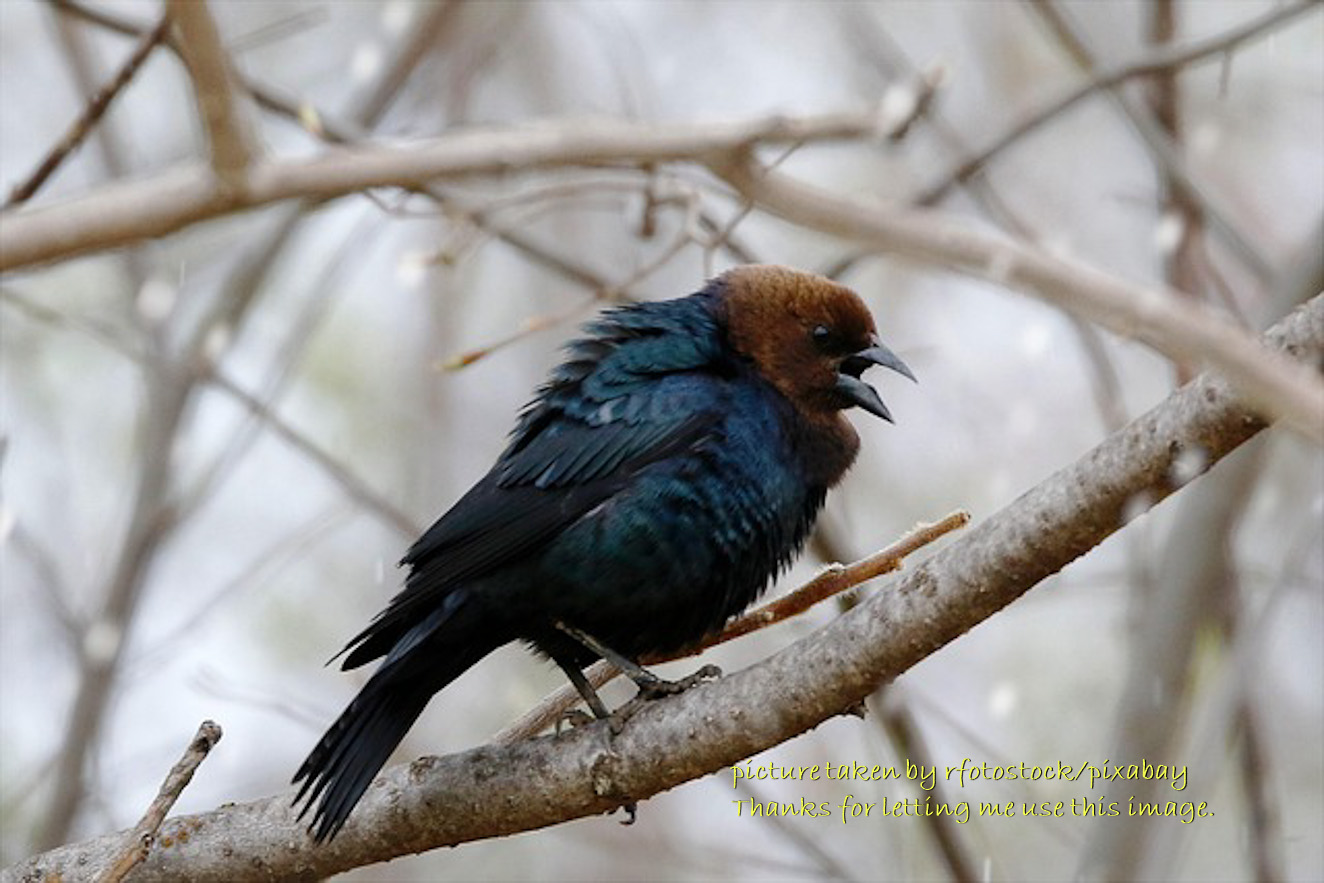
This picture was taken by rfotostock located on Pixabay. I wanted you to see what the male cowbird looks like.
I woke up very early this morning when it was still dark outside, though the whiteness of the snow made it possible to see. At this time of morning there was no visible bird activity. I was wide awake, so I made a black walnut banana bread, and drank some tea as it was baking. Eventually, I went back to bed, and slept for about an hour before the noise of bird activity woke me up. I went into the kitchen and was somewhat startled to see about 2 dozen cowbirds resting on our deck as close to the door as they could get. There were many more cowbirds resting in the surrounding trees and several fighting over the seeds in a couple of feeders.
My husband had purchased a small wooden birdhouse that is a seed feeder that he placed on the back railing of our deck. Normally many small sparrows play inside and outside of it eating the seeds. This morning many cowbirds were flocked around it. When I opened the door to scare the noisy flock they all flew away or up into surrounding trees. There was one exception, one cowbird was left stuck inside the little bird house. I called my husband to come see the commotion. I will let him decide what to do with the stuck cowbird. Perhaps it can eventually free itself.
Our regular backyard birds were still around. I spotted the cardinals, a blue jay, the visiting winter juncos, and I was delighted to see a cute little wren exploring the corners of the deck.
I was not delighted to see the cowbird flock. I used to see a few here and there in our garden many many years ago. They are not regular inhabitants here, and I have not seen any in a very long time. They are called cowbirds because they follow herds of cattle and eat the seeds and insects stirred up by the herd. They used to be called bison birds before many of the bison were killed off. The female cowbirds do not look like the males, and are very non-descript looking. They do not build nests, and they are called brood parasites because they will lay their egg in another birds nest. Often the other bird will foster the cowbird egg along with their own eggs. I used to read a lot about the different birds I would see in my garden.
It is still snowing and perhaps the cowbirds were brought here by this weather system. They will eventually move along, especially if the feeders are empty.
I will not bemoan the rain. It brings life to the pond and thirsty ground.
Looking out my kitchen window at the rain, I can see a gentle mourning dove take a dip among the bent-over dried cattail stalks, using them as a flotation pad. The grey and white juncos are all about enjoying the rain. Winter is when they visit my garden.
The thawed out ice in the pond and fountain makes the water more accessible for all.
While doing chores inside I ran across a 1989 five cent Canadian coin among the knick- knacks in a drawer. On one side is engraved a master builder beaver. This made me wonder how our local beavers (at Beaverdam Reservoir in Ashburn, Virginia) are faring this winter?
While attempting to answer this question with an online search, I discovered that the world’s largest beaver dam in the world is located in Canada. “Wood Buffalo National Park is the largest national park in Canada… having one of the largest freshwater deltas in the world- the Peace Athabasca Delta.” This quote is from the website: parks.canada.ca They claim it can be seen by satellites in space.
Now I can understand why the beaver is engraved on their coin, though, my original question about our local beavers remains unanswered.