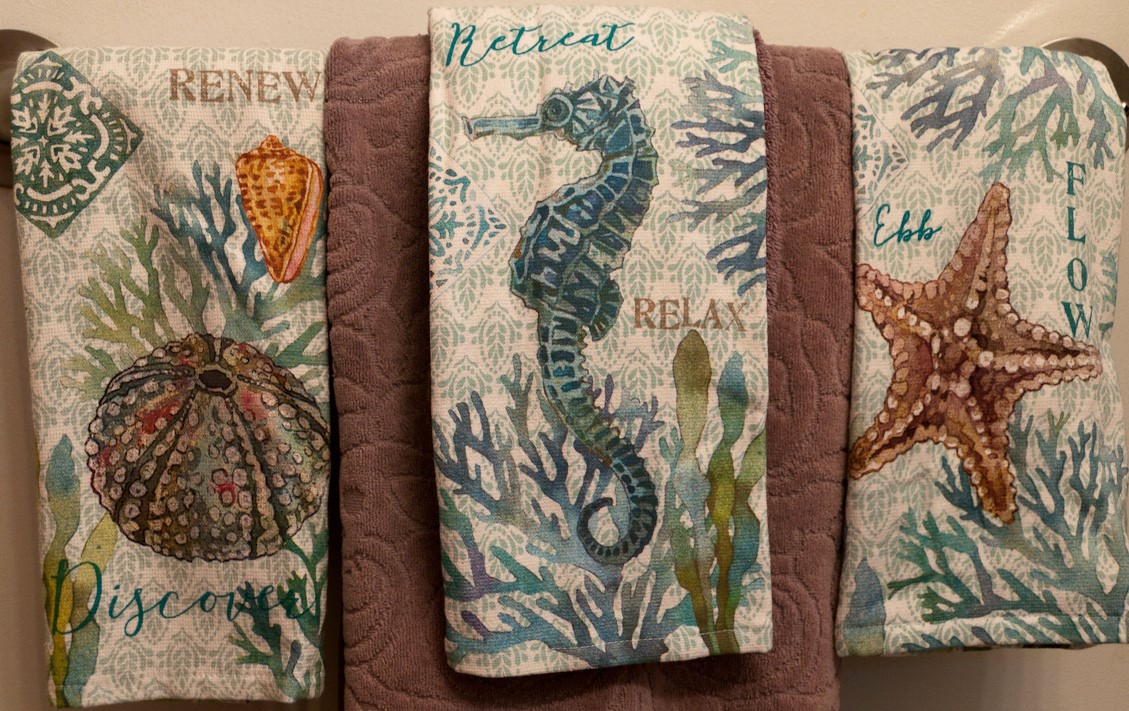
I mentioned recently that I have been working on cleaning and reorganizing some areas of my home. Our linen closet has to be my next project! It is crammed full and not that organized. I saw these brand new tea towels that I purchased years ago, and decided to take them out and use them. They are kitchen towels, though I don’t think they go well in my kitchen, so I decided to use them in my bathroom. This morning when I looked at them, my attention was drawn to the sea urchin on the bottom left side of this picture. My nudge was the word ‘discover’. It got me to thinking about the sea urchins I inherited from my mother-in-law many years ago.
Next, with the word discover foremost in my brain, I went and found the ones I inherited. Look below to see them.
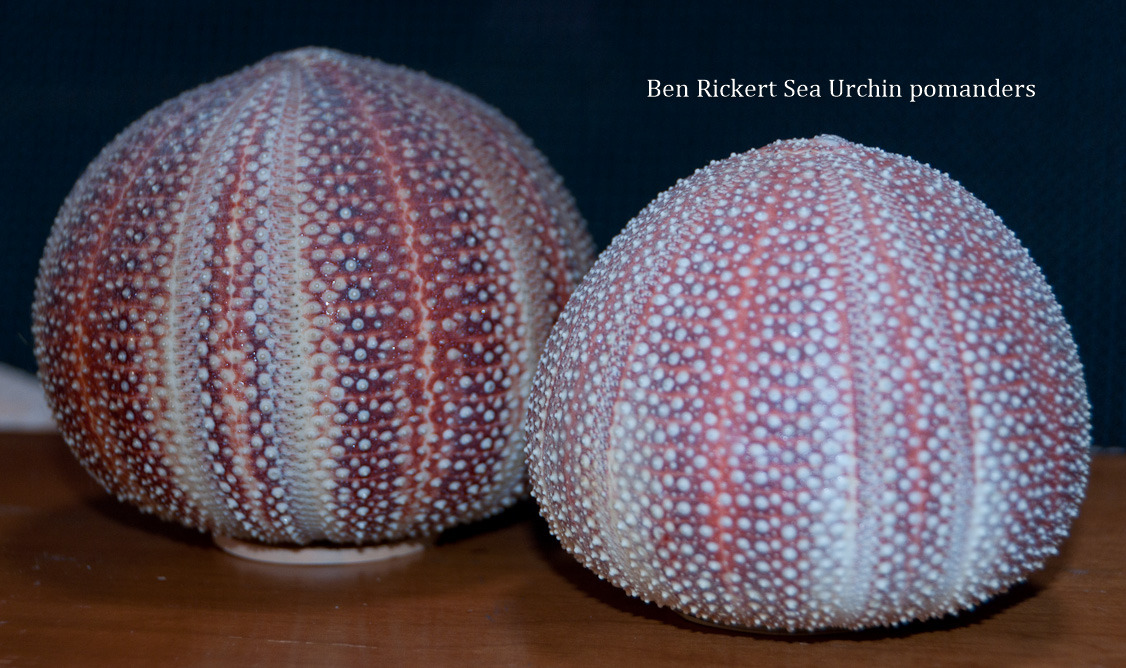
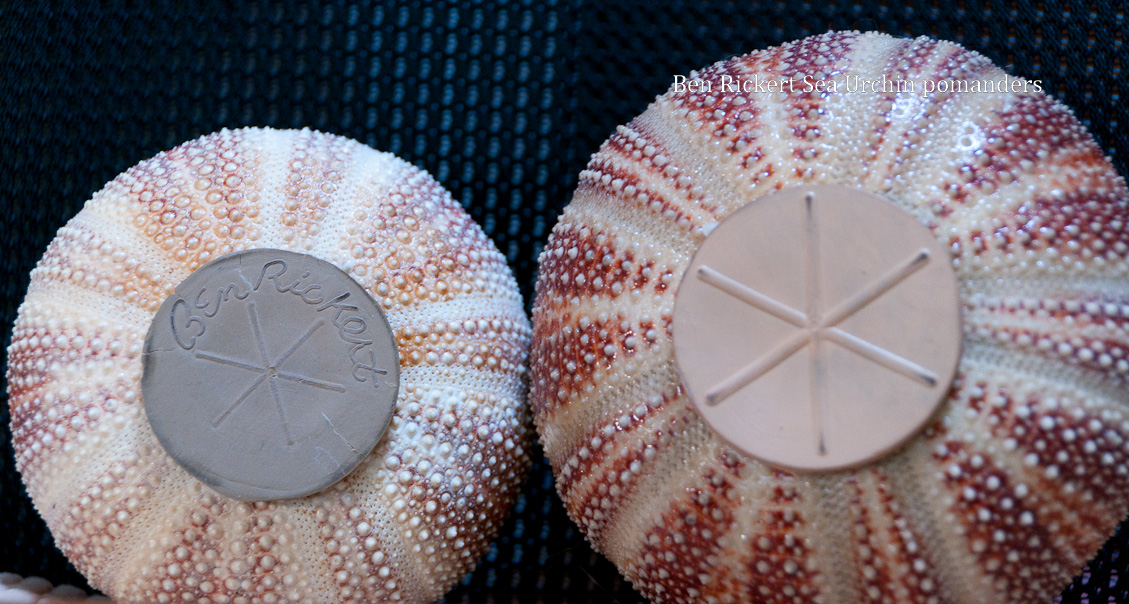
I decided to take a picture of them. I had always wondered why they had stoppers in them on one end. While taking their picture I discovered the name Ben Rickert. I looked up his name and the words sea urchin. I was surprised to learn that they have stoppers on one end because they are intended to be potpourri diffusers. They are made from real sea urchin shells found in the English channel and crafted in England.
While researching sea urchins the memory of me tasting one came into my mind, though they did not look like the sea urchins in these picture. The one I remember tasting was purple and spiky. In my early twenties I was vacationing with my sister and her boyfriend. He was part French and he owned a yacht. We were staying with his mother in Cannes, France, and we were out for the day exploring off the coast of France, which is known as the French Riviera. I can’t remember exactly where we were anchored, however, swimming was possible and someone on his boat dove under water and brought up some purple spiky sea urchins. They were split in half and an orange substance was inside and we tasted it raw. I thought it was horrible.
I wanted to try and find a picture of the type I tasted. There are between 950- 1,000 different species of sea urchins according to people who keep track of these things. I was able to find a website with information about the sea urchins off the coast of France and in the area where we explored. https://news.cnrs.fr/slideshows/sea-urchin-under-threat — (Warning: this link worked for me when I read it, however, it does not work now. It will take you to the website, it states page not found, however, if you type sea urchins into their search box, you will find the article. It clearly shows the purple spiky species I remember.)
Then, I decided to research edible sea urchins. They claim that only 18 species are edible. For more information about this look below. https://pangeashellfish.com/blog/about-sea-urchins-facts-and-guide — (Warning: this does not work either. If you scroll down to the bottom you will see a link for their blog. Then search their blog site for sea urchins, and you will find the information I read.) I learned that the edible part of the sea urchin is their gonads, also known as uni.
I learned from this website– https://nhm.ac.uk/discover/sea-urchin-strange-and spiny-wonders-of-the-ocean.html that — “In fact, ‘urchin’ comes from an old word for hedgehog owing to their similar looking spiky armour”. Link does not work now.
Well, I did end up discovering and learning a few new things today!
Mission accomplished.
None of the links posted here work. Perhaps, I missed something in typing them or linking them. The information is still out on the web if you are interested in finding them. My apologies.
 movingforwardslowly